Editorial: The AI vultures are monetizing the dead. Your old emails might be worth millions
Published in Op Eds
If you recently left a job, it’s likely you lost access to your old inbox and the saved records of those tedious Zoom or Teams meetings. Leaving such digital detritus behind now is part of life. But we doubt you anticipated your employer being able to make money from what you had to say while gainfully employed.
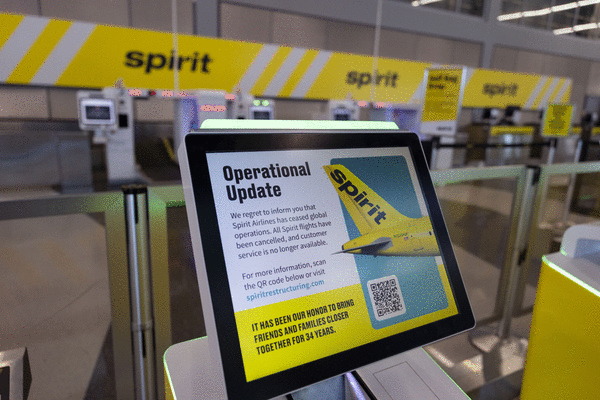
Consider what just happened with the remains of what used to be Spirit Airlines, the bankrupt ultra-low-cost air carrier. Earlier this month, Google was the winner of a highly competitive auction not for the dead airline’s planes or equipment but for the corpse’s data trove. Reportedly, the treasure included 100 million emails and 500 million Teams messages, not to mention a ton of lines of code.
Why did Google blow $10 million on such seeming scrap? To train its artificial intelligence agents.
We’ll try not to get too in the weeds here, but in essence the Spirit purchase was like buying a massive business-school case study with bots as the intended students.
By seeing what humans did in actual life, the AI creepy-crawlies can learn about, well, what humans did in actual life. It doesn’t matter if they did what they did well (and, in the case of Spirit, it all failed in the end). It’s all about using this specific business as a way for AI to learn how an airline actually operates in real life or, yet more generally, how humans typically work together in organizations.
And you thought those AI agents were merely ingesting books and newspapers. Nope. They are looking at your old out-of-office replies and ill-considered rants on Teams.
Google has said the data will be randomized before it is used, protecting people’s privacy. You’ll have to take Google’s word for that. But even aside from that genuine concern (there are, after all, 100 million emails), there is something dystopian about these hungry bots dissecting a failed human endeavor like birds of prey picking over a roadkill creature’s entrails. They’re figuring out where the dumb humans screwed up and how artificial intelligence can do better next time. And, apparently, we’re all perfectly OK with that.
If you are an AI evangelist, you likely would cheer such an exercise as an excellent use of $10 million. For example, Spirit endured many passenger letters of complaint. This will help AI respond to future such gripes.
So where are you going to be working tomorrow?
Once the AI takeover is writ yet larger, sooner than you think, we might well be wondering why we so willingly handed over so many of the keys to our shared human kingdom.
___
©2026 Chicago Tribune. Visit at chicagotribune.com. Distributed by Tribune Content Agency, LLC.





















































Comments