Editorial: The Justice Department must be independent
Published in Op Eds
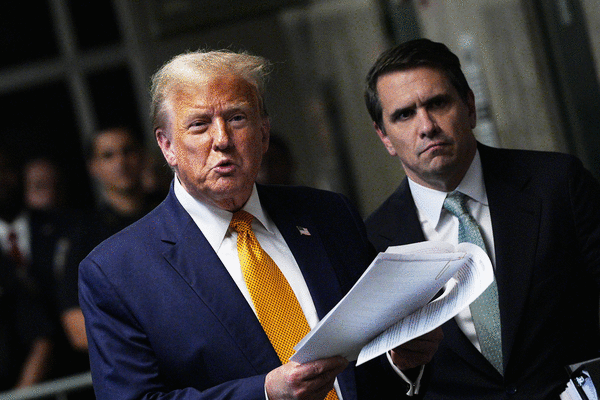
President Donald Trump’s Department of Justice keeps breaking the law in appointing U.S. attorneys, seeking to install unqualified, but loyal stooges without Senate confirmation or the consent of the local federal judges. This is because Trump wrongly sees the DOJ as his personal law firm, not an independent arm of the government. And new Attorney General Todd Blanche (Trump’s former criminal defense lawyer) refuses to support the concept of independence from the White House.
This week, the West Coast federal appeals court ruled that Sigal Chattah, Trump’s handpicked federal prosecutor for Nevada, was serving unlawfully, one of a series now of U.S. attorneys that the president has attempted to appoint permanently through administrative action, including John Sarcone in Albany and Alina Habba in New Jersey.
Thankfully, the two most critical posts, Manhattan and Brooklyn, have been spared this. Maybe someone is telling Trump not to fool around with clowns in these two spots.
The law is very clear that there are two avenues through which these powerful federal prosecutors can be appointed: either via Senate confirmation or consent from the district’s federal judges, i.e. at least one approval by another branch of the government.
These appointments are not a pure presidential prerogative, just as the Justice Department itself is not intended to be an arm of the White House. Yes, it is an executive agency, but there’s a reason that it’s historically been independent from the presidency. Times when this line has fundamentally blurred, such as with Nixon and Watergate, have been some of the most notorious instances of overreach and corruption in our history.
The department exists to preserve some semblance of equal justice in the United States — imperfectly, haltingly, often overbearingly for some and cautiously for others — and help ensure that the nation is governed by the rule of law. You’ll notice that this definition does not mention the president.
This isn’t to say that it is or ever has been a completely hands-off approach. The president nominates the U.S. attorneys and attorney general and can broadly set enforcement priorities and parameters to, for example, shift the focus towards threats like white collar crime or foreign interference in elections.
That is a very far cry from the president directing the department specifically to charge opponents like New York Attorney General Tish James and former FBI Director Jim Comey, going after regular people like Kilmar Abrego García and evading Senate or court input in selecting federal prosecutors.
The AG must be independent and follow the law where it leads, even if it hurts the president or their party. Once upon a time, Republicans understood this, or at least pretended to.
Who can forget when ex-President Bill Clinton briefly spoke privately with then-Attorney General Loretta Lynch for a few minutes in 2016 at the same time as the DOJ was probing the Clintons’ email server (If you can believe it was once considered an insurmountable scandal that a presidential candidate might have mishandled some classified information). The GOP, including then-candidate Trump, hand-wrung about that for days.
Nowadays AG Blanche is a happy lap dog of the incumbent president and the GOP Senate had no qualms in confirming him knowing that in advance.
_____
©2026 New York Daily News. Visit at nydailynews.com. Distributed by Tribune Content Agency, LLC.




















































Comments