Editorial: Beware the hidden risks lurking in property tax cuts
Published in Op Eds
A home that gains value is part of the American dream — except for the taxes. In the past two years, 17 states have lowered or limited property taxes as politicians respond to escalating prices.
The idea is seductive, particularly for longtime residents who benefit most. But just as the perfect home can contain serious hidden flaws, underexamined tax reforms can distort the housing market, deplete budgets and sap local autonomy.
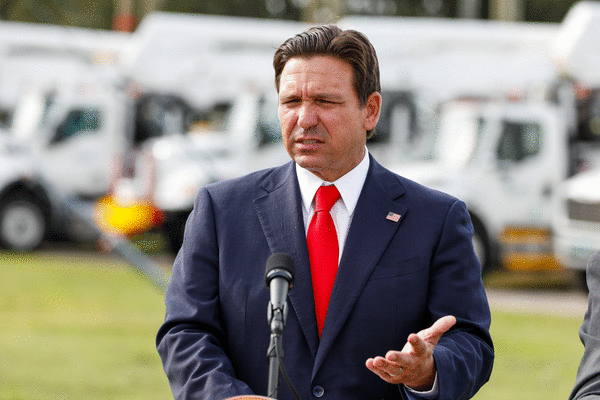
One current example is Florida. As its population has surged over the past decade, home prices and property levies have more than doubled. Taxes have jumped 40% since 2023. Just two years after adding an inflation adjustment to exemptions on primary residences (“homesteads”), the state is now seeking voter approval to quintuple the benefit and empower the legislature to increase it even further — potentially eliminating some homeowners’ taxes altogether.
That certainly sounds appealing. Yet California provides a cautionary tale. In 1978, voters fed up with their own tax inflation approved Proposition 13, which limited rates to 1% of a property’s assessed value at the time of purchase and capped annual increases at 2%. The result was a warped housing market, with homeowners locked into a valuable tax subsidy, limiting supply and raising prices. (Warren Buffett has noted that his Laguna Beach mansion was taxed at a fraction of what he paid each year on his more modest Omaha home.)
The fiscal consequences, moreover, were severe. Local governments lost more than half their property tax revenue, leading to increased fees and other taxes. They also became highly dependent on Sacramento, which meant they had less control over spending and volatile levels of support. Today, even with the highest state income tax rate, California’s finances are a mess.
The recent spate of tax measures aren’t identical to Proposition 13, but they rhyme. If enacted, Florida’s proposal is estimated to cost counties an average of $4.8 billion a year. Borrowing costs could rise as credit ratings suffer. George Kruse, a Republican on the Manatee County Commission south of Tampa, told Bloomberg News, “We can make anything work, we’ll just have to charge a fee for literally everything.”
Which raises a crucial point: As hated as they may be, property taxes are the least economically damaging way to raise revenue. Florida, which already lacks income or estate taxes, will either need to cut budgets or rely on more regressive sales and business levies to keep up with spending needs. It’s a big gamble — especially when the federal government is intent on pushing costs for health care and disaster relief on to the states.
Politicians rightly sense that voters are dissatisfied on this issue. But the prudent response isn’t to abolish property taxes and hope for the best. Better to adopt a more constructive agenda.
As home values rise, for instance, communities that feel overtaxed can push local authorities to reduce the so-called millage rate to slow property tax increases and better align local revenue with outlays. They might also apply “circuit breakers” to households that have unusually high tax liabilities relative to income, thereby shielding the elderly or otherwise vulnerable. The goal should be targeted relief.
With focused reforms of this kind, local governments can help poorer homeowners and protect local budgets while still maintaining independence from the state capital. After all, while a tax revolt helped fuel the American Revolution more than 250 years ago, the nation’s founding principle has always been self-determination, not just lower costs.
____
The Editorial Board publishes the views of the editors across a range of national and global affairs.
_____
©2026 Bloomberg L.P. Visit bloomberg.com/opinion. Distributed by Tribune Content Agency, LLC.



















































Comments