Editorial: High court slaps down bureaucratic excess
Published in Op Eds
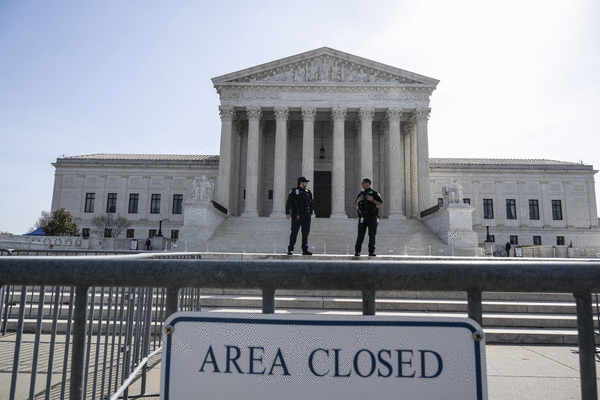
The Supreme Court will wrap up its term in a matter of days, offering rulings on a number of important cases. In the meantime, the justices issued a directive last week that continues their push to rein in executive branch overreach.
The case involved a Biden administration edict demanding that furnaces and water heaters meet higher efficiency standards as part of the effort to combat global warming. The regulation, issued by the Department of Energy, would have banned certain products by 2028, thus limiting consumer choice and driving up costs for businesses and homeowners alike.
The move was an effort by the Biden White House to do an end-run around a 2024 Supreme Court ruling that curbed the power of executive branch bureaucrats to act as de facto lawmakers.
The American Gas Association and other industry groups sued, but the U.S. Court of Appeals for the District of Columbia upheld the regulation. The Supreme Court’s order returns the matter to the lower court for reconsideration.
“We welcome the Supreme Court’s decision to protect the American people from this unlawful regulation that would increase costs for families and businesses and ban an entire class of appliances,” Karen Harbert, president and CEO of the association, said in a news release. “We will continue to work to ensure all Americans can make choices about the energy and appliances in their homes.”
The ruling would have banned “noncondensing” appliances — which vent hot exhaust gases — many of which are the only type compatible with certain existing homes or business designs. The ban, critics pointed out, would have required existing occupants to make “significant structural modifications” to comply with the law.
Not only was the rule an example of bureaucratic activism — remember the threat by the Biden DOE to outlaw gas stoves? — it betrayed a regulatory state unconcerned with the consequences of its decrees for those who must live with them. Of greater importance, the regulation was also in conflict with the high court’s decision in Loper Bright Enterprises v. Raimondo.
In that case, the justices re-established that the judicial branch rather than the executive branch has the power to interpret congressional legislation. In other words, federal bureaucrats don’t get to determine the scope of their own power. The decision was a victory for the separation of powers, which is integral to ensuring that state authority isn’t consolidated into a too few hands, which the Founders understood was a recipe for tyranny.
Your water heaters and furnaces are safe. The Supreme Court did the right thing.
©2026 Las Vegas Review-Journal. Visit reviewjournal.com.. Distributed by Tribune Content Agency, LLC.



















































Comments