Abby McCloskey: RFK wants you to eat real food. MAGA is making it more expensive
Published in Op Eds
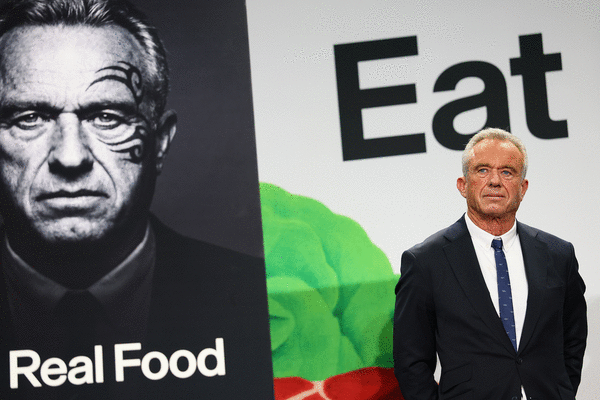
“Eat real food,” the slogan behind the USDA’s new food pyramid, has been one of the most popular, bipartisan ideas hammered home by Robert F. Kennedy Jr., the Health and Human Services secretary. But the administration Kennedy serves is making it more expensive for families to do that.
Grocery prices are 26% higher than they were five years ago, according to Labor Department data. Much of this rise occurred under President Joe Biden (and is a big part of why voters reelected President Donald Trump), but prices have continued to increase.
That is in large part due to the impact of the Trump administration’s tariffs. As a result of those tariffs, the Yale Budget Lab estimates that fresh produce was 6.1% more expensive in 2025, relative to a 3% initial jump in overall food prices.
Then there’s the higher oil prices caused by the Iran war. Fresh food, which requires frequent restocking, has been disproportionately affected by higher fuel prices.
And now a new hurdle: The House of Representatives recently passed legislation proposing to cut $141 million from the vegetable and fruit allowance in the Special Supplemental Nutrition Program for Women, Infants and Children (commonly known as WIC).
For three decades, WIC has been America’s primary federal nutrition program for low-income pregnant and postpartum mothers and children under the age of 5. Republicans insist that the cuts won’t be felt by participants and merely reflect the program’s reduced participation rate and carryover funds from prior years. But by my calculations, the monthly fruit and vegetable benefits would drop from $52 to $47 for breastfeeding mothers and from $26 to $21 for young children.
Those aren’t draconian cuts — but the program isn’t that expensive in the first place. Less than 0.1% of federal spending is on WIC. There are hardly any savings from these cuts in terms of the federal budget. Any unused funds get returned to the USDA at the end of the fiscal year. Why cut here?
WIC has three decades of data showing improved health outcomes and nutrition for those who access this program. Benefits include fewer premature births, fewer infant deaths, greater likelihood of prenatal care, improved vitamin intake, improved breastfeeding rates, lower rates of maternal obesity, improved cognitive development for children, and savings in healthcare costs.
Arguably, the program’s biggest problem is the low participation rate cited by Congress as the justification for the cuts. As things are, only about half of eligible families end up enrolling. Given the program’s return on investment, and the drumbeat of the MAHA campaign, you’d expect the administration to try to increase WIC’s uptake, if anything. Especially because, as last year’s landmark MAHA report made clear, mothers don’t get enough real food as it is.
“During gestation, fetal development depends on maternal nutrition, influencing everything — from membrane composition and mitochondrial integrity to nervous system wiring and hormone regulation,” says the report. “This programming ultimately determines the child’s long-term metabolic, cognitive, and immune resilience.” The report also lambasts ultraprocessed foods, which it says “make up over 50% of the diets of pregnant and postpartum mothers, despite evidence that increased UPF consumption during pregnancy negatively impacts health outcomes for their children.”
Eating real food is the beating heart of WIC. Mothers can use vouchers to buy all kinds of fresh fruits and vegetables and herbs, as well as canned and frozen ones. But processed food cannot be purchased with the vouchers, including those with added sugars, artificial sweeteners, creams or other additives.
Surely someone in the White House is mentioning how cuts to WIC would hand Democrats (yet another) wrapped gift for the midterm elections. Republicans can scoff all they want at New York City Mayor Zohran Mamdani’s government-subsidized, democratic socialist grocery stores. But the GOP’s #EatRealFood slogan will ring hollow if voters realize the party’s policies have not only raised the cost of food, but also cut nutrition benefits for mothers and babies.
As it stands, 61% of Americans say they had to change which groceries they buy to stay within their budget this spring, according to a CNN poll. This includes half (53%) of Republicans and 70% of 18- to 34-year-olds, the primary age group for WIC mothers.
Last year, the Senate stopped similar cuts to WIC proposed by the White House. It will be up to them to do so again. The first rule of healthcare is first do no harm. This includes maintaining the affordability of real food.
_____
This column reflects the personal views of the author and does not necessarily reflect the opinion of the editorial board or Bloomberg LP and its owners.
Abby McCloskey is a columnist, podcast host, and consultant. She directed domestic policy on two presidential campaigns and was director of economic policy at the American Enterprise Institute.
_____
©2026 Bloomberg L.P. Visit bloomberg.com/opinion. Distributed by Tribune Content Agency, LLC.





















































Comments