Politics
/ArcaMax
Lara Williams: What's in Russian permafrost may be scarier than plague
After the COVID pandemic, we’re all a little jumpy when it comes to new disease outbreaks. So it’s understandable that the death of a lab technician working at a plague research institute in Siberia has put everyone on high alert. But while there’s still much we don’t know about that case, there is another health threat brewing in Russia...Read more
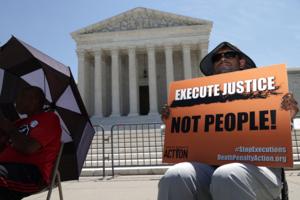
Commentary: Christa Pike execution shows lethal injection is breaking down
Christa Pike’s execution in Tennessee was a disaster waiting to happen. The warnings did not only come from her lawyers or opponents of the death penalty: Doctors in Tennessee and Republican state senators called for the state to pause executions, because the chances of one going catastrophically wrong were so high.
Tennessee Gov. Bill Lee ...Read more
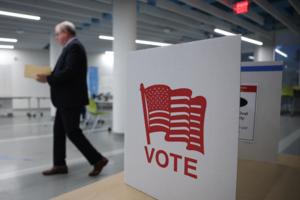
Commentary: Faith communities can help restore trust in America's elections
Less than half of Americans expect this November’s midterm election to be free and fair. According to a survey from the University of California San Diego, confidence is falling among Democrats, Republicans, and Independents alike.
The data is disconcerting, but it also points to an important opportunity. When trust is fraying, we have a ...Read more
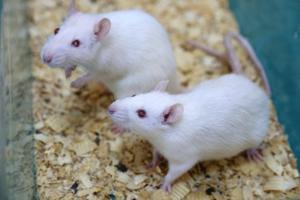
Commentary: Stop strangling mice in the name of domestic violence research
Every October, Domestic Violence Awareness Month reminds Americans of a grim reality: Millions of people live with abuse at the hands of an intimate partner.
With such an urgent need to help survivors, it’s fair to ask why the U.S. military is wasting more than $5 million on an experiment in Canada that includes strangulation-like procedures ...Read more
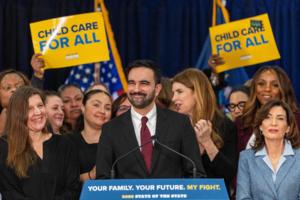
Commentary: New York is making childcare affordable. Don't forget the people providing it
Last month, New York City opened its first free 2-K classrooms. Roughly 2,000 two-year-olds got seats, the beginning of Mayor Zohran Mamdani’s push for universal childcare.
More than 5,700 applied for those first 2,000 seats, which gives some sense of the demand. Childcare has become unaffordable for too many parents, and New York is doing ...Read more

Editorial: Hamas wins the PR war thanks to US left
It’s been three years since Hamas terrorists breached Israel’s border and launched a savage assault, killing, burning, kidnapping and raping innocent men, women and children.
The massacre on Oct. 7, 2023 and ensuing war can be chalked up by Hamas as a PR win, thanks to their allies on the American left.
The terrorist group was nothing if ...Read more
Editorial: What would socialist policies mean for the middle class?
With Election Day less than a month away, voters should look beyond campaign slogans and ask what the policies on the ballot would mean for families who built their lives around work, homeownership, savings and the hope that their children can do better.
A growing socialist movement promises to make life fairer by putting more of the economy ...Read more

Editorial: The brutal terror of Oct. 7 inflicted on Israel must not be forgotten amid the debate over Gaza
Oct. 7 was a brutal, savage sneak terror attack by Hamas in which they raped, kidnapped and murdered Israeli civilians in their homes, in their beds, at a music festival, wherever they could be found, in the worst day of slaughter of Jews since Hitler’s Holocaust. That’s what Oct. 7 is and that always must be remembered as the world marks ...Read more
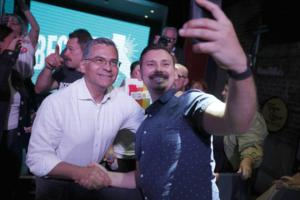
Gustavo Arellano: What Steve Hilton doesn't get about Xavier Becerra's parents
My maternal grandmother, Marcela Miranda, was born in Arizona's copper country in 1914 and lived in the United States until she was about 7.
She was part of a generation whose parents were from the rancho of El Cargadero, Zacatecas, and started families in el Norte while waiting out the Mexican Revolution in the 1910s and the Cristero Revolt in...Read more
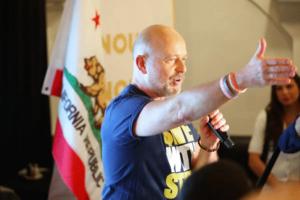
Mark Z. Barabak: Hilton makes history in California governor's race. But not the kind he had in mind
Let’s pretend for a moment you’re a Republican running for governor in the blue, blue state of California.
Your prospect of winning is small. So small, you could peer through a microscope, blink and miss it. How, then do you draw voters to your candidacy and boost your chances?
Actually, let’s not pretend. A very real flesh-and-blood ...Read more
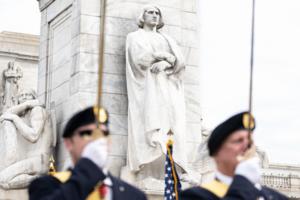
Commentary: A Columbus Day question -- Have we finally stopped distorting our past?
Dilapidated artwork says a lot about a society. Restoring it can breathe fresh life into a culture. A timely case in point: the Christopher Columbus fountain in front of Union Station in Washington, D.C.
It’s a reminder of our history and of our connection to the old world. Yet it was left to ruin for nearly 20 years. The water didn’t flow,...Read more
Commentary: The most important assignment of the semester -- Make a plan to vote
For many students, the start of the fall semester means a new address. Whether it's a freshman-year dorm room or a sick (you decide the connotation here) off-campus apartment, your address can impact how and where you vote.
With midterms quickly approaching—no, we’re not just talking about your exams—checking your voter registration now ...Read more

Aisha Sultan: The robots tell me which jobs they're taking
A mother of a graduating high school senior recently confided that her son wanted to study actuarial science in college, and she was worried about whether AI would end up replacing those jobs.
It may seem like an insignificant concern when the big debate recently has been whether AI will wipe out all of humanity in the near future. Why worry ...Read more
POINT: Trump's name should never go on the Kennedy Center
President Donald Trump famously likes to put his name on things he builds as monuments to himself. It might be conceited, vain and unseemly, but that is his right.
What he doesn’t have the right to do is permanently plaster his name on the John F. Kennedy Memorial Center for the Performing Arts. To do so would not just be unlawful. It would...Read more
Commentary: What makes a college civics requirement work
Students entering Ohio’s public universities this fall are the first four-year cohort expected to graduate under the state’s new American civic literacy requirement. Beginning with the spring 2030 graduating class, students must complete an approved three-credit course built around the Constitution and other foundational texts, with limited ...Read more
COUNTERPOINT: Trump's name belongs on the building he is saving
The John F. Kennedy Center for the Performing Arts is in trouble because years of neglect have left the national landmark unsafe, underfunded and waiting for someone else to pay the bills.
President Donald Trump became chairman of the board after returning to office and made its renovation and financial condition a personal priority, while also...Read more
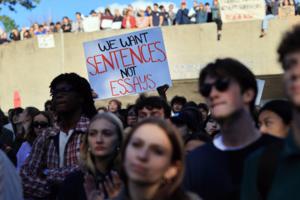
Commentary: Cornell case shows #MeToo is still changing the world
Not long before the #MeToo hashtag erupted in 2017, two young women, who said they’d been raped while studying at the University of North Carolina, organized a national movement to stop campus rape and confront the colleges that did little to punish it. Ten years later, here we are, consumed with national outrage over yet another alleged ...Read more
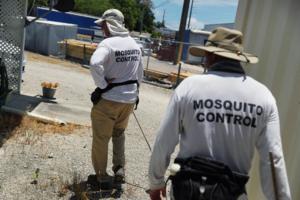
Mark Gongloff: Florida's dengue fever outbreak is a national warning
For a state whose government officially doesn’t believe climate change is real, Florida remains our nation’s busiest climate-change laboratory.
The latest test for the Sunshine State is an outbreak of dengue fever, the largest in the U.S. since the 1940s. The numbers are relatively small: 485 cases as of the latest count from the Centers ...Read more

Mary Ellen Klas: Latino voters are the new swing voters
Almost as soon as next month’s elections are over, arguments will begin about the lessons and implications for 2028. But one conclusion is already undeniable: Latinos are America’s new swing voters.
If Democrats win control of Congress in November, it will be in large part because the Latino voters President Donald Trump captured in ...Read more

Steve Lopez: 'Take out' L.A. or San Diego? This buffoon thinks Trump was way out of line
I went to bed at a decent hour Monday night and got a pretty good sleep.
I woke up refreshed Tuesday morning, only to see the news that President Donald Trump seemed to have told a crowd in Nebraska that it wouldn't be such a bad thing if Iran attacked Southern California.
"Let 'em take out Los Angeles. Let 'em take out San Diego," he said in ...Read more
Related Channels

ACLU
By The ACLU

Amy Goodman
By Amy Goodman

Armstrong Williams
By Armstrong Williams

Austin Bay
By Austin Bay

Betsy McCaughey
By Betsy McCaughey

Bill Press
By Bill Press

Bonnie Jean Feldkamp
By Bonnie Jean Feldkamp

Cal Thomas
By Cal Thomas

Clarence Page
By Clarence Page

Danny Tyree
By Danny Tyree

David Harsanyi
By David Harsanyi

Dick Polman
By Dick Polman

Erick Erickson
By Erick Erickson

Froma Harrop
By Froma Harrop

Jacob Sullum
By Jacob Sullum

Jamie Stiehm
By Jamie Stiehm

Jeff Robbins
By Jeff Robbins

Jessica Johnson
By Jessica Johnson

Jim Hightower
By Jim Hightower

Joe Conason
By Joe Conason

John Stossel
By John Stossel

Josh Hammer
By Josh Hammer

Judge Andrew Napolitano
By Judge Andrew P. Napolitano

Laura Hollis
By Laura Hollis

Marc Munroe Dion
By Marc Munroe Dion

Michael Barone
By Michael Barone

Mona Charen
By Mona Charen

Rachel Marsden
By Rachel Marsden

Rich Lowry
By Rich Lowry

Robert B. Reich
By Robert B. Reich

Ruben Navarrett Jr
By Ruben Navarrett Jr.

Ruth Marcus
By Ruth Marcus

S.E. Cupp
By S.E. Cupp

Salena Zito
By Salena Zito

Star Parker
By Star Parker

Stephen Moore
By Stephen Moore

Susan Estrich
By Susan Estrich

Ted Rall
By Ted Rall

Terence P. Jeffrey
By Terence P. Jeffrey

Tim Graham
By Tim Graham

Tom Purcell
By Tom Purcell

Veronique de Rugy
By Veronique de Rugy

Victor Joecks
By Victor Joecks

Wayne Allyn Root
By Wayne Allyn Root
Comics