Commentary: The fuel shortages of the '70s were crazy. Will we be running on empty again?
Published in Op Eds
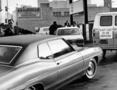
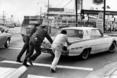
LOS ANGELES -- Surely you haven’t forgotten those mad COVID weeks of scrambling for the most elementary necessities: the masks, the baby formula, the toilet paper?
Maybe we should start to think of that as … practice.
Twice in the last 50 years, crises in the Mideast, one of them centered in Iran, have turned Americans into frantic hunter-gatherers for another necessity: fuel for their gas tanks. It’s true even now, even with so many electric cars later, that gasoline is still the drink of choice for millions of vehicles.
Very briefly, the 1973-74 oil embargo began after the “Yom Kippur” Arab-Israeli war. Arab oil-producing countries cut production and exports to the U.S. and other nations supporting Israel.
Then, in 1979, the Iranian revolution stomped on the brakes of that country’s oil production, and the U.S. again went through oil withdrawal. Diving supplies, stratospheric prices, and rules and regs for who could buy how much gas and when sent Americans into panicky buying habits.
These twinned crises put the U.S. on its slow, foot-dragging path toward energy independence. We’ve turned to electric and hybrid vehicles and the alternative wind and solar energy projects that the Trump administration is kicking to the curb today.
Like COVID, unless you were there, it’s hard to believe the things that went on, but if you’re skeptical about what old grandsire tells you about the Great Gas Wars of the 1970s, believe him. Here’s why:
In 1974 — the year Detroit’s mileage average bottomed out at about 14 mpg, and a loaded new Ford Torino scored 8.5 mpg — President Nixon dropped the national speed limit to 55 to conserve fuel, and it didn’t get completely lifted for 21 years.
Let’s drive slowly through what it was like:
In May 1973, just before the Memorial Day holiday and the launch of summer road travels, the prospect of shortages was clear. A ranking administration official warned that a gas shortage was “not certain but probable.” He told us to carpool, to take public transit.
Independent gas stations were quickly getting walloped. Big oil companies were saving their gas for their own affiliated stations, with little or nothing left for the independents they usually supplied. In Portland, Ore., an independent service station owner turned off his pumps and turned his place into a drive-through taco shop.
In California, Standard Oil — the massive industrial “Octopus” with so many interests in its grasp — told the California Highway Patrol that some of its stations would sell to patrol cars only, 10 gallons at a pop.
On the cusp of summer, Des Moines taxi drivers were ordered to keep the air conditioning off.
Suddenly, smaller cars with higher gas mileage numbers were hot — and hard to find. A Boston-area man got on the phone to dealer after car dealer, and one told him, “You came six months too late.” A Mazda dealer boldly placed a big ad — “the gas shortage is over with a Mazda” — right there in the Flint Journal, the hometown newspaper of General Motors.
The image of Toyotas and Datsuns — soon rebranded as Nissans — went from quirky to sine qua non. The ditzy little VW Beetle, for years the budget wheels of college kids, was the new star of the sales lot. The gas crisis gave these smaller cars a foothold in the American market that became permanent.
By Thanksgiving, Nixon had considered but ruled out a ban on Sunday driving, but he was at least asking stations to close voluntarily on Sundays.
In some places, tourism by car — the “see the USA in your Chevrolet” spirit — flatlined. Lake Tahoe, so dependent on tourist bucks, set up a hot line to help visitors find open gas stations. And by Valentine’s Day 1974, more than 3,000 Californians, from gas station attendants to hotel bellhops, were out of work.
RV sales took a hit. Real estate sales took a hit. No one was just driving around from open house to open house, and real estate agents weren’t about to ferry mere looky-loos around.
And here’s where we get into the realm of toilet-paper panic. During COVID, some stores capped how many essentials customers could buy. A Costco clerk in Northridge saw people brawling over toilet paper and water.
Now, think of that with gasoline — enough material for a master’s thesis in human misbehavior.
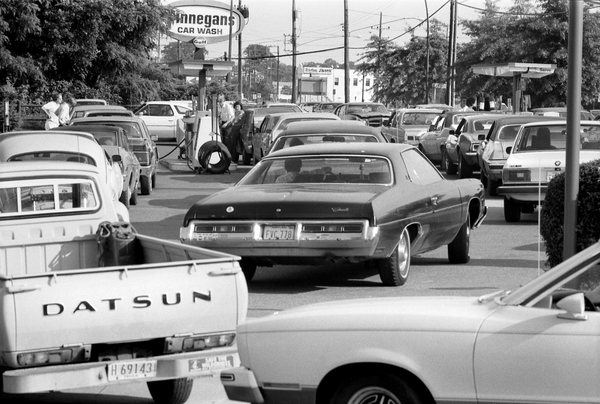
As with TP, people in the 1970s tried to protect the gas they had and hoard more. Auto supply stores could not keep up with the demand for locking gas caps. People bought five-gallon jerry cans, filled them, and bought more. In the San Fernando Valley, neighbors reported fearfully of neighbors storing as much as a hundred gallons in their garages, 10 times the legal limit.
Drivers were frantically topping off their tanks, not knowing when they’d see another open gas station; sales of 12 cents’ worth of gas were recorded. Gas station amenities vanished: no more trading stamps. No more steak-knife sets with five-gallon fill-ups. A Hollywood gas station owner got one hand bitten by a woman he asked to get in the correct gas line. She bit him, then locked her car and wouldn’t budge, shouting, “If I can’t get gas, nobody can!”
There was a big demand for gas siphons — something a Pep Boys spokesman called by the old insult “Oklahoma credit cards.” Some had a built-in squeeze pump to keep gas out of the siphoner’s mouth, but other gas thieves couldn’t be bothered, and hospitals like one in Thousand Oaks reported almost a dozen cases a week of siphoners swallowing gas.
Late one night, an Oxnard ambulance driver prepared to head to an emergency call and found a teenage woman there in the dark, siphoning gas from his ambulance’s tank.
Tanker trucks were hijacked and found later, empty, their liquid-gold cargo evidently disgorged into some gas station’s underground tanks.
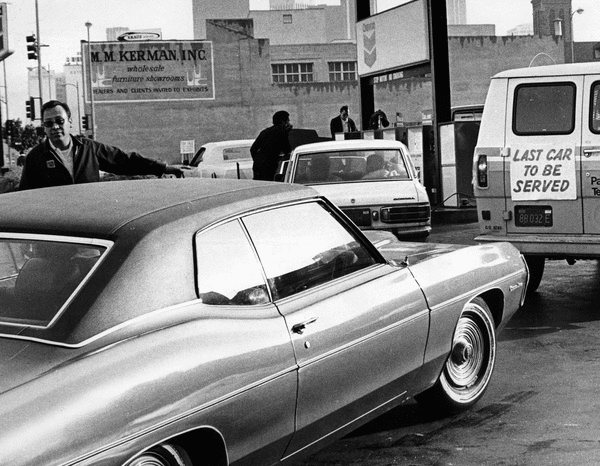
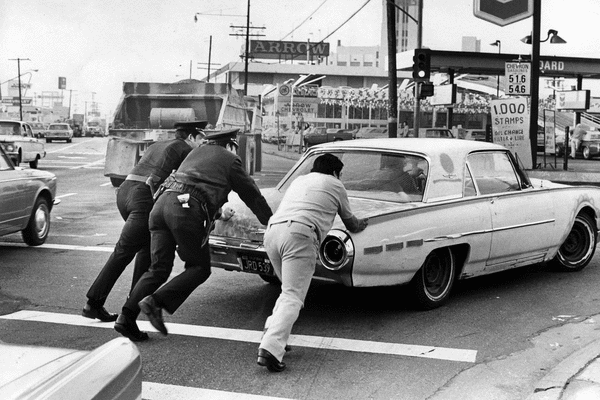
Drivers had to burn gas to find gas, creeping from station to station, looking for the green flags that meant “open,” not the red flags that signaled “closed” or “out of gas.” In the 1979 gas shortage, an attendant at a busy San Bernardino gas station was confronted by an armed man demanding money. She grabbed the red flag and whacked the robber over the head until he ran off.
Most people waited resignedly, if not patiently. What choice did they have? They brought books, knitting, thermoses of coffee or something more muscular. Drivers sometimes parked outside closed service stations late at night and slept in their cars to be there early when the stations opened in the morning. Students and the unemployed worked as line-sitters; for up to $5 an hour, they’d sit in your car and inch it forward toward the gas pumps. Extra if you wanted your car washed too.
Teachers accepted tardy excuses from parents of students stuck in gas lines.
Lines for gas could go on for blocks, for 30, 40 minutes, or hours, and people took their queuing very seriously. A San Mateo, Calif., chaplain spotted a break in a long line of cars, and pulled into the opening. A man in line behind him walked up and told the chaplain to get to the back of the line. When the chaplain ignored him, the man pulled out a handgun. “You better move!” he threatened — but drove off before the cops showed up.
A line outside a Riverside gas station crossed a railroad track, and a man stopped on the tracks refused to yield his place even when a freight train engine bore down on him. His car was smashed to bits, but he got away with only cuts.
Drivers brawled with attendants when the gas ran out, or when the lines weren’t moving fast enough, and cops closed down the stations, which made no one happy. Some stations limited fill-ups to cars with tanks at least half-empty, which turned attendants into the gas police.
A Virginia gas station owner said women had offered him sex for gas (he said he declined). An attendant at his father’s service station told the San Mateo Times that classmates he hadn’t thought about for years called him at home to buddy up — “Hey, what’s doing, how are things, how about some gas?”
Perhaps the saddest was the case of a Garden Grove gas station owner who was convicted of misdemeanors for illegally giving customers preferential treatment. He was also indicted for violating the 1973 Emergency Petroleum Allocation Act. Less than a month after his conviction, he was murdered. He’d leaped into the back of a pickup truck that had driven off without paying for $10 worth of gas, and the truck driver shot him to death.
Gas station owners were stressed. Drivers were stressed. A crisis hot line in L.A. remarked on many more callers, as people were stuck at home more and drank more.
The San Francisco Examiner ran a Q-and-A, the question being how the gas shortage was affecting locals’ love lives? One Daly City gas station attendant said “things are great for me” now that he didn’t have to work nights or weekends. A high school student bewailed her social life; no driving out with boys now, and even her girlfriends couldn’t drive over to hang out “now we have to talk on the phone instead” — on one night, for four hours.
The strictest method short of rationing was probably the even-odd buying system adopted in California and other states around the spring of 1974.
Cars whose license plates ended in even numbers could buy gas on even-numbered days. Odd numbers and personalized plates could buy on odd-numbered days, and everyone got a chance on the 31st of any month. With so many stations closed or short on gas, it felt like the Mad Hatter’s tea party paradox: “Jam yesterday, jam tomorrow, but never jam today.”
Well, you can guess what happened. License plates were stolen, sometimes from people’s own driveways. Crudely applied tape tried to alter license plate numbers. It didn’t save gas and more often than not it triggered panic buying, like the 12-cent top-off.
Inevitably, not a few drivers thought it was all a hoax, engineered by gas companies taking advantage of petro-global politics to squeeze supply and nudge up prices. A Nixon energy advisor had to try to quash the “great myth” rumor that gas would hit — gasp — a dollar a gallon.
All these decades later, a great many people still think gasoline supplies and prices are being cynically gamed by the oil companies. And, a year after the 1979 Iranian revolution, gas did leap that unimaginable threshold to a dollar a gallon.
©2026 Los Angeles Times. Visit at latimes.com. Distributed by Tribune Content Agency, LLC.
















































Comments