Nolan Finley: Tyranny doesn't end when tyrants are killed
Published in Op Eds
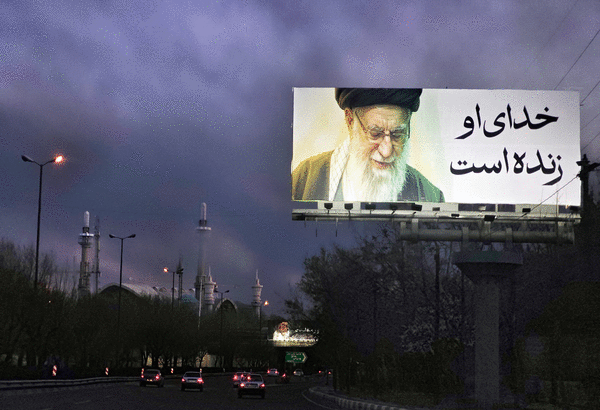
Killing the tyrant doesn’t assure the tyranny will end.
Regime change efforts by the United States in this century confirm that when despots are toppled, it is likely one form of oppression will be replaced by another.
Instead of peace and democracy, externally driven nation-building most often ends in chaos. One set of bad guys goes, and another set marches in. Or the old ones come back.
Americans should look to that history in setting expectations for what happens next in Iran now that another batch of maniacal Middle East murderers have been sent hurtling through the gates of hell.
In 2001, the United States and its allies stormed into Afghanistan, aiming to destroy the Taliban and round up the instigators of the 9/11 terrorist attacks. Twenty years later, after spending $2.3 trillion and losing nearly 2,500 American troops, then-President Joe Biden ordered a hasty withdrawal. Now, the Taliban are back exporting terror, women are shrouded and girls have again been shut out of classrooms.
Remember the jubilation in Baghdad in 2003 as long-abused citizens tore down the statue of Saddam Hussein and the real-life strongman was driven into hiding and eventually killed? Iraqis breathed a few gulps of freedom before secular warfare between Sunni and Shia militias began tearing the country apart.
Americans sent to help reconstruct the country and build a functioning government were relentlessly attacked.
The Islamic State, or ISIS, the most vicious terror group ever, found Iraq to be the perfect launching pad for its marauders. Today, the country is considered a shaky democracy at best, and civil rights abuses abound.
Bringing “freedom” to Iraq cost America just under 4,500 troops and nearly $3 trillion.
A U.S. led NATO coalition aided a 2011 military coup in Libya that left the sadistic dictator Muammar Gaddafi dead in a ditch. The North African nation today is in a power vacuum and roiled by conflicts between rival armed gangs, some with ties to international terrorism.
That history should inform American decisions and its expectations as it moves ahead with extracting the Islamic radicals from Iran.
While the Iranian people have demonstrated fervently for freedom, there seems to be an endless line of mullahs willing to step into the shoes from which Supreme Leader Ayatollah Ali Khamenei was just blown out.
President Donald Trump has rallied the Iranians to rise up and take over their country. But the people lack significant arms. Their economy is being shattered along with their infrastructure. They have to work. They have to eat. They have to focus on survival.
They have watched up to 30,000 of their countrymen be slaughtered for protesting the regime, including many who might have led Iran’s rebuilding.
There’s bound to be an extended period of chaos, power struggles and hardship even under the best scenario.
Removing the Iranian Revolutionary Guard and the radical clerics with bombs alone will be an arduous and uncertain process. A ground war seems inevitable, and Trump has not ruled one out.
But the principle of “you broke it, you own it,” will be hard to resist. The argument will be that some form of peace-keeping force will be necessary to restore order in the country and keep it from re-radicalizing. It will be another dangerous, expensive quagmire, despite assurances from the administration that things will be different this time.
Considering the poor return on investment of previous regime change mobilizations, will America be willing to sacrifice more of its children to a cause with such a dubious chance of success?
_____
©2026 www.detroitnews.com. Visit at detroitnews.com. Distributed by Tribune Content Agency, LLC.


















































Comments