Editorial: Black History Month observed for a century, but erasure efforts go on
Published in Op Eds
This year marks the 100th year for Black history to be formally recognized nationally. Started in 1926 by historian Carter G. Woodson as Negro History Week, the month is used to spotlight the true picture and often overlooked contributions and achievements of Black Americans despite the systemic challenges they faced.
Essential to that picture is the system of slavery.
How could a race of people be enslaved for 240 years, then endure decades of humiliation under Jim Crow laws and decades more of government-sanctioned discrimination and still rise to produce scientists such as Dr. Patricia Bath, who invented a laser treatment for cataract surgery, explorers such as Washington’s George Bush and professors such as Woodson, who was the son of formerly enslaved people yet earned a doctorate from Harvard? Those accomplishments against incredible odds should intrigue Americans of all colors. The people, places and events from the Civil War to the Civil Rights Movement should spark curiosity from all ages.
But for too many decades schools and communities ignored Black history, and produced generations with a lack of true knowledge of how America was created and who all contributed.
Today, 100 years since the inception of Negro History Week, many still want to ignore and even erase history that doesn’t center whiteness.
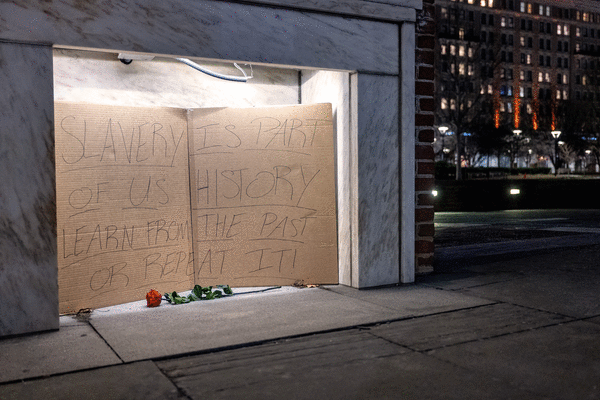
In 2017, President Donald Trump visited the Smithsonian’s National Museum of African American History and Culture during Black History Month. He called the tour a “meaningful reminder of why we have to fight bigotry, intolerance and hatred in all of its very ugly forms.” Fast forward to 2025 and his administration has removed references to Black history and slavery at museums, and national parks and buildings. One of the administration’s most egregious acts was the recent removal of a display at the Philadelphia home of George and Martha Washington that told the story of nine enslaved people who worked there. This action has resulted in litigation.
Trump administration attempts to erase Black history are a meaningful reminder of why we have to fight bigotry, intolerance and hatred in all of its very ugly forms.
Locally there are opportunities this month to learn and share with others America’s Black history. The King County Library System has a list of recommended books for all ages. The Washington State Commission on African American Affairs has events planned for the month. And Blackpast.org is a year-round international resource for Black history founded by the late University of Washington professor Quintard Taylor.
Meanwhile, senior U.S. District Judge Cynthia Rufe soon will decide the fate of the display in Philadelphia. Before she visited the site she said: “You can’t erase history once you’ve learned it. It doesn’t work that way.”
____
The Seattle Times editorial board: members are editorial page editor Kate Riley, Ryan Blethen, Melissa Davis, Josh Farley, Alex Fryer, Claudia Rowe, Carlton Winfrey, Frank A. Blethen (emeritus) and William K. Blethen (emeritus).
©2026 The Seattle Times. Visit seattletimes.com. Distributed by Tribune Content Agency, LLC.





















































Comments