Commentary: Trump's strategic strike in Venezuela creates opportunities for US energy dominance
Published in Op Eds
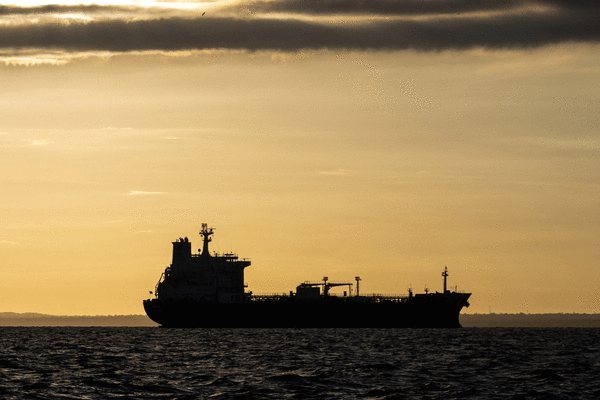
“Operation Absolute Resolve” successfully dismantled illegitimate President Nicolás Maduro’s dangerous narcoterrorism regime and created valuable opportunities for the U.S. economy — fueled by the oil sector.
The Trump agenda prioritizes unleashing American energy, which includes maximizing domestic production of traditional energy resources. Venezuela holds the world’s largest oil reserves totaling 303 billion barrels, over $17 trillion in value.
For context, selling these reserves at only a quarter of market value would amount to $4.25 trillion, exceeding the GDP of every nation in the world except the top four (America, China, Germany, and Japan).
President Donald Trump wants to unlock and sell Venezuela’s massive oil reserves. American companies could add billions of dollars to the U.S. economy by rebuilding outdated infrastructure and selling oil — in turn, enriching both Americans and Venezuelans.
In a recent speech at Mar-a-Lago, Trump explained, “We’re going to have our very large United States oil companies, the biggest anywhere in the world, go in, spend billions of dollars, fix the badly broken oil infrastructure, and start making money for [Venezuela].”
U.S. oil firms like Chevron and ExxonMobil may stand to profit significantly as they invest into infrastructure, which would ramp up oil production in Venezuela. This intervention also rectifies the billions of dollars’ worth of American oil assets, platforms, and infrastructure that were stolen under the Chávez and Maduro regimes.
Starting in the early 1900s, U.S. oil companies were heavily invested in Venezuela. But in 1976, U.S. production facilities were seized by the state, and the oil industry was nationalized. In the 1990s, oil companies returned for a moment of market liberalization, investing billions in improving drilling and refining capacity—reaching 3.5 million barrels per day.
With the election of Hugo Chávez and subsequent descent into socialism, oil assets were again seized by state-owned Petróleos de Venezuela, S.A. (PDSVA) and U.S. companies were kicked out. Sanctions that were accelerated during Trump’s first term reduced Venezuela’s oil output to under 1 million barrels per day.
The Latin American country’s underperforming oil sector is a symptom of authoritarian government mismanagement that deteriorated the socioeconomic sphere. Venezuela’s economic freedom was ranked number 22 globally in 1980 and number 165 as of 2021, according to the Fraser Institute’s Economic Freedom of the World Index.
Though problems started under former socialist dictator Chávez, Maduro is responsible for exacerbating Venezuela’s humanitarian and economic crises. Policies rooted in socialist controls turned the once prosperous oil-rich country into an impoverished one.
As U.S. firms begin to invest and drill, America will be compensated through sales of Venezuelan oil and future production, essentially being reimbursed for past theft of assets and losses of revenue. A return to the pre-1976 50/50 profit sharing split seems like a reasonable starting point in monetary negotiations.
Venezuela, with American intervention, will undoubtedly become a major supplier again, adding millions of barrels to world markets daily. Consumers may experience lower prices and nations could diversify away from Russia and Saudi Arabia. This, of course, reduces geopolitical leverage for China, Russia and Iran, who have been influential in Venezuela’s oil sector and who, themselves, face oil sanctions from America and her allies.
“Instead of the oil being blockaded, as it is right now, we’re going to let the oil flow,” explained Energy Secretary Chris Wright in a recent energy conference. America will sell Venezuelan oil “indefinitely,” and by doing so, the U.S. will establish energy dominance and limit oil-sanctioned countries’ energy deals and regional influence.
As an oil export-dependent country, increased investment and production may lift millions out of poverty and create jobs for locals. While the largest beneficiaries will certainly be the Venezuelans who have been liberated from Maduro, American oil firms and labor deservedly stand to profit largely, too.
Celebrations worldwide following Maduro’s capture and basic economic logic suggests tangible profit-making developments for both America and the people of Venezuela. With the new year having only just begun, the next decade will certainly be filled with opportunity, oil, and prosperity. “Drill baby, drill”—in both Venezuela and the United States.
____
Nicole Huyer is a Senior Research Associate in the Roe Institute at The Heritage Foundation.
_____
©2026 Tribune Content Agency, LLC.


















































Comments