Editorial: Marijuana madness may soon get worse
Published in Op Eds
“A holiday from the facts.” That’s how the antagonist of "Brave New World" describes the wonder drug soma. The phrase might equally apply to U.S. marijuana policy.
Since California first legalized medicinal cannabis in 1996, the U.S. pot industry has morphed into a $40 billion behemoth. Weed is now legal in 24 states for recreational purposes and in 40 for medical use. About 15% of Americans report partaking; close to 18 million are daily or near-daily users, on par with alcohol.
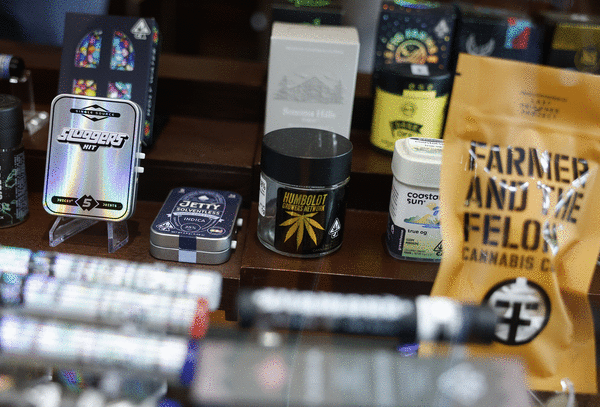
Accompanying this boom has been a proliferation of pot-adjacent products — vapes, oils, edibles, gummies, concentrates, tinctures, fizzing multicolored soft drinks infused with staggering levels of THC — that are subject to varying state-by-state regulations and essentially no federal product-safety standards. (A law passed in November aims to curtail such products but may not be enforced anytime soon.)
Amid this haphazard experiment, some inconvenient facts are emerging.
For one, evidence has been piling up that marijuana poses significant risks to public health, particularly for young people. One recent study found that heavy cannabis use might’ve contributed to 30% of schizophrenia cases among young men in recent years. Others have linked the drug to higher rates of depression, anxiety disorders, psychosis, cognitive impairment, poor academic performance, cardiovascular problems and more. Pregnant women are at especially high risk.
That’s to say nothing of the effects that legalization has had on traffic accidents, child overdoses, public order and quality of life.
Further complicating matters, a new paper has demonstrated what many doctors have warned about for years: There’s scant evidence that marijuana has medical benefits. Some specialty products have been shown to help with certain conditions, such as AIDS-related anorexia. But claims that pot can alleviate insomnia, chronic pain and other ailments have little or no empirical support. As one of the authors put it: “Our review highlights significant gaps between public perception and scientific evidence regarding its effectiveness for most medical conditions.”
It’s an odd time, then, for the federal government to effectively offer its imprimatur for marijuana, as the White House seems to be considering. Marijuana remains illegal under federal law, classified as a Schedule I drug, the same as heroin or LSD. This month, the administration said that it plans to loosen this classification. It should tread carefully.
Reclassifying the drug surely makes sense in itself. A Schedule I listing means that proprietors of state-legal weed shops must contend with severe tax penalties, limited banking services, high insurance costs, weak legal protections and numerous supply-chain restrictions. This has only empowered black-market competitors with cheaper products and laxer standards.
Worse, Schedule I imposes a host of legal and procedural constraints that have left federal agencies and universities reluctant to fund serious marijuana research. Those rules have artificially limited clinical trials, product standardization studies, therapeutic investigations and other essential work. It’s easier to study meth or cocaine.
At the same time, the administration must be clear that it isn’t endorsing or legalizing the drug. Instead, the goal should be funding high-quality trials; evaluating state-legal products; creating product safety standards for potency, additives and so on; establishing reliable impairment metrics and toxicology standards; and otherwise creating a robust body of research. Good policy requires sound data.
That effort should be paired with a public-information campaign that establishes the essential facts about marijuana use, warns about known risks — especially to developing brains — and counters industry hype about the supposed benefits of the drug. It’s long past time to impose some order on America’s reefer free-for-all.
____
The Editorial Board publishes the views of the editors across a range of national and global affairs.
©2025 Bloomberg L.P. Visit bloomberg.com/opinion. Distributed by Tribune Content Agency, LLC.





















































Comments