Editorial: The war on drugs shouldn't be the military's fight
Published in Op Eds
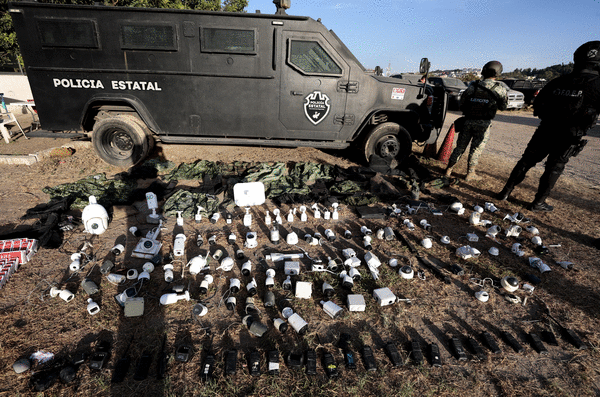
The White House is delighting in videos of the U.S. Navy blowing up alleged drug boats in the Caribbean. If the administration wants to make real progress in the war on drugs, however, the military shouldn’t lead this fight.
The flotilla now deployed off the coast of Venezuela is formidable: It includes three destroyers, a guided-missile cruiser, a fast-attack nuclear submarine and three amphibious ships, carrying 2,200 Marines; F-35 fighters and MQ-9 Reaper drones are based in nearby Puerto Rico. The stated goal is to disrupt the flow of illegal drugs through the Caribbean into the U.S. and to deter Venezuelan traffickers.
But the administration evidently has more ambitious plans. Media reports suggest the forthcoming National Defense Strategy will elevate the battle against cartels to a top national-security priority, while the president recently vowed to go after traffickers on land, “stopping them the same way we stopped the boats.” The implication seems to be that the U.S. is considering strikes on foreign soil as well as in international waters. One congressman is reportedly floating a proposal that would authorize armed action against anyone deemed a “narcoterrorist” and the nations harboring them.
No tears ought to be shed for the cartels, which are responsible for at least half of all murders across the region and which contributed to nearly 200,000 U.S. overdose deaths over the past two years. A case can be made that they represent a bigger threat than President Joe Biden’s administration assessed. Moreover, the U.S. military can bring capabilities to the anti-drug fight that law enforcement agencies can’t, especially in signals intelligence and surveillance.
Yet the White House’s new strategy is misguided on multiple levels. For starters, it’s not at all apparent that the recent strikes, which reportedly killed at least 17 people, were legal. Although the administration has designated several cartels as foreign terrorist organizations, that doesn’t grant authority to target them with lethal force (hence the impetus for the draft bill). Previous authorizations for drone strikes against Islamist terrorists don’t apply; to say that the small boats — one of which may have been turning back when hit — posed an imminent threat to the U.S. is a stretch.
Nor are such strikes terribly effective. Killing low-level drug mules eliminates potential sources of information and infiltration. Their deaths are unlikely to deter cartel bosses, who are accustomed to unimaginable levels of bloodshed — and to losing occasional shipments. They’ll simply pursue other methods of delivering drugs to the U.S., including harder-to-detect unmanned vessels.
Going after drug lords in nations such as Mexico or Colombia is also likely to be counterproductive. The few tactical successes the U.S. military has registered in the 54-year war on drugs have come from working closely with local forces. Unilateral drone strikes or commando raids would make such cooperation, even from otherwise willing partners, politically impossible. Any payoff would be limited: Killing or capturing top leaders has rarely disrupted the flow of drugs for long.
Perhaps most important, a battle against cartels would distract the military from the more crucial task of deterring China and Russia. Deploying troops, ships and planes will wear down equipment, undermine readiness and use up resources required in other theaters. It’s also needlessly expensive: Using $2.5 billion destroyers designed for high-intensity combat in the Pacific against speedboats makes little sense, especially when the Coast Guard already has the experience and firepower to do the job.
Substantially damaging the cartels demands hard, patient work — not viral videos. The main target shouldn’t be foot soldiers but the middle layer of financiers, logistics experts and security chiefs who are harder to replace. Dismantling those networks will require better intelligence and closer law-enforcement cooperation, in particular with Mexico, as well as sustained anti-corruption initiatives to reduce the cartels’ sway over local politicians, judges and police.
Designating the cartels as terrorist groups can help in targeting money flows. The Pentagon can add logistical and intelligence support. But the president has long opposed embroiling the military in forever wars with no plausible end. He should think twice before launching one of his own.
_____
The Editorial Board publishes the views of the editors across a range of national and global affairs.
_____
©2025 Bloomberg L.P. Visit bloomberg.com/opinion. Distributed by Tribune Content Agency, LLC.


















































Comments