Editorial: Give us a home where the bison roam
Published in Op Eds
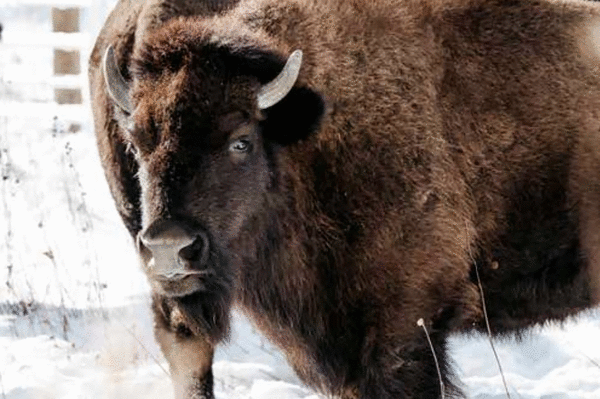
Before Illinois became a state anchored by a sprawling metropolis, it was a humble prairie. Flat, yes, but that open horizon offered the perfect home for creatures big and small to graze and lope.
Among those creatures were bison, giants that called this place home for thousands of years until we humans edged them out of their habitat, disappearing around the mid-1800s.
We’re happy to report: They’re back.
On Dec. 8, the Forest Preserve District of Kane County announced the reintroduction of bison to Burlington Prairie Forest Preserve in Sycamore, their first presence in Kane County in more than 200 years. The bison’s return fulfills a conservation commitment approved by Kane County voters in the 2024 Land Acquisition & Preserve Improvement Referendum.
Bison are returning not just as a symbol of heritage, but because they play a critical ecological role — their grazing and wallowing help maintain open prairie and create habitat that supports a wide range of plant and animal life.
That restoration matters because so little of Illinois’ original prairie remains. Once covering most of the state, native tallgrass prairie was steadily plowed under for farms, roads and cities, leaving only a fraction intact today. What survives does so largely because of deliberate preservation. The bison’s return is part of that larger, ongoing effort to keep what little remains from vanishing altogether.
The public can’t see them just yet. After arriving Dec. 5 and briefly acclimating in a small corral, the bison were released into a larger, fenced prairie, with winter serving as a settling-in period before public access and educational programs begin this spring.
Bison aren’t the only massive quadrupeds residing on forest preserve lands. Visit Busse Woods in Elk Grove Village, and if you’re lucky you can catch a glimpse of elk — a quiet reminder that conservation here is not new. The herd has lived in a 17-acre enclosed pasture since 1925, when stock arrived from Yellowstone National Park. Together, the elk at Busse Woods and the returning bison mark different chapters of conservation in the region.
Make no mistake, without the industrial revolution, Chicago would not have ascended to greatness, at one point becoming the fastest-growing city in America. Our big shoulders come from our people, many of whom worked in the stockyards, the rail yards, the mills and the factories that powered a booming city. But that growth brought change to the natural landscape our ancestors settled, which ultimately led to the extirpation of species — like the bison — that were here first.
That history doesn’t call for regret so much as responsibility. We cannot, and should not, rewind the clock on Illinois’ development. But we can decide what kind of stewards we want to be now, choosing to protect and restore what remains of our natural heritage, not as a novelty, but as a public good worth the investment.
With that in mind, we find ourselves humming an old-fashioned ditty today.
Oh, give us a home where the … bison roam.
We’re happy to have them. As spring approaches, this feels like something rare and welcome: good news you can actually go see, hooves and all.
_____
©2025 Chicago Tribune. Visit chicagotribune.com. Distributed by Tribune Content Agency, LLC.




















































Comments