Politics
/ArcaMax
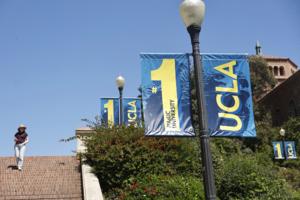
Steve Lopez: The California I grew up in was full of ambition and possibility. Is the dream still alive?
The California I grew up in had its pluses and minuses, just like the state I'm living in now.
But consider this:
In 1974, I wrote a check for a semester of college.
The fee was $98.
That was the cost of registration, by the way. Tuition for in-state residents was free at San José State University and other public universities in California...Read more
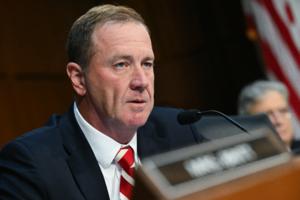
Editorial: Eric Schmitt airballs with 'dirtbag' attack
Just when you think Eric Schmitt couldn’t possibly embarrass himself and his constituents any more than he already has, he goes in for a rhetorical layup, gratuitously throws an elbow, spectacularly misses the shot and then stomps around the court indignantly when the ref calls foul.
That’s all metaphorical, of course. What Missouri’s ...Read more

Michael Hiltzik: No, AI bots won't extinguish humanity on their own -- but you should worry about the humans behind them
If you've devoted even a moment's attention to the vibes percolating within the zeitgeist, you've probably heard about the possibility that artificial intelligence is poised to extinguish us all.
The current version of a scenario once chiefly identified with the Terminator movies and other examples of apocalyptic science-fiction derives from ...Read more

Editorial: The Trump administration's strange affection for prediction markets
There is something genuinely strange happening at the Commodity Futures Trading Commission, the federal agency responsible for regulating derivatives markets. Under Chairman Michael Selig, the CFTC has challenged states seeking to regulate prediction platforms, arguing that federally designated contract markets fall within its exclusive ...Read more

Editorial: After debacle that followed Bite of Seattle mass shooting, city must set a new course
It’s been two months since the fatal mass shooting at the Bite of Seattle food festival. Questions about accountability within city government remain.
Three people are dead, four were injured and only one of as many as three suspects is in custody.
The Seattle Police Department recently presented its after-action report — an evaluation of ...Read more
Editorial: Where have all the good Republican candidates gone?
A wise man once told us “I’m a Democrat at the local level, a Republican at the state level, and a libertarian when it comes to federal politics.”
It’s a philosophy that holds, essentially, that you should be more skeptical of government power the farther away that government is from the people it governs. It expresses a comfort with an...Read more
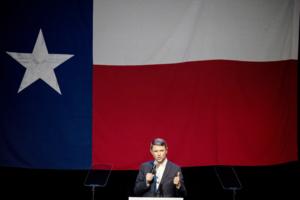
Abby McCloskey: Talarico is too left for Texas and Paxton is too amoral
At an intersection near our house in Dallas, one home has a large Talarico sign in the front yard. The home directly across the street has a large Paxton sign. That’s what it’s like down here one month before Election Day. The candidates are neck-and-neck. Votes are split across streets and among families.
The latest poll by Texas Public ...Read more

Commentary: Women deserve a different kind of 'happily ever after'
The finale of Netflix’s dynamic and delicious retelling of “My Brilliant Career” delivers the kind of love story modern women have been craving.
The six-part miniseries based on the 1901 protofeminist novel follows a talented, wild young woman, Sybylla, played by Australian actor Philippa Northeast, who is recklessly bold and almost feral...Read more
Editorial: Americans rely on deposit insurance. Now is the time to fortify it
Banks in the U.S. have plenty to celebrate these days, from record profits and higher stock prices to a strong economy and easier regulation. One thing they don’t need is an added discount on their deposit insurance — a crucial buffer that should be reinforced when times are good.
For the better part of a century, U.S. bank customers have ...Read more

Commentary: The tech threat to women's privacy
In late August, Texas and Florida became the latest states to limit the use of Flock cameras, an artificial intelligence-powered network of automated traffic surveillance devices, in response to growing concerns about their misuse by law enforcement. But even in the consumer technology sphere, other digital surveillance devices pose similar ...Read more
COUNTERPOINT: In the states, AI deepfakes we aren't seeing
Political deepfakes have marred elections worldwide. Deepfakes have influenced presidential elections in Argentina, affected parliamentary races in Slovakia, and spread misinformation widely.
In contrast, deceptive deepfakes have not swamped American politics. This is despite the easy availability of rapidly improving AI deepfake technology. It...Read more
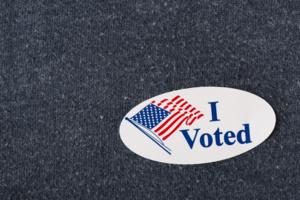
Commentary: My students are politically apathetic. Here's what colleges can do to get them involved and engaged
A recent national poll conducted by Harvard University revealed that young Americans are a pessimistic bunch. People between ages 18 and 29 view inflation and the rising cost of housing as national crises. More than a quarter of young adults believe they’ll end up worse off financially than their parents. And only 13% say the country is on the...Read more

Commentary: The pro-life policy that outlived Roe v. Wade
This year, a life-saving federal policy turns 50 years old. For half a century, the Hyde amendment has protected women, girls, and unborn children from taxpayer-funded abortions. In contrast, Roe v. Wade collapsed under the weight of its own bad reasoning just shy of its 50th “birth” day. How fitting.
In the wake of the devastation he knew ...Read more
POINT: Let's not make the AI cure worse than the disease
The drumbeat for regulating artificial intelligence is growing louder by the day, largely due to a coordinated campaign that magnifies the technology’s risks. It ignores the critical question: Can we regulate effectively without causing a disaster for our technology leadership and economy?
That is not to say, however, that some form of ...Read more

Mark Z. Barabak: Will or won't they? Newsom and Harris weigh 2028 contest -- and possible collision
The fraught relationship between Gavin Newsom and Kamala Harris is the stuff of reality TV.
With their Hollywood looks and unbridled ambition, the two San Francisco-spawned Democrats have spent decades in tacit competition, ascending to the heights of California politics while still managing to avoid direct confrontation.
That could change in ...Read more

Commentary: Let each culture decide which languages to save, and how
Although I founded and run an initiative that promotes endangered languages, I actually agree with the premise of a recent New Yorker article titled “ Sometimes It’s O.K. to Let a Language Die.” It is not practical for millions of people to learn their ancestors’ languages. This is true in California — which is home to dozens of ...Read more
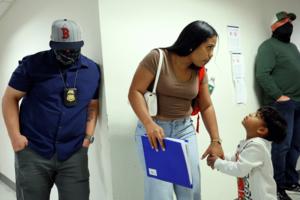
Commentary: When immigrants' rights are threatened, democracy is too
The Fulcrum is committed to nurturing the next generation of journalists. We asked Abbey Osborn, a Fall Fulcrum Fellow, to share what democracy means to her and her view of its current health.
____
When I think of democracy, I picture the Statue of Liberty, her torch lit, arm outstretched, for those who seek the protections offered in the ...Read more

Ronald Brownstein: Democrats should be rushing to convert more Trump skeptics
The most important measure to watch in the campaign’s final weeks is how Democratic candidates are performing among voters who disapprove of President Donald Trump.
Many are not yet hitting the benchmarks among those voters they need to put away their races — especially in red-leaning states. But the challenge Trump’s decline presents to ...Read more
Commentary: California's billionaire tax is imperfect but a necessary step
In November’s election, California voters will decide on a one-time 5% tax on the net worth of the state’s roughly 250 billionaires — Proposition 40. The tax could raise an estimated $100 billion, with 90% set aside for healthcare and the remainder for food assistance and education.
This is exactly the financial help that Los Angeles and ...Read more
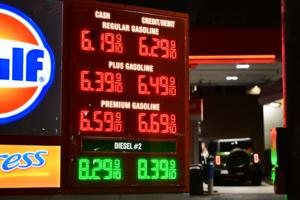
Editorial: 'We believe that people should be able to make a choice'
Radical greens and other cheerleaders for central planning are mewling about the Trump administration’s new fuel economy standards for automakers. Yet the reforms are a necessary response to Biden-era efforts to undermine the marketplace by limiting options for American consumers.
On Monday, the White House relaxed stringent fuel economy ...Read more
Related Channels

ACLU
By The ACLU

Amy Goodman
By Amy Goodman

Armstrong Williams
By Armstrong Williams

Austin Bay
By Austin Bay

Betsy McCaughey
By Betsy McCaughey

Bill Press
By Bill Press

Bonnie Jean Feldkamp
By Bonnie Jean Feldkamp

Cal Thomas
By Cal Thomas

Clarence Page
By Clarence Page

Danny Tyree
By Danny Tyree

David Harsanyi
By David Harsanyi

Dick Polman
By Dick Polman

Erick Erickson
By Erick Erickson

Froma Harrop
By Froma Harrop

Jacob Sullum
By Jacob Sullum

Jamie Stiehm
By Jamie Stiehm

Jeff Robbins
By Jeff Robbins

Jessica Johnson
By Jessica Johnson

Jim Hightower
By Jim Hightower

Joe Conason
By Joe Conason

John Stossel
By John Stossel

Josh Hammer
By Josh Hammer

Judge Andrew Napolitano
By Judge Andrew P. Napolitano

Laura Hollis
By Laura Hollis

Marc Munroe Dion
By Marc Munroe Dion

Michael Barone
By Michael Barone

Mona Charen
By Mona Charen

Rachel Marsden
By Rachel Marsden

Rich Lowry
By Rich Lowry

Robert B. Reich
By Robert B. Reich

Ruben Navarrett Jr
By Ruben Navarrett Jr.

Ruth Marcus
By Ruth Marcus

S.E. Cupp
By S.E. Cupp

Salena Zito
By Salena Zito

Star Parker
By Star Parker

Stephen Moore
By Stephen Moore

Susan Estrich
By Susan Estrich

Ted Rall
By Ted Rall

Terence P. Jeffrey
By Terence P. Jeffrey

Tim Graham
By Tim Graham

Tom Purcell
By Tom Purcell

Veronique de Rugy
By Veronique de Rugy

Victor Joecks
By Victor Joecks

Wayne Allyn Root
By Wayne Allyn Root
Comics