Trump creates beef with ranchers over new import plan
Published in Political News
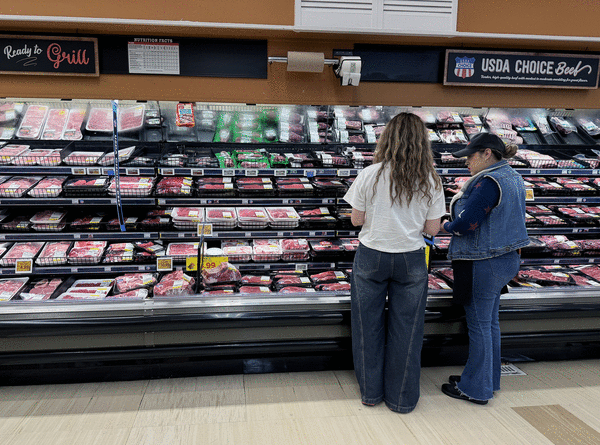
WASHINGTON — President Donald Trump’s new plan to temporarily allow more tariff-free foreign beef into the U.S. in an effort to bring down prices has only ramped up tensions with domestic cattle ranchers, who warn the policy could hurt both U.S. producers and consumers.
The backlash comes as Republicans face mounting pressure over the cost of living ahead of November’s midterm elections. Trump has been hemorrhaging support among rural voters since the beginning of his second term, which isn’t a good trend for a demographic Republicans need in their corner come November.
On Friday, Trump posted to social media his intention of removing tariffs from up to 300,000 metric tons of imported lean beef trimmings for ground beef production. Trump said he secured a commitment with foreign beef exporters “that this beef will be sold at 25 percent below current market prices.”
But ranchers and farm groups are pushing back against the announcement, arguing that coupled with the absence of mandatory country-of-origin labeling and safety screening for beef, it could make it harder for consumers to distinguish imported meat from domestically raised cattle — giving imported products a competitive advantage while also drawing in questions of quality.
National Cattlemen’s Beef Association CEO Colin Woodall said his group was “disappointed” by the announcement.
“While America’s cattle producers share the goal of keeping groceries affordable for consumers, flooding the market with government-subsidized, below-market beef is not the way to rebuild the American cattle herd,” he said. Woodall noted the announcement caused cattle market futures to fall on Friday morning and will harm the “prospect of herd expansion and sacrifices long-term stability for short term messaging.”
The NCBA has skewed heavily Republican over the years in its support for federal candidates, according to OpenSecrets.org. The group’s PAC and individual contributors have given at least 89% of their campaign contributions to the GOP in elections dating back to 2012, with 95% going to Republicans in the 2024 cycle.
Sen. Tim Sheehy said he advised Trump against the decision “because American ranchers have been struggling against the packer monopoly for decades, and this will further harm them — most of whom are MAGA Republicans.”
The Montana Republican, a strong ally of the president on Capitol Hill, said “the reality is this action will make it more difficult for American ranchers to rebuild our herd and bring prices down for the American people. And most importantly, this will harm our ranching families who feed the nation.”
Democrats have been eyeing several rural, agriculture-heavy states as potential pickup opportunities in this year’s midterm elections, as farmers and ranchers face mounting economic pressures from tariffs and the ongoing conflict in Iran, which has driven up the cost of key agricultural inputs, particularly fertilizer and diesel.
Several key races for Republicans in these states with active cattle industries are growing increasingly in play for Democrats for pickup opportunities. Inside Elections with Nathan L. Gonzales recently shifted Iowa’s Senate race from Lean Republican to Tilt Republican, North Carolina’s open Senate seat from Toss-up to Tilt Democratic and in Texas, the Senate race shifted from Likely Republican to Lean Republican.
If Democrats keep all their seats, they need to flip just four to take outright control of the Senate.
‘Scrap this deal’
Many farmers and ranchers have felt an economic squeeze in the past couple of years from environmental conditions like drought and wildfires, as well as historically small herd sizes, according to Agriculture Department data. Those problems have been exacerbated by other policy decisions coming from the White House, including on tariffs and wars abroad, critics say.
Dan Osborn, an independent running against Republican Sen. Pete Ricketts in Nebraska, said Trump “needs to scrap this deal.”
“Yes, we need lower beef prices, but we can’t do that by importing foreign beef at a discount, undermining our American ranchers and making them compete with lower foreign prices. Our ranching industry is already struggling, and this makes things way worse,” he said. “This isn’t America First.”
Ricketts joined his November opponent in critiquing Trump’s decision.
“Flooding the market with lower quality beef compromises Nebraska farmers and ranchers. They should be enabled to grow herd sizes and meet consumer demand,” he said.
His fellow Nebraska Republican in the Senate, Deb Fischer — herself a cattle rancher — said “we cannot [lower grocery prices] at the expense of American producers. Flooding the market with foreign beef hurts our livestock industry and undermines the long-term solution: growing the U.S. cattle herd to meet demand.”
Ranchers had also previously pushed back against the administration’s previous efforts to import foreign beef. In February, Trump signed an executive order to increase beef imports from Argentina by 80,000 metric tons despite the outcry.
Endangered Democrats quickly seized on Trump’s latest announcement.
Rep. Marcy Kaptur, whose seat in northwest Ohio grew a shade redder from redistricting, called it “slap in the face to ranchers, producers, and farmers in NW Ohio and across America.”
Inside Elections rates Kaptur’s seat Tilt Republican.
“First, the President paid Argentina $20 Billion to send beef here. Now he’s importing another 300,000 metric tons of foreign beef to undercut American cattlemen,” she wrote on the social platform X.
A White House official said Trump would sign an executive order to implement the new tariff-free beef quota arrangement within the next two weeks. The official also blamed high beef prices on supply shortages that began during the Biden administration.
At the same time, the official said the Trump administration is “simultaneously working with ranchers to expand domestic beef production to meet our needs right here at home in the long term.”
_____
(John T. Bennett contributed to this report.)
_____
©2026 CQ-Roll Call, Inc., All Rights Reserved. Visit cqrollcall.com. Distributed by Tribune Content Agency, LLC.



















































Comments