Young women are identifying as less straight; young men, not so much
Published in Political News
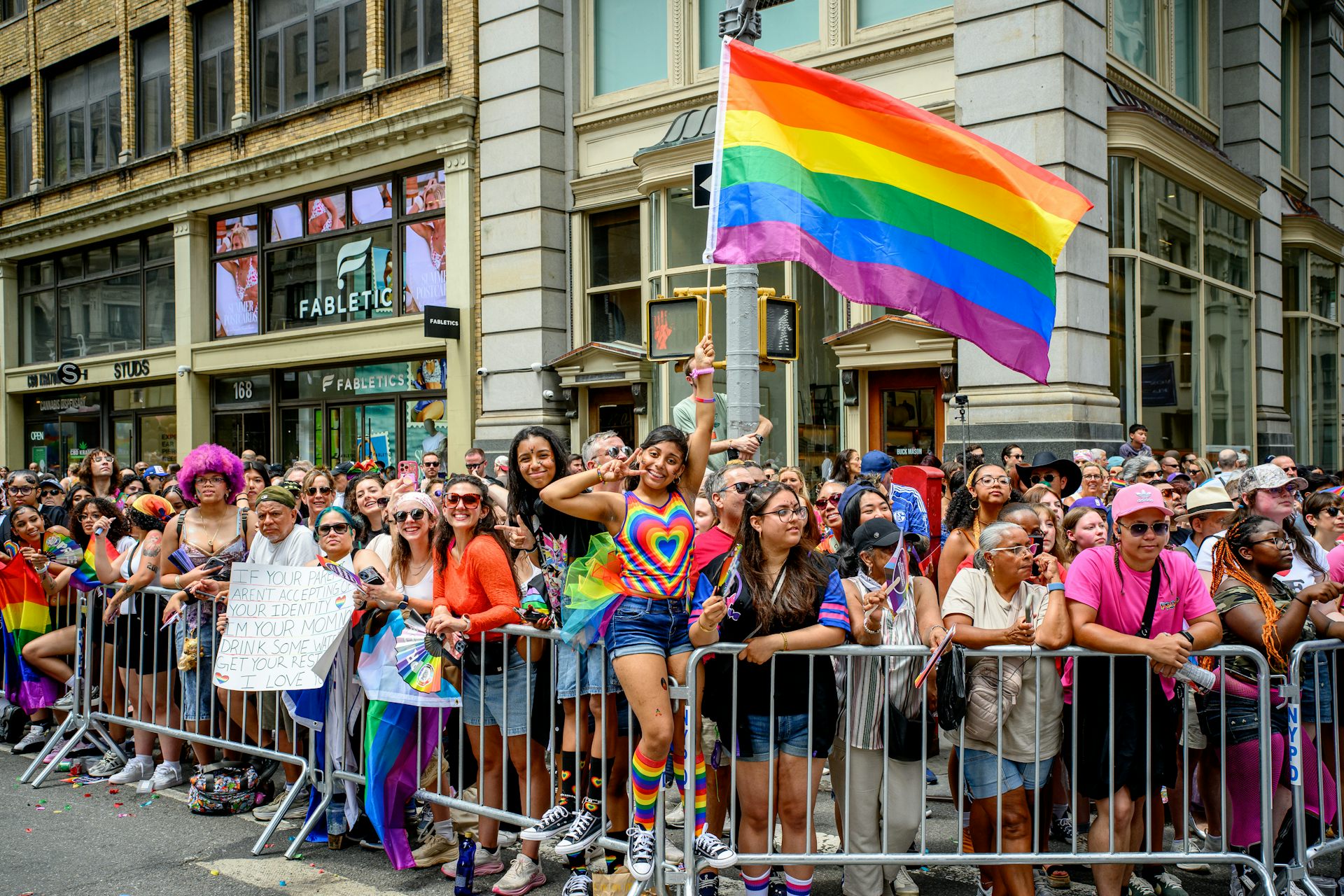
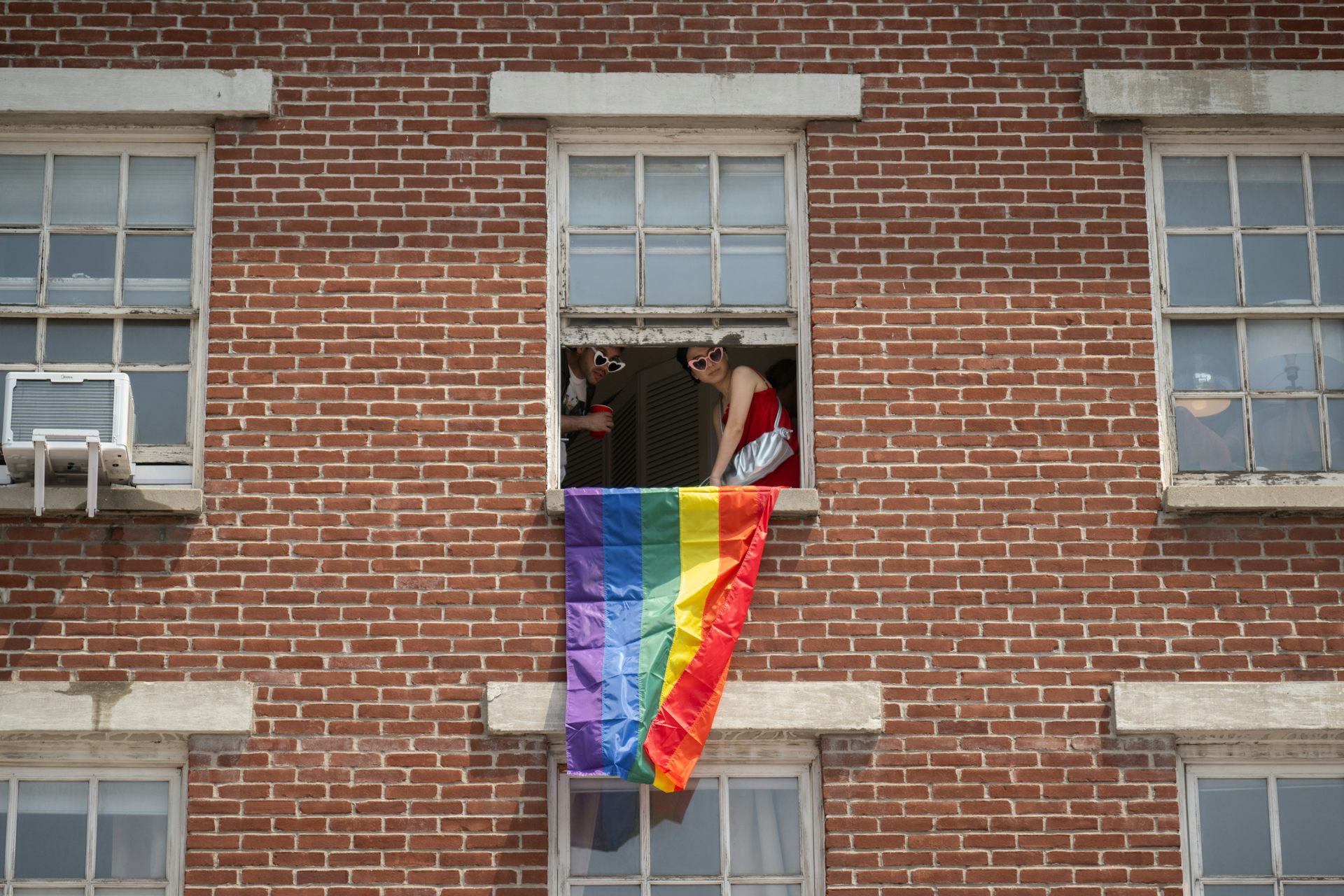


Young women are moving away from exclusive heterosexuality faster than young men.
In a recent poll, Gallup found that LGBTQ+ identification has more than doubled since 2012, with especially high rates among Gen Z women, or those born between 1997 and 2012. In 2023, 28.5% of Gen Z women identified as LGBTQ+, compared with 10.6% of Gen Z men.
As researchers who study sexuality, gender and young adulthood, we, along with our former colleague Sarah R. Young, have tracked these patterns in our Human Sexualities Research Lab since 2011. The national trend matches what our interdisciplinary team – spanning psychology, social work and gender studies – has documented over a decade.
Our most recent study asked whether young women and men are changing in similar ways across three measures of sexual orientation: sexual attraction, or who someone sees as a sexual partner; sexual behavior, or who their sexual contacts or partners actually are; and self-identification, or how they label their sexuality. Our findings suggest they are not. In our analysis, this gender gap is not only about who claims an LGBTQ+ identity; it is also about how the boundaries of heterosexuality are changing.
Identity is only one part of sexual orientation. People also differ in who they are attracted to and who they have sex with.
In a study now under review, our team examined 15 years of responses from more than 10,000 public university undergraduates in New York state between 2011 and 2026. We also analyzed more than 700 open-ended responses from 2024 and 2025 in which the same student population explained why they chose their particular sexual identities.
Our research found that, across 15 years, young women have steadily become less likely to report being exclusively attracted to the other sex. In 2011, about 22% of female students reported attraction that was not exclusively to men; by 2026, that had increased to close to 50%. Similar movement appeared across sexual behavior and identity: The share of women who reported not having exclusively male sexual partners increased from 8% to 35%, while the share identifying as something other than exclusively heterosexual increased from 18% to 44%. These trends were broadly consistent across racial groups.
In our survey, students rated sexual attraction on a scale from exclusively other-sex attraction (women attracted only to men; men attracted only to women) to exclusively same-sex attraction (women attracted only to women; men attracted only to men). For young women, the shift was not mainly from exclusive attraction to men to exclusive attraction to women. Instead, women’s responses spread across the scale, from mostly attracted to men to mostly attracted to women. The largest change was a decline in exclusive attraction to men.
Young men showed no comparable long-term shift and instead remained concentrated in exclusive heterosexuality; any movement away from that was limited and less sustained. The share of male students reporting attraction that was not exclusively to women remained nearly unchanged: about 14% in 2011 and 13% in 2026. This lack of movement was also seen in behavior and identity.
Among students who identified as something other than exclusively straight, male students were more likely to report exclusively gay identities than female students were to report exclusively lesbian identities. This is consistent with gender norms that leave men less room for sexual ambiguity and sort male desire into either entirely straight or entirely gay.
Researchers and journalists have suggested Covid-era lockdowns changed conditions for exploring sexuality and gender: Social life moved online, dating was interrupted, and some people had more time for reflection, online connection and experimentation away from peer scrutiny.
Our research does show a pandemic-era shift. Around 2020, more women reported being attracted to people other than just men, a change that leveled off somewhat after 2023. But COVID-19 lockdowns did not create the broader trend. Among women, movement away from exclusive heterosexuality was already visible before 2020 and has since continued along the same general path.
In contrast, there was no steady, long-term movement among men away from exclusive heterosexuality. The changes we observed were smaller and more concentrated around the pandemic and the years that immediately followed.
To understand why these changes matter, consider what feminist writer Adrienne Rich argued more than four decades ago: Heterosexuality has never simply described who someone desires. As a social expectation, it has helped define women and men as complementary but unequal. It gives men greater authority and social status, encourages women to organize their attention, care and futures around men, and makes that arrangement appear normal, natural and even romantic. As the norm, it also stigmatizes those who do not conform.
Over the past century, feminist movements expanded women’s access to education, paid work, political rights, contraception, divorce and other legal protections. Those changes made adult life outside of heterosexual marriage easier to imagine and, for some, easier to pursue. Although scholars argue this progress has been uneven and, in some areas, has stalled, women today encounter a wider range of possible futures – professional, partnered, child-free, queer, bisexual, activist, caregiver or combinations of these.
At the same time, LGBTQ+ visibility, same-sex marriage, online queer communities, expanding language for sexuality and gender, and the #MeToo movement have challenged the idea that heterosexual partnership should be the unquestioned center of women’s lives.
Similar efforts to reimagine masculinity have existed for decades, but they have had less cultural reach and have not loosened masculinity’s reliance on heterosexuality to the same extent. For many, masculinity is still tied to heterosexual dominance, sexual confidence with women and distance from anything seen as gay or feminine.
Heterosexuality also still offers men advantages in relationships, including authority, sexual entitlement and unequal freedom from domestic labor.
Feminist progress loosened assumptions that men and women naturally complete one another through heterosexual relationships. As gender becomes less tightly bound to heterosexuality, marriage and family, some people have found room for exploration. Others have responded by trying to restore more traditional views of masculinity, femininity and heterosexual roles.
That may explain why public arguments about what young adults should want – in dating, sex, marriage, family and identity – so often circle back to gender.
Whereas some young adults embrace queer, pansexual, nonbinary or fluid self-descriptions, others turn to ideals that restore traditional roles: “trad wife” femininity, which casts homemaking and deference as aspirational; “feminine energy” dating advice that prizes softness, receptivity and letting one’s partner lead; male dominance promoted across the manosphere; or claims that men and women are naturally suited to opposite roles. These attempts to restore traditional gender roles offer certainty as expectations linking gender, sexuality, relationships and adulthood weaken.
Our findings don’t just tell the story of young people becoming less heterosexual or young women becoming more queer. Instead, we believe they support the idea that heterosexuality may no longer organize gender in quite the same way for women and men. For young women, its boundaries appear more permeable. For young men, heterosexuality remains bound to masculinity, status and social recognition.
Our research examined young adults at a pivotal life stage, as they begin figuring out who they are and what they want. But those identities form within a changing social world, shaped by rising LGBTQ+ identification, political backlash over LGBTQ+ rights and shifting expectations for dating and family life.
The larger question is what happens as these young adults carry different relationships with gender and heterosexuality beyond college. Those relationships will shape, and be shaped by, dating, families, workplaces, politics and law. They will also face expectations about what women and men should want, with all the pressures, backlash, policing and resistance that come with them.
In our analysis, the gap between women and men may persist unless masculinity itself becomes less dependent on dominance, control and compulsory heterosexuality.
This article is republished from The Conversation, a nonprofit, independent news organization bringing you facts and trustworthy analysis to help you make sense of our complex world. It was written by: Sean G. Massey, Binghamton University, State University of New York; Ann M. Merriwether, Binghamton University, State University of New York, and Melissa Hardesty, Binghamton University, State University of New York
Read more:
Social scientists have long found women tend to be more religious than men – but Gen Z may show a shift
Young LGBT Americans are more politically engaged than the rest of Generation Z
Sourdough and submission in the name of God: How tradwife content fuses femininity with anti‑feminist ideas
The authors do not work for, consult, own shares in or receive funding from any company or organization that would benefit from this article, and have disclosed no relevant affiliations beyond their academic appointment.




















































Comments