How public celebrations quietly remake what it means to be American
Published in Political News
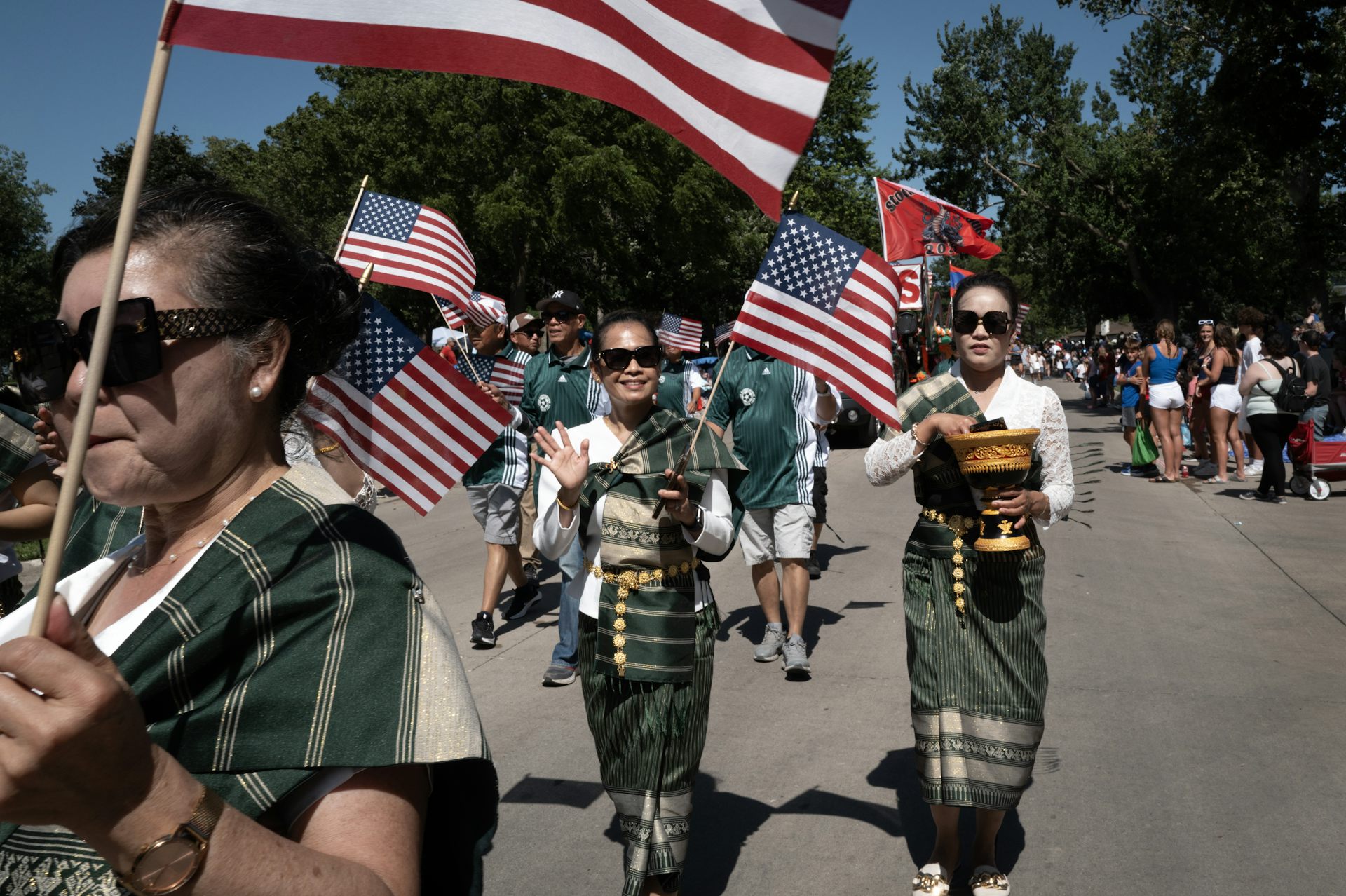
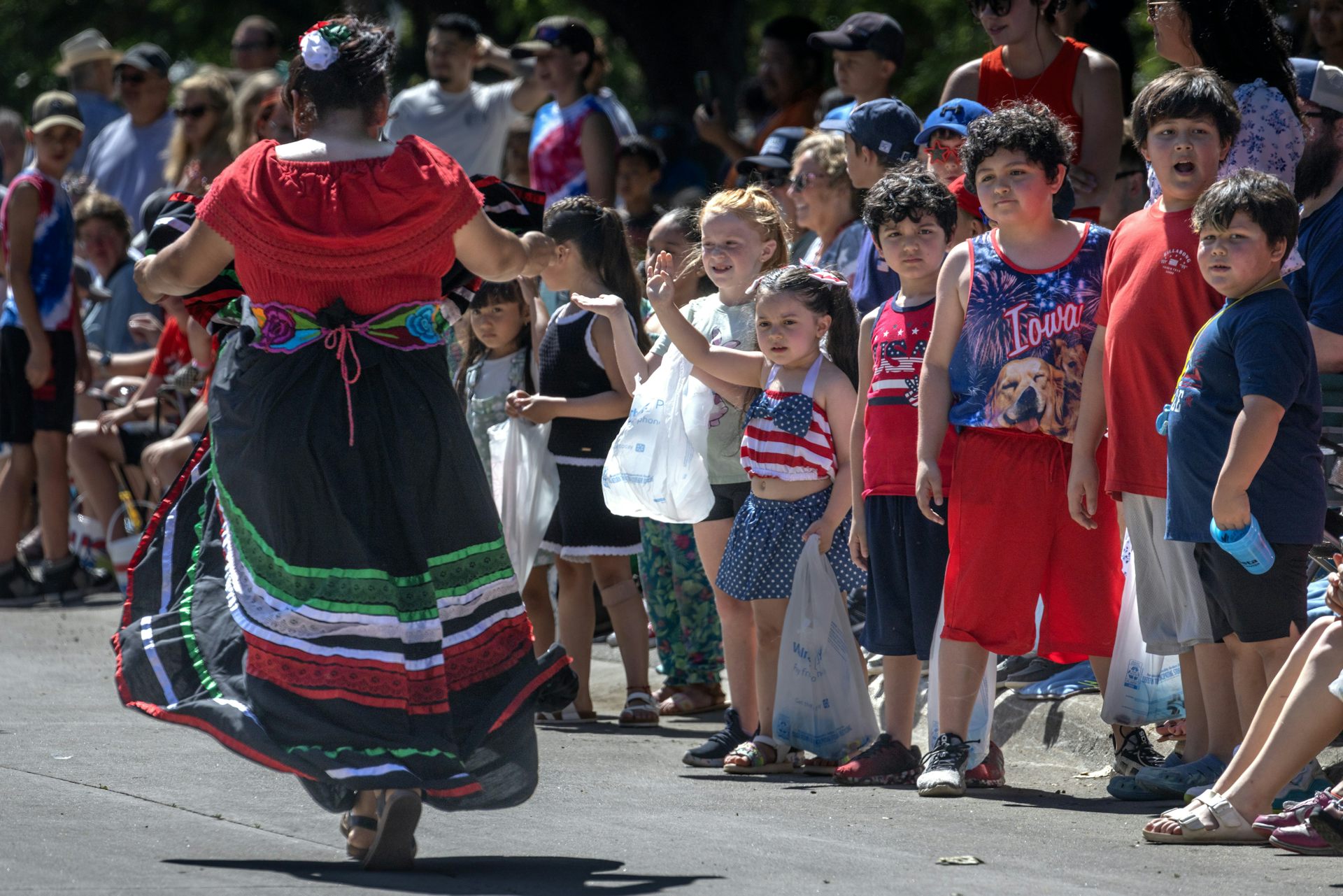
Twenty-five years ago, I attended a Fourth of July parade in Boston that has stuck with me.
The head drummer of the colonial fife and drum band was a Black man in a Revolutionary War costume, his dreadlocks peeking from under a powdered wig. As the parade stopped to lay a wreath at the Granary Burying Ground where founding fathers John Hancock and Samuel Adams are buried, a man placed a small stone on the memorial, a Jewish tradition of remembrance. A woman in a colorful sari marched alongside the parade as it continued toward the State House.
To me, then in the early stages of my career as an immigration scholar, the scene told a story of migration and incorporation: Africans forcibly brought here on slave ships in the 17th and 18th centuries, Eastern European Jews arriving in the 19th century, Asian immigrants in the 20th and 21st centuries.
I’m a sociologist who has studied immigration and civic engagement for more than 25 years, including citizenship acquisition, voter turnout and community engagement. In quantifying immigrants’ likelihood of becoming citizens and voting, I’ve come to see that healthy communities and strong societies require more than formal membership and turning out at the polls every few years; they require connecting with neighbors, feeling a sense of responsibility for one another and seeing each other as part of a shared democratic system.
Public celebrations – such as parades, festivals and even road races – can help with this. They play a critical role in society, incorporating the newest Americans into the community and creating a greater sense of belonging for everyone.
My recent book, “Beyond White Picket Fences: Evolution of an American Town,” documents how immigrant and ethnic groups have reshaped the historically white, Christian town of Wellesley, Massachusetts, over the past 100 years. Through nearly 100 in-depth interviews, participant observations and archival work – examining more than 20,000 articles, letters to the editor, advertisements and obituaries from the local newspaper throughout the 20th century – I came to see the role that public celebrations play in connecting people.
In an interview for my book, a lifelong Wellesley resident who identifies as Irish and Italian American recounted how her daughters – through Chinese families they danced alongside at a small local dance studio – ended up performing in the Chinese Language School’s Lunar New Year program.
Another community event, the Dreidel Dash, is a 5K begun by the local synagogue that lets Jewish residents take pride in their traditions while offering others a chance to learn. The race starts at the synagogue, where temple members can show newcomers around and explain why they eat food like latkes and jelly-filled donuts at Hanukkah. An Irish Catholic runner who won shabbat candles for finishing first in his division later told me he hadn’t known anything about shabbat beforehand. He learned something about Jewish culture because of his participation in a 5K.
These types of communal celebrations have been associated with feelings of empowerment, a sense of group belonging and collective action. French sociologist Émile Durkheim coined the term “collective effervescence” in the early 20th century to describe the connection, excitement and unity of shared experience, a joy only possible in community.
During my research, I found a social media response to an article reporting on Wellesley’s 2024 Lunar New Year’s Celebration that illustrated Durkheim’s sentiment: “Happy New Year to all!! What a great way to celebrate the Chinese heritage and share the ancient yet lively culture with our communities!!! Sharing helps understanding, sharing STOPS AAPI HATE!!!” AAPI stands for Asian American and Pacific Islander, an umbrella term for Americans with roots in parts of Asia and the Pacific Islands.
Public celebrations also help communities reshape how they think about themselves and how those outside their community think about them.
Over the past two years, I’ve developed a course on what it means to be a citizen in America today, taught with a colleague at the University of Pikeville in Kentucky. In April 2026, that collaboration led me to Kentucky’s Hillbilly Days, a three-day festival of music, food and culture.
“Hillbilly” has long been a slur against the people of Appalachia, but these Kentuckians have reclaimed it: They mock the stereotype by blackening their teeth and wearing straw hats and overalls, while celebrating their culture of bluegrass, clog dancing and the hard labor of coal mining. The festival lets them tell their region’s story of hardship, resilience and community on their own terms.
My visit also allowed me to learn about the history of the term “redneck,” a term with complex and contested meaning. Often used as an insult against Appalachians and Americans from the rural South, more generally the term has various origins: Some trace it to the sunburned necks of farmers; others tie it to the red bandanas worn by coal miners during the early-20th-century coal strikes — among the largest labor uprisings in U.S. history.
Images from those strikes show miners of varied racial and ethnic backgrounds – white and Black, American- and foreign-born – wearing red bandanas. At Hillbilly Days, people today wear red bandanas to reclaim that history and show pride in who they are and where they are from.
At the same time, new groups are being woven into the American tapestry: Asian, Mexican and Middle Eastern food trucks line the event, speaking to how the country’s evolving demographics are even showing up in rural Appalachia.
I now know that scene in Boston 25 years ago wasn’t an outlier. National holidays have long offered the opportunity to rethink what it means to be an American.
My archival research has found the pattern stretching back a century: an Italian band playing a concert at a 1917 Fourth of July parade, Chinese American residents donning dragon costumes in a 1971 Veterans Day parade, and Polish Americans showcasing traditional folk dancing in a 2026 Memorial Day Parade.
In my analysis, such participation helped immigrants find their place in society and helped longer-settled Americans see them as part of the American experiment. From St. Patrick’s Day to Cinco de Mayo, diversified public celebrations are cause and consequence of a national transformation that other scholars have documented as well.
According to a new survey, 85% of likely voters think the U.S. is a nation founded on shared ideals rather than on the character of its Anglo-Saxon settlers, as President Donald Trump has claimed.
Historian Yuval Harari argues the need for a form of nationalism, not the nationalism of exclusion and hate, but one of care for all the tribes of a nation.
“Without a strong national community,” he explains, “democracy cannot survive.”
Likewise, research shows that humans need social connection, joy and a sense of belonging to thrive. Communal celebrations have the power to provide, at least in part, these key ingredients.
This article is republished from The Conversation, a nonprofit, independent news organization bringing you facts and trustworthy analysis to help you make sense of our complex world. It was written by: Catherine Simpson Bueker, Emmanuel College
Read more:
‘We the People’ includes all Americans – but July 4 is a reminder that democracy remains a work in progress
Detroit’s population grew in 2023, 2024 − a strategy to welcome immigrants helps explain the turnaround from decades of population decline
Revisiting Middletown, Ohio – the Midwestern town at the heart of JD Vance’s ‘Hillbilly Elegy’
Catherine Simpson Bueker receives funding from The Russell Sage Foundation and the Marion and Jasper Whiting Foundation.


















































Comments