Trump's messaging on Iran deal aims to rebut claims the US lost
Published in Political News
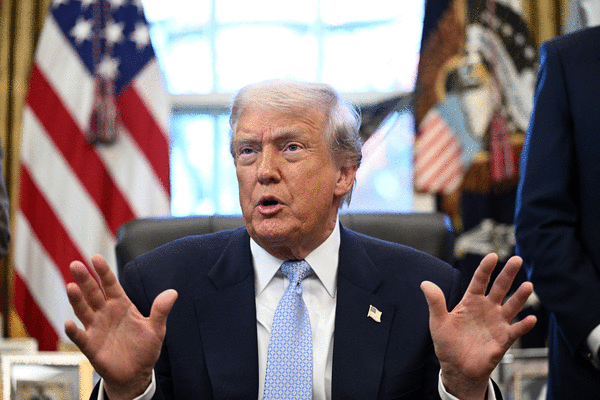
WASHINGTON — The U.S. and Iran may have halted their conflict for now, but the messaging war has only just begun.
Both countries have cast the memorandum of understanding — signed by the two countries’ leaders on June 17 — as a victory for their side. Analysts suggest that Iran came out on top by securing new sanctions relief and funds for reconstruction.
The U.S, on the other hand, only secured the reopening of a water.way — the Strait of Hormuz — that was operating normally before the war, and got concessions on Iran’s nuclear program that Tehran has made before.
The White House issued a list of talking points to allies designed to frame the deal as a political win.
The U.S. and Israel – close military allies – launched their war against Iran on Feb. 28. More recently, the White House has pressured Prime Minister Benjamin Netanyahu to rein in a parallel war against Hezbollah militants in Lebanon that risks derailing U.S. efforts to end the conflict with Iran.
While the U.S. rationale for the war has shifted slightly over time, Trump and other U.S. officials have repeatedly cited the risk of Iran getting a nuclear weapon as justification for the conflict.
Iran and the U.S. have been geopolitical foes since the 1979 Islamic Revolution. But Trump’s decision in 2018 to pull out of the 2015 Iran nuclear deal torpedoed diplomatic attempts to steer Iran’s nuclear program toward peaceful ends and ushered in an era of uncertainty.
Trump has repeatedly criticized the Obama-era deal and yet many analysts believe it’s unlikely that negotiations this time around will achieve anything more comprehensive or meaningful than what was outlined in the so-called Joint Comprehensive Plan of Action, or JCPOA.
©2026 Bloomberg L.P. Visit bloomberg.com. Distributed by Tribune Content Agency, LLC.




















































Comments