The ‘warrior ethos’ promises victory — history says it leads to defeat
Published in Political News
At Marine Corps Base Quantico in September 2025, Defense Secretary Pete Hegseth promised assembled generals “maximum lethality” and no “stupid rules of engagement.” Under his leadership, the newly rebranded Department of War would “untie the hands of our warfighters to intimidate, demoralize, hunt, and kill.” Troops would be held to the “highest male standard,” he said. “Weak men won’t qualify.”
Hegseth also restricted anonymous whistleblower and discrimination complaints and limited how long past misconduct can be held against a service member, weakening internal rules and oversight processes the military had built over decades.
Months later, with the Iran war underway, he told reporters at a Pentagon briefing that the U.S. was “punching (Iran) while they’re down, which is exactly how it should be.” He has also said the U.S. will give “no quarter, no mercy” to its enemies, language legal experts say can constitute a war crime under international law.
Hegseth calls his military doctrine the “warrior ethos.”
Historians of fascism have catalogued similar rhetorical patterns — strongman posturing, contempt for constraint — for decades.
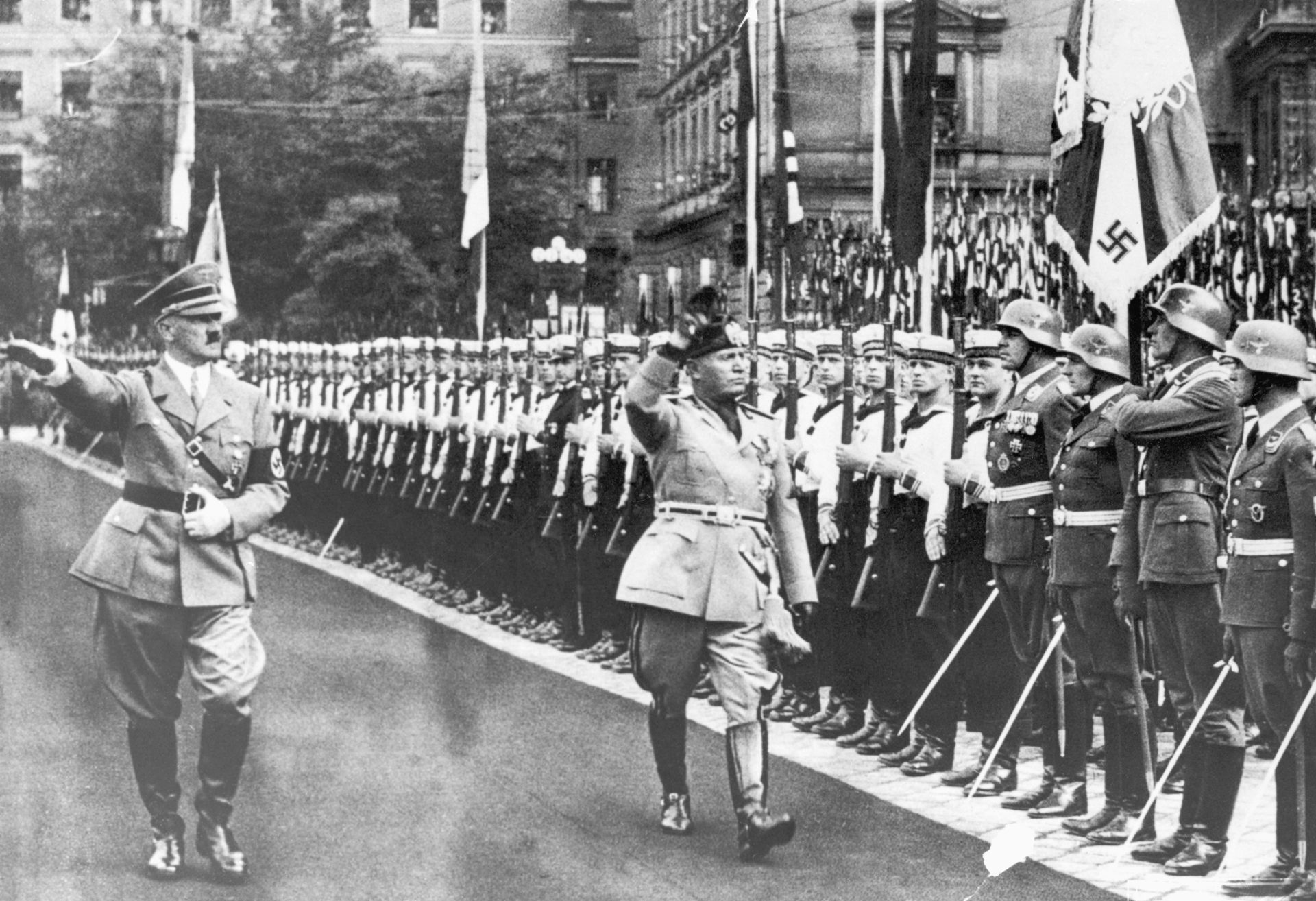
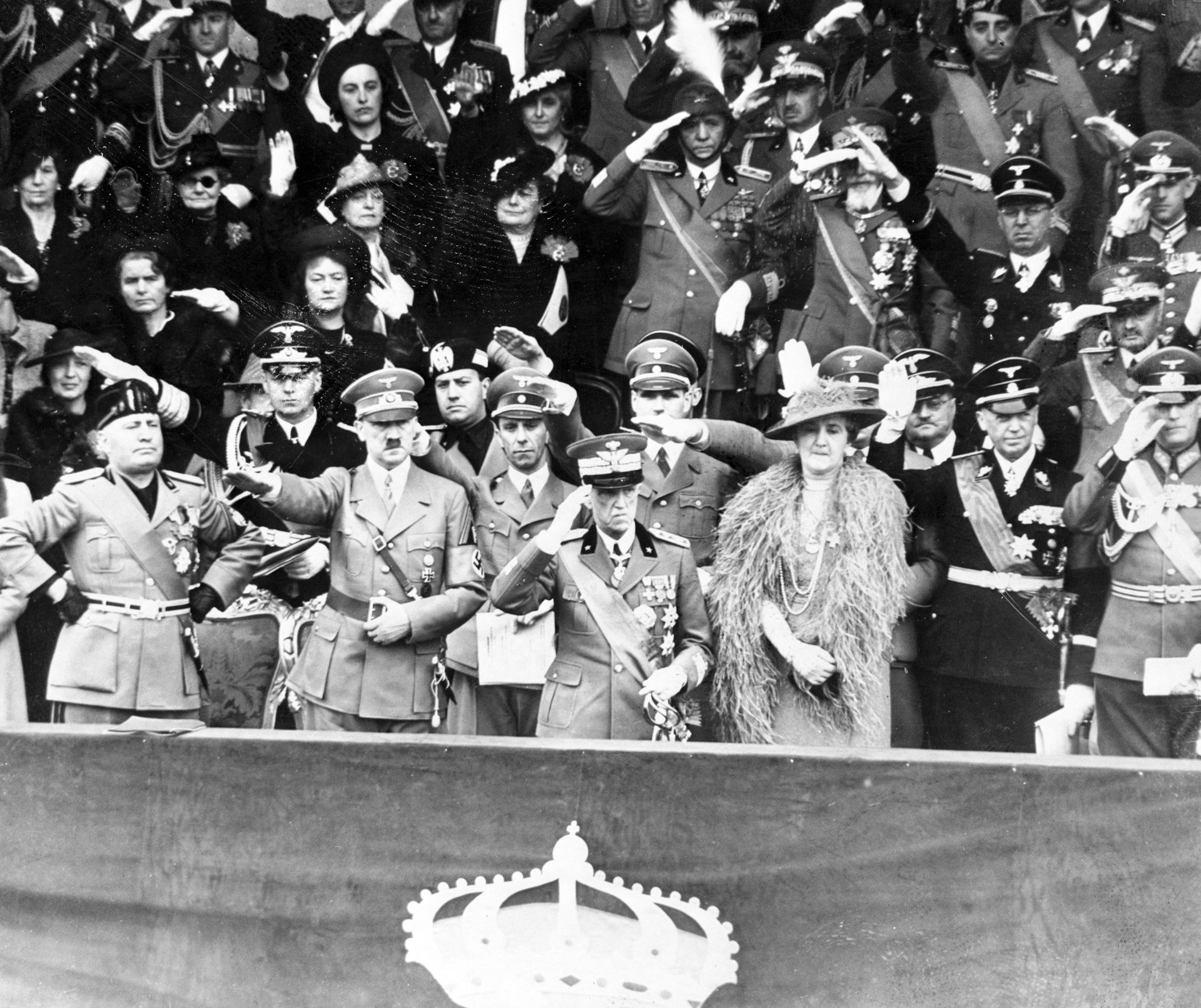
I’m a historian of race and nationalism and author of “Blood, Oil and the Axis,” a book about World War II and nationalism in Iraq and Syria. I’ve studied how fascist regimes fight. At its core, fascism is ultranationalism fused with a cult of masculine strength, racial hierarchy, paranoia about socialism and contempt for democracy. It also has a theory of war: Victory belongs to the ruthless and the ideologically pure. Rules are for the weak.
Nazi Germany, fascist Italy and Imperial Japan all built their military strategies on some version of this ideology in the run-up to the Second World War. And in each case, the strategy failed, undone by its own contradictions.
Democracies don’t necessarily fight clean wars. During World War II, the Allies firebombed cities, created internment camps and dropped atomic bombs.
What distinguishes fascist powers from democracies is their contempt for rules based on their sense of superiority. In 1933, Adolf Hitler’s propaganda minister Joseph Goebbels announced that the Nazis would claim the absolute right to override democratic constraints. “This contemptible parliamentarianism … is gone,” he said.
Italian dictator Benito Mussolini said it more bluntly in 1936: “We do not argue with those who disagree with us, we destroy them.”
But rules of engagement function as a control system that ties tactical decisions to strategy, law and the risk of escalation. Discarding them tends to produce the atrocities and strategic blowback that lose wars.
Democratic procedure does similar work: Political scientists who studied 197 conflicts from 1816 to 1987 found that democracies won about 76% of their conflicts and non-democracies 46%, in large part because accountable leaders and public access to information force a government to notice when a plan isn’t working.
A fascist regime that treats democratic constraints as obstacles is likely to decide inconvenient information is an obstacle too. Because of this, in fascist governments, loyalists rank higher than experts. Fascist systems don’t remove people for being wrong; they remove them for insufficient loyalty. The man who tells the leader what he wants to hear rises. The man whose report contradicts the leader’s views endangers himself.
Consider Joachim von Ribbentrop.
Before becoming Hitler’s foreign minister, he was a wine salesman whose years in Canada became his qualification for understanding America. He attached himself to Hitler and was rewarded with a top seat in his government, where Ribbentrop’s signature contribution was overruling the diplomats who warned that Americans would fight if pushed too far by the Axis.
The Nazi view prevailed: Americans were too racially mixed, too soft, too consumed by money to be dangerous. When Germany declared war on the U.S. four days after Pearl Harbor, it did so partly on that disdain for what Hitler called a “mongrel nation.” Ribbentrop was among the most consequentially wrong foreign ministers in modern history – he’d also misjudged Britain’s willingness to join the war over the invasion of Poland – still, he kept his job.
The ideology that produced Ribbentrop’s overconfidence also produced the Nazi theory of the Eastern Front: that Slavic peoples – fundamentally inferior and tainted by Bolshevism – would collapse within weeks. But the Red Army didn’t collapse. Hitler fired the officers who reported as much and demanded more of the same operations that had already failed. Operation Barbarossa, which was supposed to take weeks, stretched to years.
Attempting to match Hitler’s conquests and assert dominance over the Mediterranean, Mussolini invaded Greece in October 1940 with shorthanded divisions, in mountain terrain and at the start of winter, because he believed Italian spirit would overwhelm Greek resistance in two weeks. His generals had doubts, but many did not express them. The Greeks counterattacked, but Mussolini blamed his generals’ “insufficient will,” the only kind of failure his theory allowed. Germany had to intervene.
Connected to the fascist superiority complex is a contempt for feedback, creating a closed information system that can’t register failure, tolerate disagreement or revise a plan. Strategy requires accurate reporting, even when the news is bad, and the willingness to be wrong. Fascist regimes punish the first and refuse the second.
German high command was still reporting a controlled advance in November 1942 when its 6th Army, some 330,000 soldiers, was being encircled at Stalingrad. Hitler had declared the city practically taken; the press never reported the Soviet counteroffensive that surrounded it. When the remnants finally surrendered on Feb. 2, 1943, it was a turning point in the war – Germany’s first catastrophic defeat on the Eastern Front, from which the Wehrmacht never recovered.
Mussolini bragged about his mighty army of 8 million soldiers while 3.5 million – the real number – were being routed on three fronts in as many years.
Imperial Japan fused racial supremacy with a military code that forbade surrender and treated anyone who did as subhuman. Loyalty to the emperor was absolute; questioning his depiction of reality was betrayal.
In that environment, officers had every incentive to lie up the chain of command when reality on the ground did not match what leaders wanted to hear. For example, after the Battle of Midway, a catastrophic defeat for Japan in June 1942, naval headquarters filed reports that bore little resemblance to what happened. Later that year, the Imperial Navy told Tokyo they had sunk twelve American ships near today’s Taiwan when they had merely damaged two.
Two years of retreat later, the kamikaze program – which sent some 3,900 pilots to their deaths in suicidal crashes against Allied ships – was the logical conclusion: Let pilots prove their loyalty by dying.
This article is republished from The Conversation, a nonprofit, independent news organization bringing you facts and trustworthy analysis to help you make sense of our complex world. It was written by: John Broich, Case Western Reserve University
Read more:
What is fascism?
Normalizing fascists
‘Warrior ethos’ mistakes military might for true security − and ignores the wisdom of Eisenhower
John Broich does not work for, consult, own shares in or receive funding from any company or organization that would benefit from this article, and has disclosed no relevant affiliations beyond their academic appointment.


















































Comments