Senate GOP seeks $1 billion for Secret Service, Trump ballroom
Published in Political News
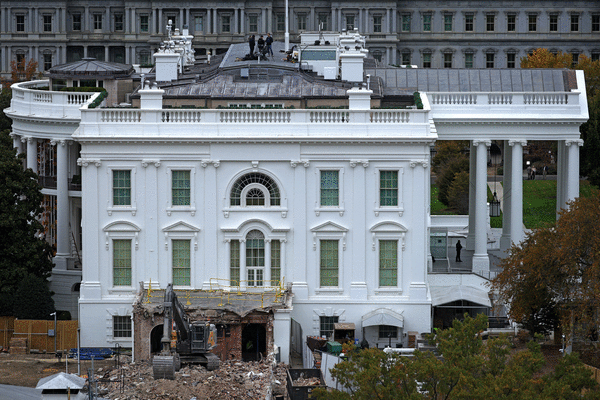
A top Senate Republican has proposed spending as much as $1 billion for U.S. Secret Service security adjustments and upgrades, including for President Donald Trump’s planned White House ballroom.
The funding would come in legislation authored by Judiciary Committee Chairman Chuck Grassley, who on Monday released language for his panel’s portion of a forthcoming spending bill for law enforcement and border security. The measure, known as a reconciliation bill, would allow Republicans to pass the funding over Democratic objections, because it can’t be blocked with a filibuster.
The legislation comes less than two weeks after a gunman raced through a security checkpoint at the White House Correspondents’ Dinner at a hotel in Washington, D.C., forcing Secret Service to evacuate Trump and Vice President JD Vance from a nearby ballroom.
Trump and top congressional allies have repeatedly cited the incident as justification for the ballroom project, though current plans for the space don’t call for sufficient capacity to handle the correspondents’ dinner — which typically has more than 2,000 attendees — or other major Washington events that presidents are typically invited to attend.
In any case, the dinner is planned by the White House Correspondents’ Association, a private organization, while the ballroom, if built, would be the setting for state galas.
Senate Democratic leader Chuck Schumer blasted the bid for taxpayer funding as a sign Republicans “are on a different planet than American families.”
“Republicans looked at families drowning in bills and decided what they really needed was more raids and a Trump ballroom,” Schumer said in a social media post.
Grassley’s legislation would specifically allow for the $1 billion to be spent on “enhancements by the United States Secret Service relating to the East Wing Modernization Project” — as the ballroom plan is formally known — “including above-ground and below-ground security features.”
It specifies that no funding can be used on “non-security elements” of the ballroom project, and is written broadly enough to allow spending on other Secret Service priorities as well.
Trump has repeatedly said that donors — himself included — would cover the cost of his White House ballroom. However, the White House has also said that the Secret Service would be on the hook for any security upgrades.
“This bill does not fund ballroom construction. It provides funds for Secret Service enhancements that will ensure all presidents, their families and their staffs are adequately protected,” Clare Slattery, a Judiciary Committee spokesperson, said.
Trump “and other patriot donors, have generously committed to donating the funds necessary to build this approximately $200 million dollar structure,” the White House said in a July 2025 statement. The projected cost of the ballroom construction project has since expanded to $400 million.
The White House said at the time that, beyond the cost of the ballroom itself, the Secret Service would “provide the necessary security enhancements and modifications.”
_____
©2026 Bloomberg L.P. Visit bloomberg.com. Distributed by Tribune Content Agency, LLC.





















































Comments