Colorado has emergency domestic violence shelters in only half its counties, leaving survivors without safe housing options
Published in Political News

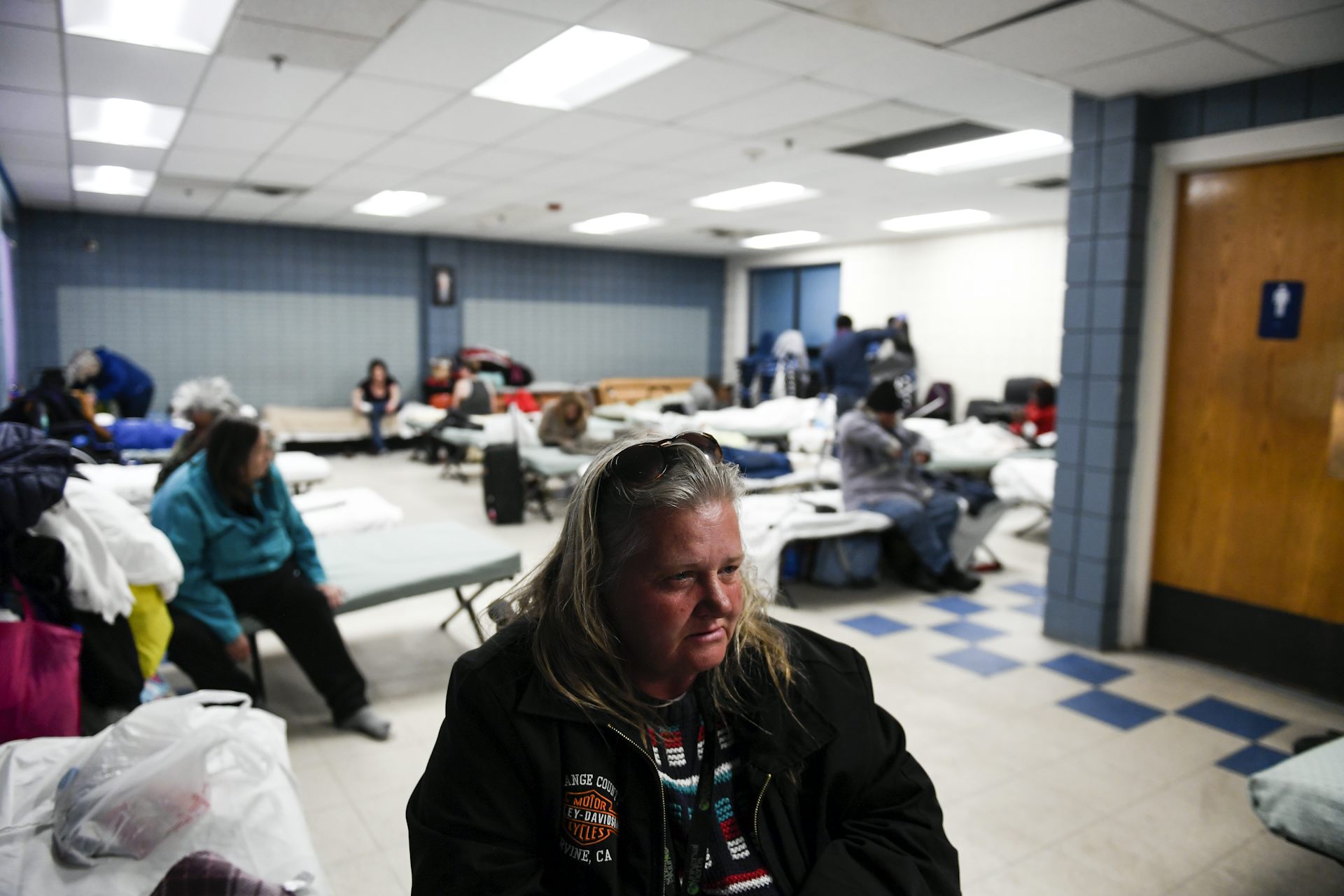


Only 33 of Colorado’s 64 counties have an emergency shelter program specifically for survivors of domestic violence. In the greater Denver area, which includes Adams, Arapahoe, Broomfield, Denver, Douglas and Jefferson counties, there are only five shelter programs for survivors.
I study the policies and programs that serve survivors of domestic violence. In 2020, I created the most up-to-date registry of domestic violence shelter programs in the U.S. These programs are hugely impactful for their clients, but not every survivor in need is able to find an open shelter bed. In fact, most U.S. counties lack a specific shelter for victims of domestic violence.
One in three women in the United States experience intimate partner violence in their lifetime. Every day, thousands of survivors are not able to get the housing assistance they need at existing programs due to funding and resource limitations, according to the annual Domestic Violence Counts Report.
Domestic violence survivors regularly cite safe and secure housing as one of their most pressing needs. Women who experience intimate partner violence are four times as likely to be housing unstable as women who have not been abused by a partner.
Yet, housing-insecure survivors face a startling lack of options for safe places to turn. One of the most well-known and longest-standing service options are what are known as emergency domestic violence shelters. These front-line service providers can house survivors safely for between 30 and 60 days. In addition to emergency housing, shelter programs often offer complementary services such as counseling and legal aid. But these shelters are limited, and so is affordable housing.
The biggest arm of the federal social safety net for long-term housing is the Housing Choice Voucher, often called Section 8. These vouchers help low-income, disabled and elderly beneficiaries to rent housing up to a predefined fair market amount.
With a voucher, households pay about 30% of their income in rent, and the voucher covers the remainder. For domestic violence survivors who need long-term housing, subsidized housing vouchers can provide support beyond a short-term shelter stay. Long-term housing helps set up survivors for successful and affordable independent living.
In many U.S. communities, however, demand for vouchers is far greater than supply. Roughly half of people who ultimately receive a voucher wait at least two years to get one. In Colorado, the average wait time was 14 months as of 2024. Most public housing authorities in Colorado open their waitlists for only a few days each year, leaving potential applicants waiting months just to get in line.
Even when service providers such as shelter advocates or housing navigators have access to money, it can be difficult to spend on behalf of their clients. High housing costs and landlord bias against survivors can make it challenging to place survivors in long-term housing that survivors can afford in the long run, even when they do have a Housing Choice Voucher.
In Denver, the fair market rent defined by the Department of Housing and Urban Development for a two-bedroom apartment is US$2,089. In order to afford that apartment independently without being rent burdened – defined by the U.S. Census Bureau as spending no more than 30% of total household income on rent – a survivor would need to earn $6,963 per month, or more than $83,000 per year. For a single-income household, this would mean earning more than $40 per hour while working full time.
For housing-insecure victims of domestic violence, many of whom are fleeing with children, this is an untenable housing cost. In a survey of 3,400 residents at 215 emergency domestic violence shelters conducted by researchers at the University of Connecticut and the National Resource Center on Domestic Violence, 78% had a child under age 18 and 68% had a child with them in the shelter. The same survey found that the majority of sheltered residents had, at most, a high school education.
When there isn’t an emergency shelter in their area, or if the local shelter is full, many domestic violence shelter programs are still able to offer survivors nonresidential services such as legal assistance and safety planning. Nonshelter programs like the Rose Andom Center in Denver also support survivors who need help connecting to resources, but their ability to support victims at risk of homelessness beyond a few days is limited.
Other types of housing supports introduce new problems for survivors. Emergency homelessness shelters often have restrictions to entry. The restrictions include not allowing clients to bring all of their belongings or requiring sobriety. Many of these organizations, including the Denver Rescue Mission, are open only to men or women without children and operate only overnight, leaving folks with nowhere to go during the day.
Domestic violence service providers may be able to pay for a survivor to stay in a hotel for a few days, but hotels can be unsafe, unclean and retraumatizing. For example, hotels lack the kinds of security systems and cameras that are common at emergency domestic violence shelters to prevent abusers from contacting survivors staying there.
Survivors of domestic violence also face the same general housing challenges as those not fleeing violence: an affordability crisis in rentals, necessary time to find a place, and security deposits and moving costs. Yet the nature of domestic violence means these challenges are more intractable.
For example, survivors who share custody of children with their abusers must get permission from the child’s other parent, and often the court, in order to move. Domestic violence makes it more likely that survivors will have a history of evictions, making finding housing even more challenging.
With limited shelter availability and long waits for long-term housing assistance such as Section 8, housing-insecure survivors of domestic violence can find themselves with few safe, stable options. This can mean that survivors looking to separate from their abusers are not able to leave – subjecting them, and their children, to further violence.
This article is republished from The Conversation, a nonprofit, independent news organization bringing you facts and trustworthy analysis to help you make sense of our complex world. It was written by: Kaitlyn M. Sims, University of Denver
Read more:
Why protecting Colorado children from dying of domestic violence is such a hard problem
Domestic violence survivors seek homeless services from a system that often leaves them homeless
Domestic violence calls for help increased during the pandemic – but the answers haven’t gotten any easier
Kaitlyn M. Sims receives funding from the Wisconsin Department of Children and Families, the Arnold Ventures Foundation, and the Institute for Humane Studies.






















































Comments