Editorial: Voters will punish Trump for attacks on institutional guardrails
Published in Political News
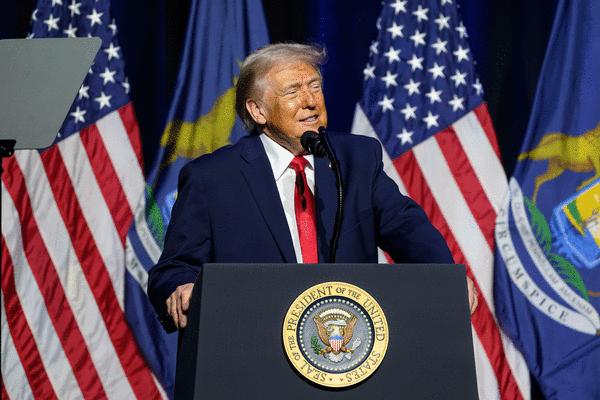
What should concern Republicans heading into the midterms is not just policy disagreement; it’s pattern and posture.
President Donald Trump is once again attacking institutional guardrails, starting with the Federal Reserve. Publicly undermining Fed Chair Jerome Powell isn’t tough leadership; it’s a signal to markets and allies that political impulse outweighs economic stability. History shows that when presidents politicize the Fed, voters, especially independents, pay the price first.
At the same time, Trump is turning his fire inward. He has lashed out at Republican senators who overwhelmingly supported his agenda, only to watch some of them break ranks and side with the Democratic Party on health care. Those rifts with former allies are less a reflection of the president’s strength than an erosion of coalition discipline. Midterms are won on turnout and unity, and this behavior fractures both.
Then there’s the demographic reality. Hispanic voters were once a growing and reliable part of Trump’s coalition. Today, disapproval is high, driven largely by the tone and execution of deportation rhetoric. You can debate border security all day, but when enforcement becomes identity politics, you lose voters for a generation, not just an election cycle.
Add to that the rhetorical freelancing on foreign policy. Casual talk about invading Greenland and escalating threats toward Iran may excite a loyal base, but it alarms allies, moderates and national security professionals. Words from the president carry weight, whether intended or not.
And even if many voters may be happy with the effect of Trump’s swaggering foreign policy, such as the removal of Venezuelan dictator Nicolás Maduro, they may still be concerned about Congress’ lack of involvement and the risk that Trump might unilaterally pull the United States into a conflict they’d rather not get involved in.
Voters want to see institutions tested when they’re unhappy with the status quo. That’s how Trump came to power in 2016 and again in 2024. But when the guardrails protecting the Constitution and stability are under pressure, voters start to get nervous. That’s why Republicans lost 41 seats in the House during Trump’s first presidency.
Why should this concern everyone, not just Republicans?
Because democracies depend on norms as much as laws. When institutions are mocked, allies unsettled and domestic coalitions weakened, the cost isn’t partisan, it’s systemic. Markets wobble. Trust erodes. Governing becomes theater instead of stewardship.
Midterms are often a referendum on stability. And right now, the question voters may ask isn’t, “Do I like his policies?” It’s, “Do I trust the temperature of the room?”
That should worry the GOP. And it should worry anyone who believes power requires restraint as much as conviction.
_____
©2026 The Baltimore Sun. Visit at baltimoresun.com. Distributed by Tribune Content Agency, LLC.

















































Comments