Politics
/ArcaMax

Democrats sue to challenge Trump's mail-in ballot limits
WASHINGTON — Congressional Democratic leaders sued to block President Donald Trump from prohibiting mail-in voting for anyone not on a preapproved list of citizens to be compiled by the Department of Homeland Security.
Top Democrats in the House and Senate, along with their campaign committees and the Democratic National Committee, allege ...Read more

US set to roll out tiered tariffs on steel, aluminum imports
The Trump administration is preparing to outline a tiered system for its broad tariffs on steel and aluminum products in an attempt to simplify a process that has dogged American companies for months.
The US will maintain 50% tariffs on a large number of derivative products in which the duty will be calculated by the value of the actual ...Read more
In major speech, Trump says Iran war will be over 'shortly' but offers little clarity
WASHINGTON — In his first formal address to the nation since launching a war on Iran more than a month ago, President Trump on Wednesday night repeated a familiar list of claimed successes — and brushed aside setbacks caused by the war — while providing little clarity on a clear path to end a conflict that he said will be over “shortly....Read more
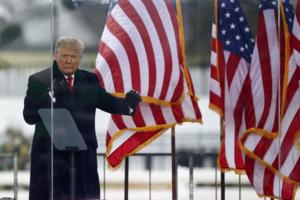
Judge denies Trump effort to end Jan. 6 lawsuits before trial
WASHINGTON — President Donald Trump must still face civil lawsuits seeking to hold him accountable for his role in the lead up to the Jan. 6, 2021, attack on the Capitol, a federal judge ruled Tuesday in a long-running litigation from Democratic House members and Capitol Police officers.
Judge Amit Mehta of the U.S. District Court for the ...Read more
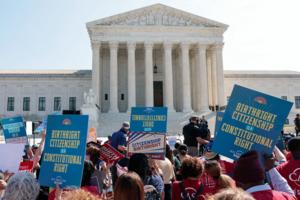
Hundreds rally outside Supreme Court to defend birthright citizenship against Trump's executive order
WASHINGTON — Inside the Supreme Court, as justices heard oral arguments in the case over birthright citizenship, President Donald Trump became the first sitting president to attend such a proceeding.
Outside the court, the great-grandson of Wong Kim Ark — the San Francisco man whose landmark Supreme Court case affirmed birthright ...Read more
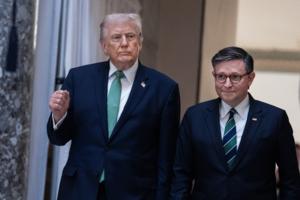
Trump unites divided GOP leadership behind Homeland Security deal
WASHINGTON — President Donald Trump and GOP leaders united behind a plan Wednesday to end the record-breaking partial shutdown of the Department of Homeland Security, committing themselves to a two-track strategy that includes passing a reconciliation bill for immigration enforcement funding by June 1.
With the shutdown stretching into its ...Read more
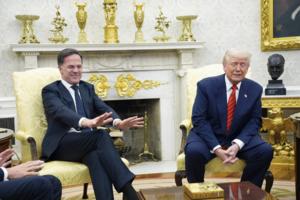
Trump suggests he wants US to pull out of NATO in new interview
President Donald Trump says he hopes to pull the United States out of NATO as the rift in the trans-Atlantic alliance gets wider over his war with Iran.
Long a skeptic of the Western alliance, Trump said in an interview published Wednesday that he is well along the way to trying to pull the U.S. out of the North American Treaty Organization ...Read more
Top GOP lobbyist testifies about dealings with former Rep. David Rivera at his foreign-agent trial
MIAMI — When Brian Ballard, a prominent Florida lobbyist who raised millions for Donald Trump’s first presidential campaign, signed a contract with a wealthy Venezuelan to help expand his TV station into the United States, he disclosed the $50,000 monthly retainer on a lobbying form with the U.S. government in 2017.
But when former Florida ...Read more
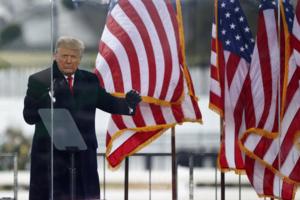
Trump can't shake claims over Jan. 6 Capitol attack years later
WASHINGTON — More than five years after violent riots at the U.S. Capitol, President Donald Trump still can’t avoid lawsuits seeking to hold him legally responsible for the chaos that temporarily disrupted Congress’ certification of the 2020 election.
A federal judge in Washington handed a multipart loss to Trump on Tuesday night, keeping...Read more
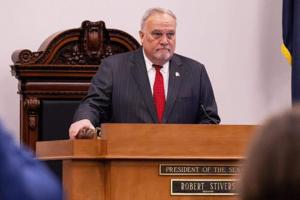
Kentucky senators plan to move forward with Goodman impeachment, despite judge's order
LEXINGTON, Ky. — Despite a circuit judge’s ruling that voided the resolution impeaching Fayette Circuit Judge Julie Muth Goodman, her April trial in the state Senate will continue as planned, lawmakers say.
Tuesday morning, Franklin Circuit Judge Phillip Shepherd voided Goodman’s March 20 impeachment in the House, saying she committed no ...Read more
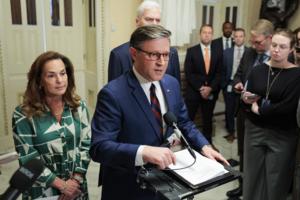
House Republicans cave and back Senate plan to end DHS shutdown
House Republicans caved to pressure Wednesday and agreed with the Senate to pass a partial funding bill to end the Department of Homeland Security government shutdown that spawned chaos at airports.
Reversing his previous stance, House Speaker Mike Johnson agreed to push for passage of the bipartisan Senate bill that funds DHS agencies ...Read more
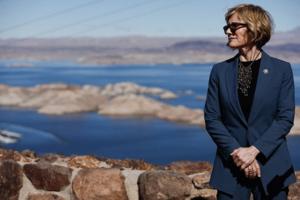
Nevada Rep. Susie Lee drops F-bombs in response to Trump's appearance at Supreme Court
A profanity-laced tweet from U.S. Rep. Susie Lee’s personal X account about President Donald Trump has raised some eyebrows on social media.
The post from Lee, D-Nev., appeared to criticize the president for his decision to attend a U.S. Supreme Court hearing Wednesday regarding birthright citizenship.
“So f——— f—ed up,” the post...Read more
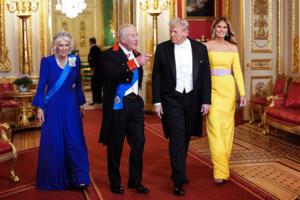
Congress awaits a royal address from King Charles
WASHINGTON — During the nation’s 250th anniversary, the British are coming — this time by invitation.
His Majesty Charles III, king of the United Kingdom of Great Britain and Northern Ireland, is set to address a joint meeting of Congress on April 28, House and Senate leaders announced Wednesday.
“The relationship between the United ...Read more
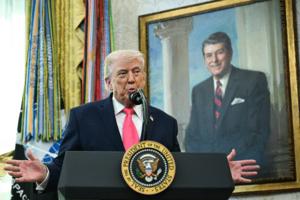
Trump to address nation on Iran as gas prices rise, poll numbers drop -- and midterms loom
WASHINGTON — President Donald Trump will address the nation Wednesday night as soaring gas prices, an unpopular war in Iran and his slumping approval number have become a collective political thorn for Republicans heading into November’s midterm elections.
Trump will use the prime-time address to repeat his Tuesday declaration that the U.S....Read more
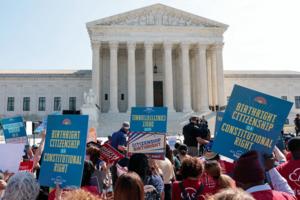
With Trump watching, Supreme Court justices sound skeptical of his bid to end birthright citizenship
WASHINGTON — With President Donald Trump watching in the courtroom, the Supreme Court justices gave a mostly skeptical hearing Wednesday to his claim that he may revise the Constitution to end birthright citizenship for babies born in this country to parents who were here unlawfully or temporarily.
Solicitor General D. John Sauer said ...Read more
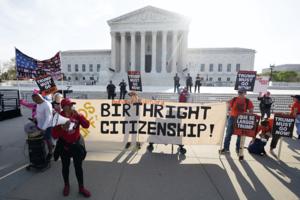
Supreme Court questions curtailing of birthright citizenship
WASHINGTON — A majority of the Supreme Court expressed hostility Wednesday to President Donald Trump’s executive order that seeks to restrict birthright citizenship, even as he became the first sitting president in the modern era to attend oral arguments.
An attorney for the U.S. urged the justices to overturn multiple lower court rulings ...Read more
Editorial: A victory for the First Amendment at the high court
Progressives wasted no time characterizing the Supreme Court’s decision Tuesday on “conversion therapy” as an attack on the LGBTQ community. It is no such thing, representing instead a victory for the First Amendment.
The justices ruled 8-1 in favor of a religious counselor who challenged a 2019 Colorado law banning attempts to “change ...Read more
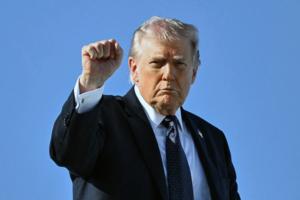
Massachusetts man accused of threatening to kill Trump: 'I am hunting him down'
BOSTON — A Bay State man has been arrested after allegedly threatening to kill President Donald Trump, according to the feds.
Great Barrington man Andrew Emerald, 45, allegedly posted messages on Facebook threatening to injure and kill Trump.
Emerald was indicted by a federal grand jury on eight counts of interstate transmission of ...Read more
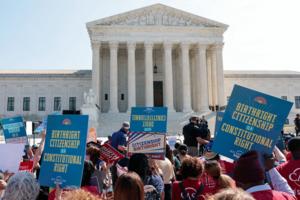
With Trump watching, Supreme Court justices sound skeptical of his bid to end birthright citizenship
WASHINGTON — With President Donald Trump watching in the gallery, the Supreme Court justices gave a mostly skeptical hearing on Wednesday to his claim that he may revise the Constitution to end birthright citizenship for babies born in this country to parents who were here unlawfully or temporarily.
Trump Solicitor Gen. D. John Sauer said ...Read more
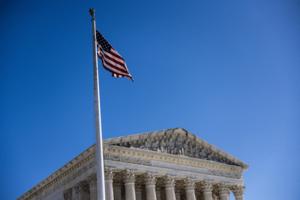
Trump arrives at Supreme Court to attend birthright citizenship arguments
WASHINGTON — President Donald Trump on Wednesday became the first sitting president to attend oral arguments at the Supreme Court, inserting himself directly into a high-stakes legal battle over one of the most consequential orders of his administration.
Trump arrived at the court Wednesday morning by limousine for arguments over whether the ...Read more
Popular Stories
- Judge blocks Trump's $400 million White House ballroom
- Court dismisses wrongful termination suit by former Fox News producer
- Who's the shutdown scapegoat now? Intraparty tensions flare between House, Senate GOP after DHS snafu
- Lawmakers said they wanted to rein in their own stock trading. What happened?
- Federal election observers once played a key role in securing voting rights for all − but times have changed
Related Channels

ACLU
By The ACLU

Amy Goodman
By Amy Goodman

Armstrong Williams
By Armstrong Williams

Austin Bay
By Austin Bay

Ben Shapiro
By Ben Shapiro

Betsy McCaughey
By Betsy McCaughey

Bill Press
By Bill Press

Bonnie Jean Feldkamp
By Bonnie Jean Feldkamp

Cal Thomas
By Cal Thomas

Clarence Page
By Clarence Page

Danny Tyree
By Danny Tyree

David Harsanyi
By David Harsanyi

Debra Saunders
By Debra Saunders

Dennis Prager
By Dennis Prager

Dick Polman
By Dick Polman

Erick Erickson
By Erick Erickson

Froma Harrop
By Froma Harrop

Jacob Sullum
By Jacob Sullum

Jamie Stiehm
By Jamie Stiehm

Jeff Robbins
By Jeff Robbins

Jessica Johnson
By Jessica Johnson

Jim Hightower
By Jim Hightower

Joe Conason
By Joe Conason

John Stossel
By John Stossel

Josh Hammer
By Josh Hammer

Judge Andrew Napolitano
By Judge Andrew P. Napolitano

Laura Hollis
By Laura Hollis

Marc Munroe Dion
By Marc Munroe Dion

Michael Barone
By Michael Barone

Mona Charen
By Mona Charen

Rachel Marsden
By Rachel Marsden

Rich Lowry
By Rich Lowry

Robert B. Reich
By Robert B. Reich

Ruben Navarrett Jr
By Ruben Navarrett Jr.

Ruth Marcus
By Ruth Marcus

S.E. Cupp
By S.E. Cupp

Salena Zito
By Salena Zito

Star Parker
By Star Parker

Stephen Moore
By Stephen Moore

Susan Estrich
By Susan Estrich

Ted Rall
By Ted Rall

Terence P. Jeffrey
By Terence P. Jeffrey

Tim Graham
By Tim Graham

Tom Purcell
By Tom Purcell

Veronique de Rugy
By Veronique de Rugy

Victor Joecks
By Victor Joecks

Wayne Allyn Root
By Wayne Allyn Root
Comics