South Korea shook a presidential power grab – failure to impeach now risks damaging democracy
Published in Political News
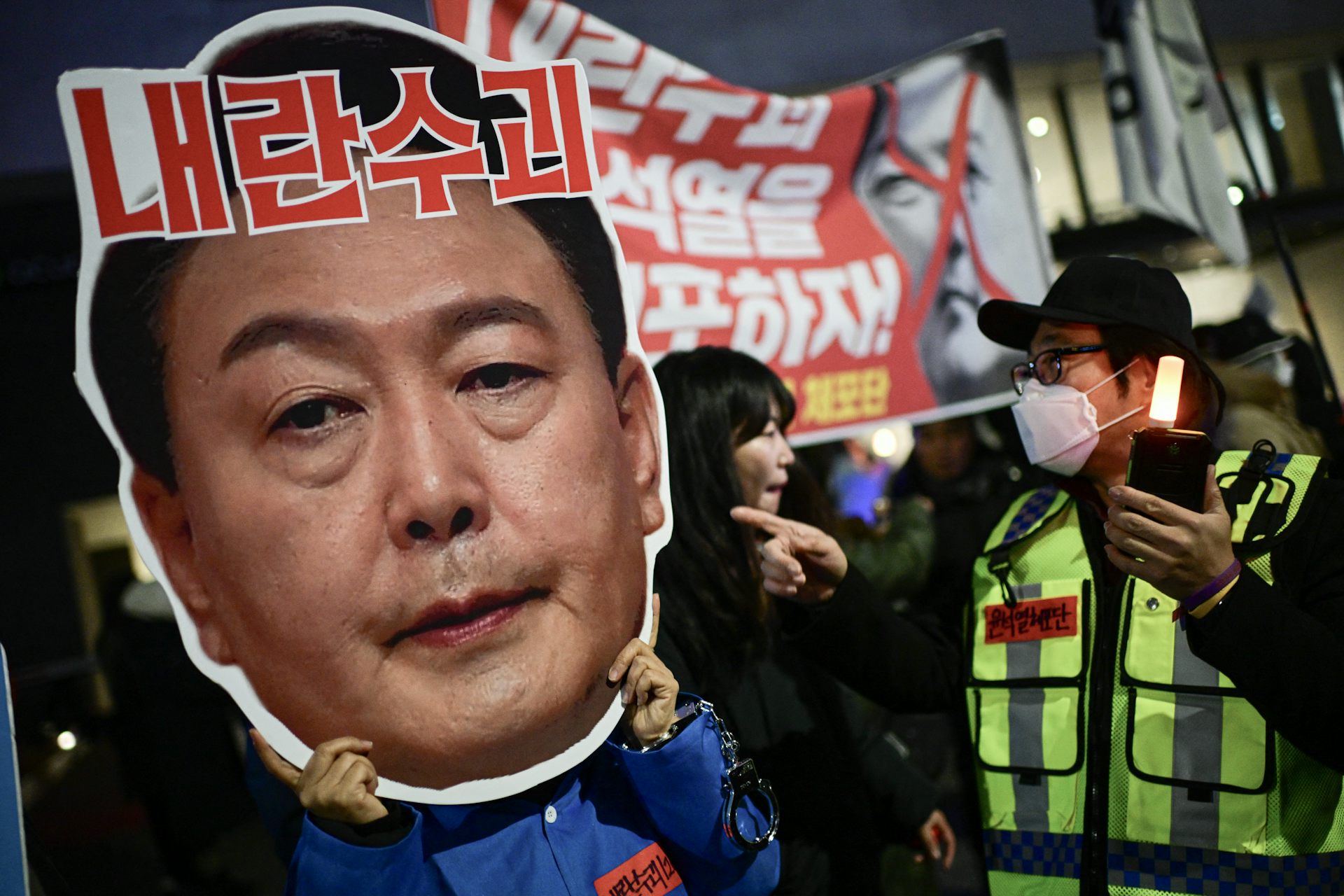
Days after announcing – and then rescinding – martial law in South Korea, President Yoon Suk Yeol’s future remains uncertain.
Immediate efforts to impeach the president over the attempted power grab have failed, due to the boycott of the vote by Yoon’s ruling conservative People’s Power Party (PPP). But that won’t be the end of the matter; on Dec. 9, 2024, South Korea’s Justice Ministry banned Yoon from leaving the country until the conclusion of an investigation into alleged treason. In the latest twist, Han Dong-hoon, the leader of PPP, urged party makers on Dec. 12 to “vote with their conscience” on future impeachment votes – seemingly ending the two men’s prior alliance.
This uncertainty over Yoon’s fate puts the future of South Korea’s commitment to democracy in focus; it is also sure to increase political tension and dysfunction in the country.
As South Korea grapples with Yoon’s actions, the nation’s hard-won democratic advancements and the historical legacy of past coups loom large. As experts on South Korean politics, we think it’s particularly revealing to compare this case with a similar coup attempt that happened 50 years ago – and succeeded. Looking at the differences shows just how far the country has come and underscores the importance of protecting these gains from future erosion.
Yoon’s political authority has all but vanished since his attempted power grab late on Dec. 3.
In the days since, those around the president have tried to spin his actions as a temporary show of force meant to “send a message to lawmakers.”
But this was no ordinary act of government. There is mounting evidence that Yoon ordered both the military and National Intelligence Service to arrest the speaker of the National Assembly, both major party leaders, several judges and even media figures. This, of course, would represent a flagrant violation of democratic institutions and norms.
Yoon clearly intended to stifle any opposition and rapidly consolidate his control over government. Given this, from our perspective it’s hard to describe Yoon’s actions as anything but an attempted self-coup – in which the perpetrator is already in office but seeks to grab more power through extralegal means. It marks the culmination of Yoon’s well-documented authoritarian tendencies.
The opposition Democratic Party has called Yoon’s moves “unconstitutional” and “illegal.”
The law appears to be on their side. Both the South Korean Constitution and the Martial Law Act of 2017 state that martial law – the temporary suspension of normal civilian rule – can only apply in times of severe national crisis. And even then, the National Assembly must vote to approve the emergency measure, with any attempt to interfere with the legislative body deemed unconstitutional.
The country was not facing a major crisis, despite Yoon’s claims of a threat from pro-North Korean forces.
Moreover, Yoon’s decree prohibited all political activity, including in parliament despite the South Korean Constitution restricting the use of martial law to the executive and judiciary, keeping the National Assembly outside its reach.
Yoon’s martial law declaration is the latest in a long line of coups throughout Korean history. But one in 1972 deserves special attention.
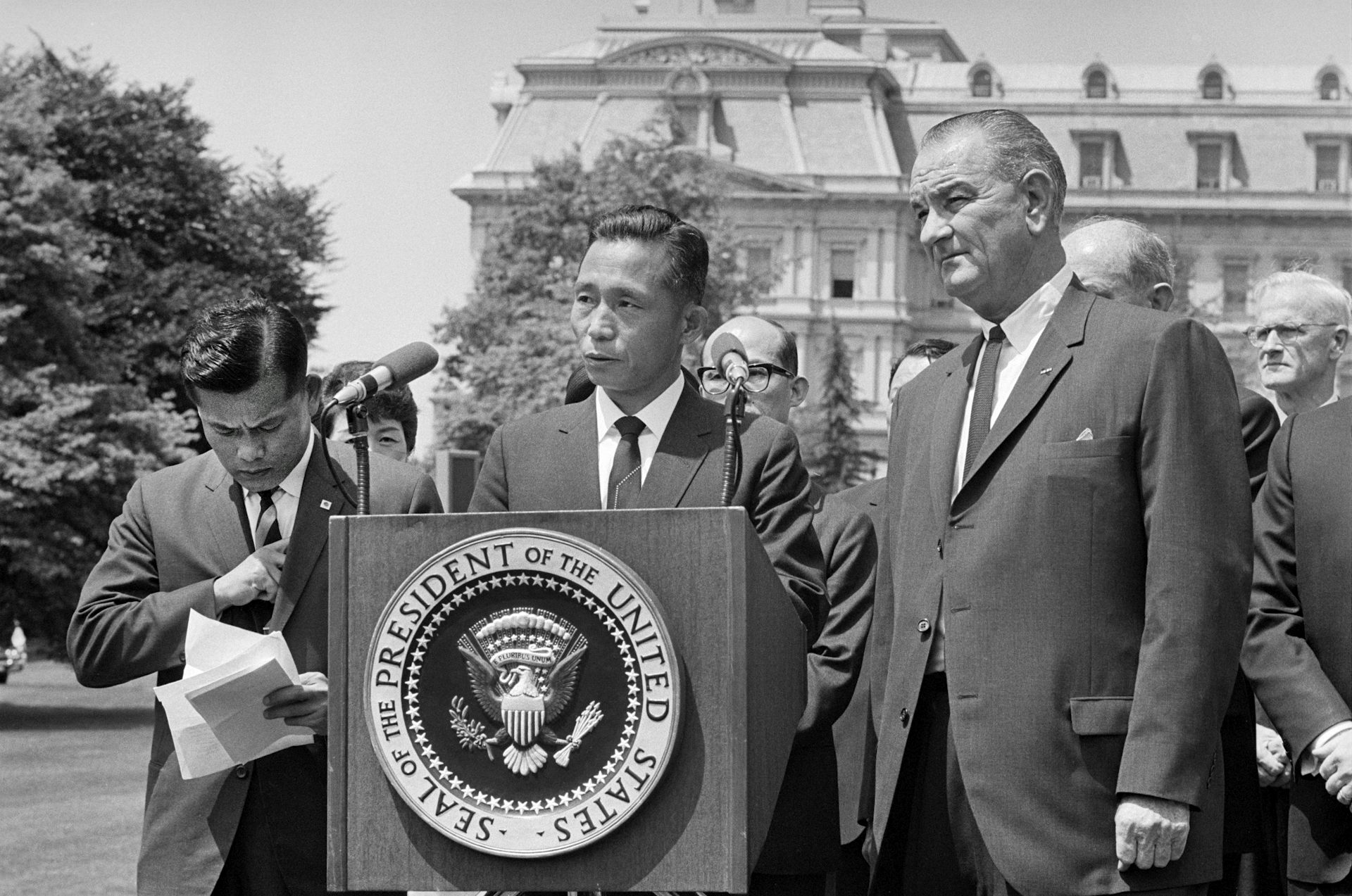
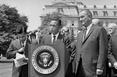
On Oct. 17 that year, then-president Park Chung-hee declared martial law – dissolving the National Assembly and arresting top lawmakers in the process – and announced a revision of the constitution to be approved by referendum.
The ensuing Yushin Constitution did away with direct presidential elections. Instead, a newly established National Conference for Unification would vote for the president in the people’s stead. Park made himself the chairman of the new body, which consisted largely of his followers. The Yushin Constitution also allowed Park to unilaterally enact “emergency decrees” that banned criticism of the government.
The power grab allowed Park to stay in office indefinitely and skirt the legislative opposition to pass his policies. And until his assassination in 1979 by his own intelligence chief, Park maintained a tight grip on power.
Why did Park succeed where Yoon failed?
Unlike Yoon, whose approval rating had already fallen to 17% in early November 2024 – before dipping to 13% since declaring martial law – Park had much of the public on his side, despite the presence of a vocal opposition.
Park, although a harsh authoritarian leader, had built up broad political legitimacy due to the rapid economic progress under his watch. He also benefited from a “rally-around-the-flag” effect due to the very real North Korean threat at the time. In fact, Park was elected multiple times to the presidency by popular vote before his self-coup in 1972.
Moreover, Park’s influence within his inner circle and the military was strong, maintaining an unchallenged authority among his main supporters. Yoon, by contrast, has had a weak grip on even his own party.
His hostile takeover of the PPP – Yoon was initially an outsider unaffiliated with the party – caused several lawmakers to split from the party. In the past year, conflicts over whether to investigate Yoon’s wife for corruption have contributed to intraparty problems and a bitter divorce from his longtime ally, PPP leader Han Dong-hoon.
The impact of this infighting was clear in the hours after the Dec. 3 martial law announcement, when 18 lawmakers from the PPP voted to nullify Yoon’s decree. And while party members voted against impeachment on Dec. 7, the PPP has also sought to neuter Yoon’s authority and appears committed to forcing his resignation as president before his term is due to end in 2027.
But perhaps the main reason Yoon failed and Park succeeded is that the country’s democratic institutions and norms are now long-established. After 40 years of authoritarian rule, in 1987 South Korea democratized. Memories of the struggle for democracy remain fresh in public consciousness, while lawmakers are better equipped to protect democracy today.
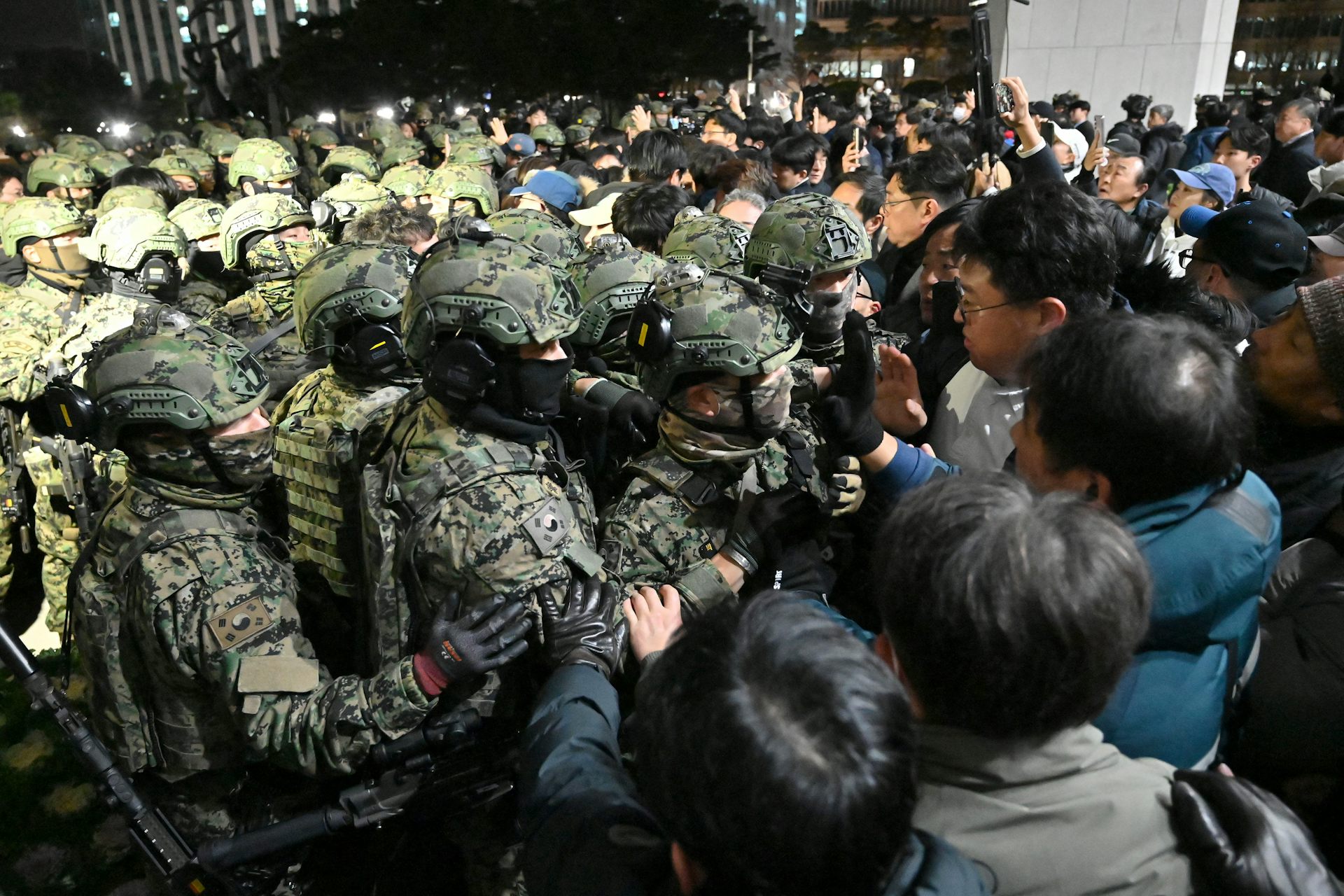
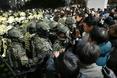
As the National Assembly rapidly convened to vote down Yoon’s martial law, crowds of citizens swiftly gathered to confront the military – which proved reluctant to attack the protesters.
In that sense, Yoon’s self-coup’s failure should provide comfort to those who fear democratic backsliding in South Korea. But it does not, in our opinion, mean that those responsible should go unpunished. Without accountability, future self-coup plotters may feel emboldened. And unlike Yoon, they may not be hindered by low popularity and robust opposition.
Meanwhile, the partisan treatment of Yoon since his self-coup attempt may cause some concern. Despite the public clamoring for his removal, the impeachment motion failed in the National Assembly – needing just eight additional votes from Yoon’s party to add to the 192 opposition votes.
Another troubling sign is that after the impeachment vote, the PPP announced an informal power-sharing agreement in which Prime Minister Han Duck-soo and PPP leader Han Dong-hoon would manage state affairs even while arranging Yoon’s “orderly resignation” at an undefined date.
Critics have described this arrangement as “unconstitutional,” perhaps even a “soft coup” that transfers vast presidential authority to unelected leaders – in the South Korean system, the prime minister is appointed rather than elected, while Han Dong-hoon is not currently a legislator.
We believe the failure to impeach Yoon and the unprecedented power-sharing agreement remove both personal and party consequences for the president’s attempted self-coup.
And this outcome, should it be unchallenged, may bolster the narrative spread by Yoon’s sympathizers who are trying to frame his actions as a desperate response to an obstructive opposition-dominated parliament. It also risks normalizing presidents turning to the military to break political deadlock.
Should that be allowed to happen, then we believe it would severely undermine decades of democratic progress and military neutrality in South Korea and set a dangerous new precedent.
This article is republished from The Conversation, a nonprofit, independent news organization bringing you facts and trustworthy analysis to help you make sense of our complex world. It was written by: Myunghee Lee, Michigan State University and Sungik Yang, Arizona State University
Read more:
President Yoon is lauded in West for embracing Japan − in South Korea it fits a conservative agenda that is proving less popular
What South Korea’s short-lived martial law says about nation’s democracy and the autocratic tendencies of President Yoon
South Korea has the lowest fertility rate in the world – and that doesn’t bode well for its economy
The authors do not work for, consult, own shares in or receive funding from any company or organization that would benefit from this article, and have disclosed no relevant affiliations beyond their academic appointment.

















































Comments