View politics critically but charitably and with good old common sense: cowboy commentator Will Rogers’ wisdom for 2024
Published in Political News
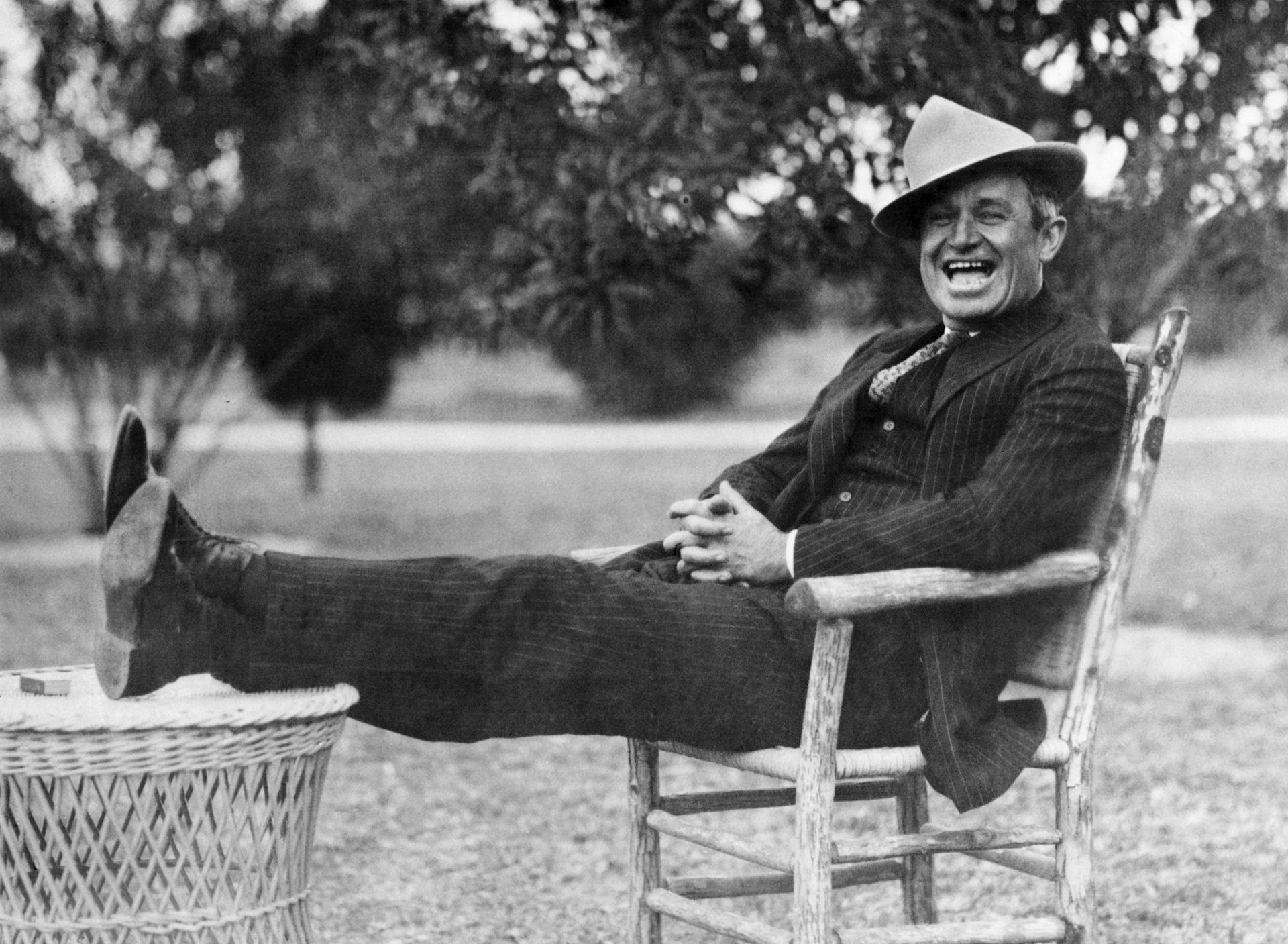
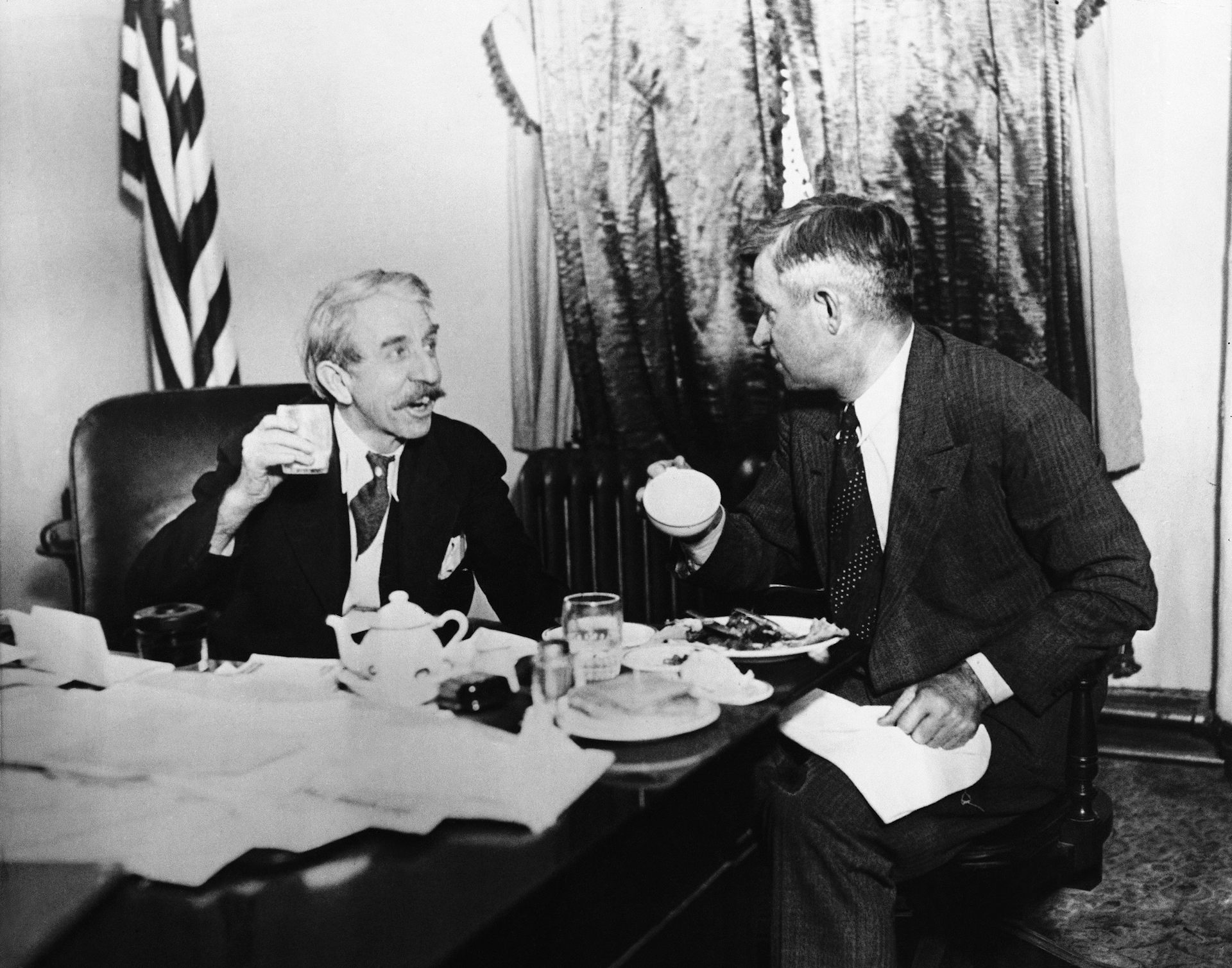
For those trying to come to terms with a particularly tumultuous election year full of deep divisions, ideological invective and personal insults, guidance can come from a historical figure whose insights into American politics still prove useful.
As I chronicle in my new book, “Citizen Cowboy: Will Rogers And The American People,” Will Rogers stood as perhaps the most influential commentator on public affairs in the United States a century ago. Born in Oklahoma, he had risen to fame as a cowboy humorist in vaudeville, the Ziegfeld Follies, Broadway shows and silent movies, and he earned public acclaim with his shrewd, folksy and witty observations on American life and values.
By the 1920s, this led to a syndicated column Rogers wrote for over 300 newspapers, a stream of magazine articles and essays, and steady appearances on the national lecture circuit. He hosted a national radio program and had starring roles in several Hollywood “talkie” movies.
Rogers became the most beloved figure in America until his death in 1935. As I discovered in my research, a flood of eulogies appeared in newspapers and magazines following his passing. Typical was this one appearing in the Minneapolis Journal: “We all loved Will Rogers … . Poets we have had, and philosophers, and humorists of note; but not one among them all so endeared to the heart of the whole people. None was ever mourned with such genuine grief, none will be so missed from our common life.”
Especially fascinated by the nation’s politics, Rogers often trained his humor on its foibles and achievements alike. Three touchstones guided his commentary: a genial skepticism about politics as usual, a belief that politics must be subsumed within a broader perspective on life and, above all, an insistence that political discussants honor a code of civility.
Rogers got most of his laughs from skeptical jabs at the system. He gleefully skewered the “bunk” of American politics, his favorite word for politicians’ shameless hypocrisy, bombastic rhetoric, inflated egos and shady deal-making. Both Democrats and Republicans stood guilty of peddling bunk.
“You know, the more you read and observe about this politics thing, you’ve got to admit that each party is worse than the other,” Rogers said. “It is getting so that a Republican promise is not much more to be depended on than a Democratic one. And that has always been considered the lowest form of collateral in the world.”
The Oklahoman poked fun at the political system’s grandiose rituals and fumbling institutions. He wrote of a benumbing presidential convention in 1924 that took three weeks and 103 ballots to nominate a nonentity: “In number of population the convention is holding its own. The deaths from old age among the delegates is about offset by the birthrate.”
Rogers pilloried governmental ineptness in Washington, D.C. One year, when Congress reconvened after a round of egregious bickering and inaction, he joked, “Let us all pray: Oh Lord, give us strength to bear that which is about to be inflicted upon us. Be merciful with them, Oh Lord, for they know not what they do.”
He claimed a simple approach: “I don’t make jokes. I just watch the government and report the facts.”
Yet Rogers insisted that political disputation should be kept in perspective. He urged his fellow citizens to avoid politicizing every public issue and instead concentrate on more meaningful endeavors – family, friends, community and work.
Despite the dire warnings of political zealots, he said, “There is no less sickness, no less Earthquakes, no less Progress, no less inventions, no less morality, no less Christianity under one (president) than the other.”
But for Rogers, the ultimate guarantee of stability came from the mass of workaday American citizens seeking commonsense solutions to public problems. What Rogers called the “Big Honest Majority” lived simply and worked hard, wanted a good life for their families and pursued their own version of happiness.
The average citizen, Rogers believed, had solid judgment and “was not simple minded enough to believe that EVERYTHING is right and doesn’t appear to be cuckoo enough to believe that EVERYTHING is wrong.”
Finally, Rogers urged an approach to politics that was critical yet charitable, principled yet magnanimous. A connoisseur of civility, he insisted that political disputants were opponents, not enemies, and that contrary viewpoints deserved respect.
The humorist set the example: “I haven’t got it in for anybody or anything.”
Even as he pilloried politicians’ shortcomings, he never made it personal. Despite their faults, Rogers wrote, “the Rascals, when you meet ’em face to face and know ’em, they are mighty nice fellows.” He declared famously, “I’ve joked about every prominent man in my time but I never met a man I didn’t like.”
Determinedly nonpartisan throughout most of his career, he leaned toward the party of Franklin Roosevelt during the Great Depression while jesting, “I don’t belong to any organized political faith; I’m a Democrat.” The cowboy humorist saw politics as an endeavor for genial discussion, not a blood sport.
Rogers’ political axioms of healthy skepticism, perspicacity and civility remain useful guides for surviving even the most sordid electioneering.
So when you hear overwrought partisans lamenting “the end of democracy” or “we won’t have a country left anymore,” take a deep breath and consider Will Rogers’ calmer, wiser approach to presidential elections a century ago. Remember his conclusion that America won’t be ruined “no matter who is elected, so the Politicians will have to wait four more years to tell us who will ruin us then.”
Then you can adopt his sage advice that when dealing with a political adversary, “don’t disagree with him looking at him; walk around behind him and see the way he’s looking.”
This article is republished from The Conversation, a nonprofit, independent news organization bringing you facts and trustworthy analysis to help you make sense of our complex world. It was written by: Steven Watts, University of Missouri-Columbia
Read more:
Harris campaign tries to beat Trump at his own game − ridicule
Happy midterms! Here’s a rundown of the best political zingers in history
Calling someone a ‘jackass’ is a tradition in US politics
Steven Watts does not work for, consult, own shares in or receive funding from any company or organization that would benefit from this article, and has disclosed no relevant affiliations beyond their academic appointment.



















































Comments