The last days of Woodrow Wilson
Published in Political News
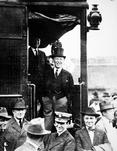
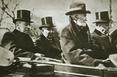
The White House bulletin on the health of Woodrow Wilson was alarming.
“The president is a very sick man,” announced Wilson’s personal physician, Rear Admiral Cary T. Grayson, on Oct. 2, 1919. He and a four-person team of doctors all agreed that “absolute rest was essential for some time.”
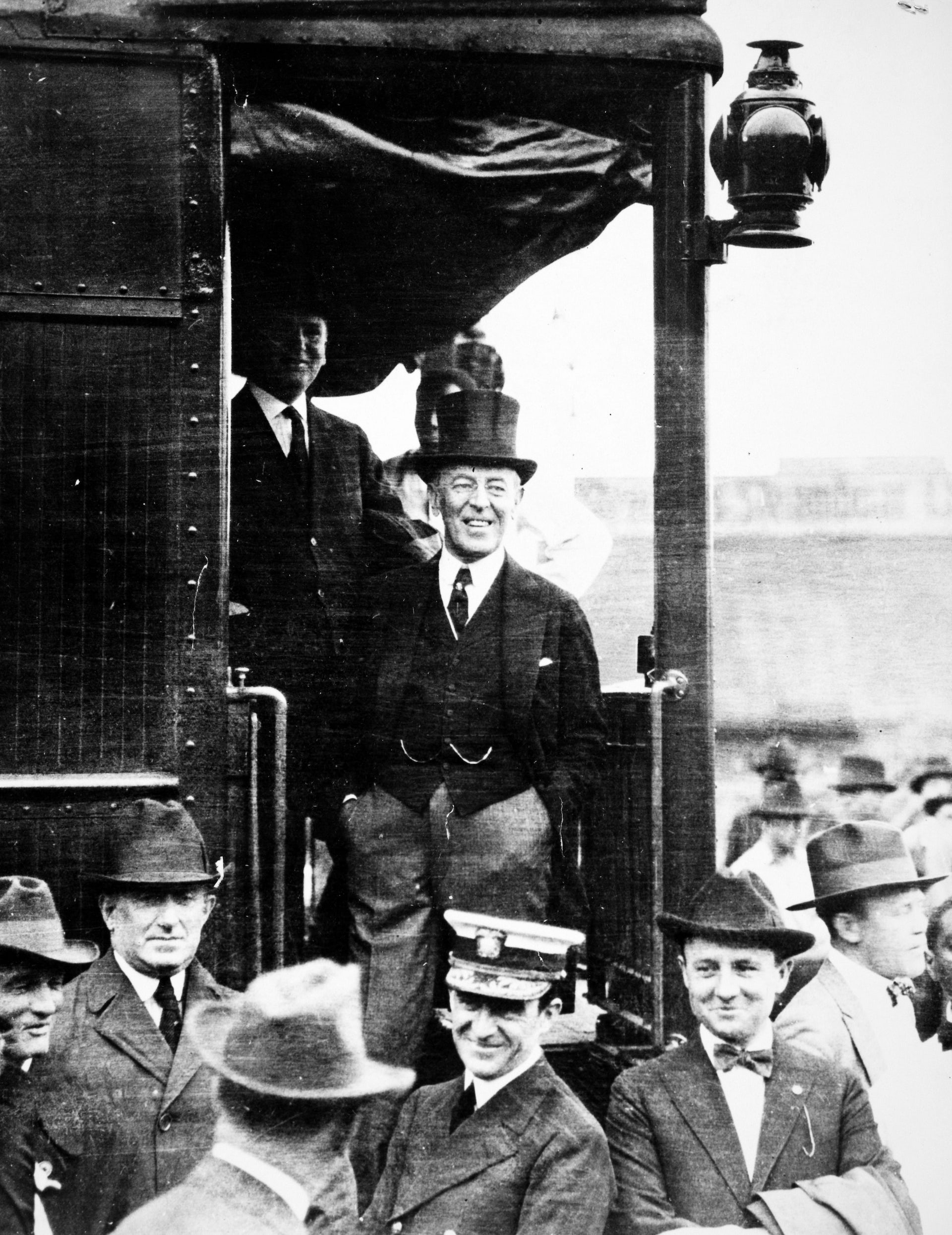
Five days earlier, on Sept. 28, 1919, Wilson had been stricken ill in Wichita, Kansas, while on a marathon speaking tour across the country to rally support for American membership in the League of Nations, the precursor to the United Nations. For Wilson, the proposed international body was the most important component of the June 1919 peace agreement signed at Versailles to end World War I.
He was rushed back to Washington, where he collapsed in the White House bathroom from an ischemic stroke. For the next 18 months – the remainder of his presidential term – he would be incapacitated.
Feb. 3, 2024, marks the centennial of Wilson’s death, a natural time for meditations on his legacy. But the verdict is already in: No president has suffered a more precipitous decline in reputation and esteem.
Once accorded an honored place in the pantheon of presidential immortals, Wilson is now assailed for suppressing free expression during the Great War and mandating Jim Crow racial segregation in federal hiring. Those actions have obliterated his image as a noble idealist laboring to make the world safe for democracy and establish a secure postwar order.
Somewhat less damning, though not inconsequential, was his self-righteousness about remaining in office when he was no longer fit for the job, a lapse of judgment ultimately addressed by the passage of the the 25th Amendment to the Constitution in 1967. The amendment provides the procedures for replacing the president or vice president in the event of death, removal, resignation or incapacitation.
Wilson had been warned about his precarious health.
Never robust, and chronically exhausted from overwork, he had been told by Dr. Grayson not to undertake the grueling rigors of a cross-country speaking tour. Yet Wilson was insistent that the ratification of the Treaty of Versailles – stalled in the U.S. Senate – was more important than his health.
He spoke in Biblical terms of the Versailles peace treaty and creation of the League of Nations. In an address before Congress on July 10, 1919, Wilson claimed divine inspiration: “It has come about by no plan of our conceiving, but by the hand of God who led us into this way.”
Wilson’s collapse ended his ability to push congressional leaders to ratify the Versailles treaty and American membership in the League Of Nations, which were ultimately rejected by a 49-35 Senate vote in March 1920.
But Wilson was determined that neither the defeat nor his convalescence would end his presidency.
For the next 18 months, the president’s inner circle – his wife, Edith, and his team of doctors – obfuscated and outright lied about Wilson’s health.
Edith served as her husband’s de facto chief of staff, managing all of his paperwork, guiding him through it and excluding virtually everyone else, including cabinet members, congressional leaders and the vice president. She determined which matters of state were important enough to bring to his attention – and delegated the rest to his cabinet and other political allies. Though mostly bedridden, Wilson still managed to attend a few cabinet meetings.
In 1931, looking back from not too far of a distance, the cultural historian Frederick Lewis Allen observed that “the country was in effect being governed by a regency.”
That is, the actual power was held by a responsible adult – in this case, Wilson’s wife – who acts on behalf of a ruler incapable of governing.
Facilitating the deception was a deference to the office of the president among the media that is unimaginable today.
Even prickly newspaper columnist H. L. Mencken held his fire, referring to Wilson only as “a sick man” and refraining from speculating about the full extent of his infirmity.
But as time went on, the absence of a visible president was too conspicuous to ignore.
On Dec. 5, 1919, Michigan’s Battle Creek Enquirer wrote darkly of the “impenetrable cordon which has been thrown about the chief executive by direction of the attending physicians and Mrs. Wilson.”
As rumors continued to swirl around Wilson’s health, two U.S. senators, Albert B. Fall, a New Mexico Republican, and Gilbert M. Hitchcock, a Nebraska Democrat, visited the White House on Dec. 5, 1919, to administer a kind of layman’s cognitive test.
Wilson received the two men in his bedroom and concealed his paralyzed left arm underneath a blanket.
Finding Wilson weak but fully coherent, they pronounced his mind “clear as a bell” while acknowledging that “physically” he was “in bad shape.”
Not until Nov. 4, 1920, over a year into his convalescence, did a wheelchair-bound Wilson appear in public at a carefully stage-managed event on the east portico of the White House.
In the presidential election of 1920, the voters gave a decisive mandate for a “return to normalcy” promised by the Republican Warren G. Harding.
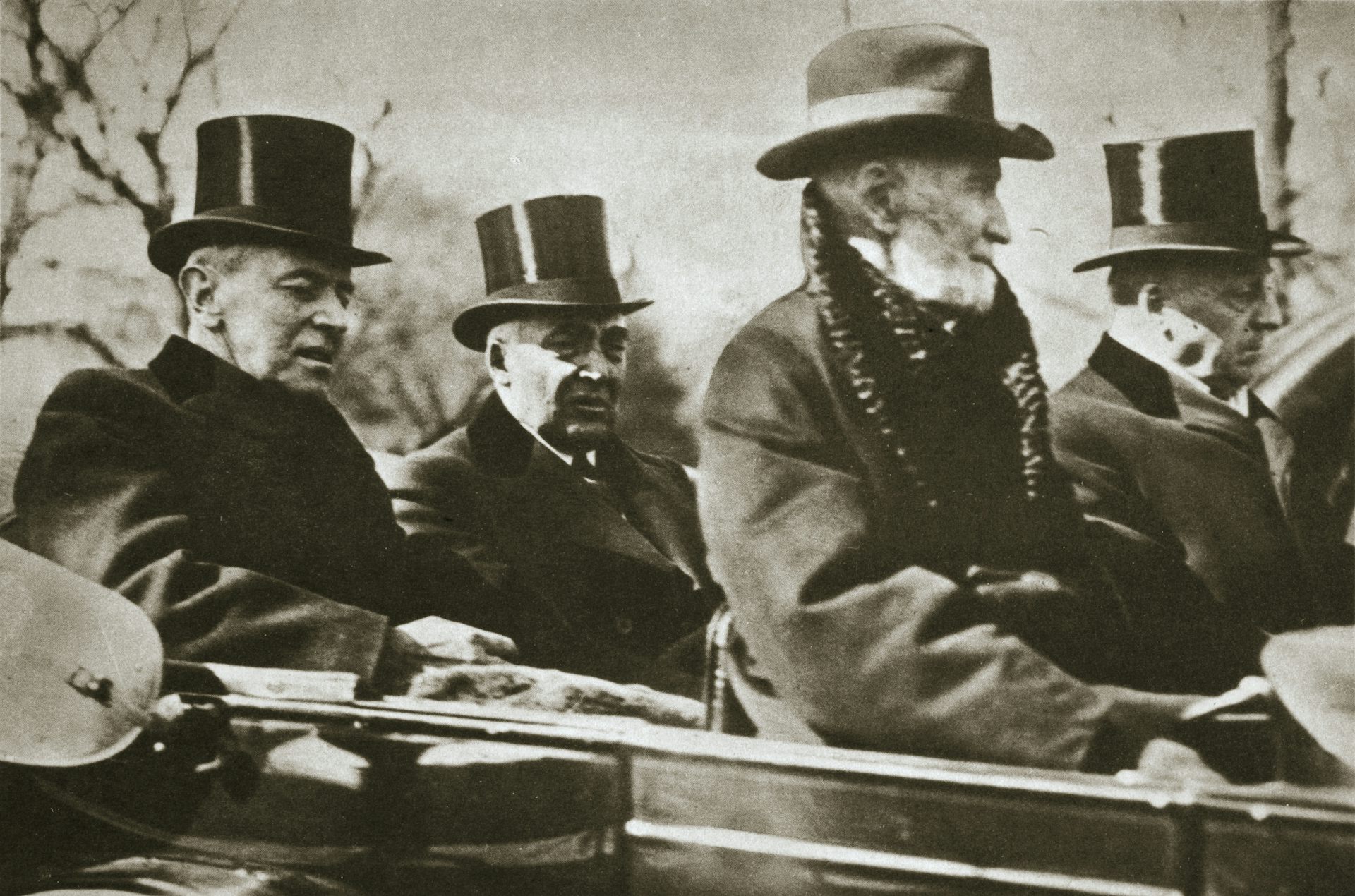
On March 4, 1921, at Harding’s inauguration, a determined Wilson somehow mustered the strength to ride with his successor from the White House to the Capitol, but skipped the actual ceremony on the inauguration stand.
“Wilson Presents Pathetic Figure As Regime Ends,” ran one unkind headline in the Washington Herald on March 5, 1921, though the newspapers refrained from publishing photographs.
The new president was described in the press as “glowing with health,” a robust contrast to the frail, “pitifully weak” figure beside him.
Ironically, Wilson outlived his successor.
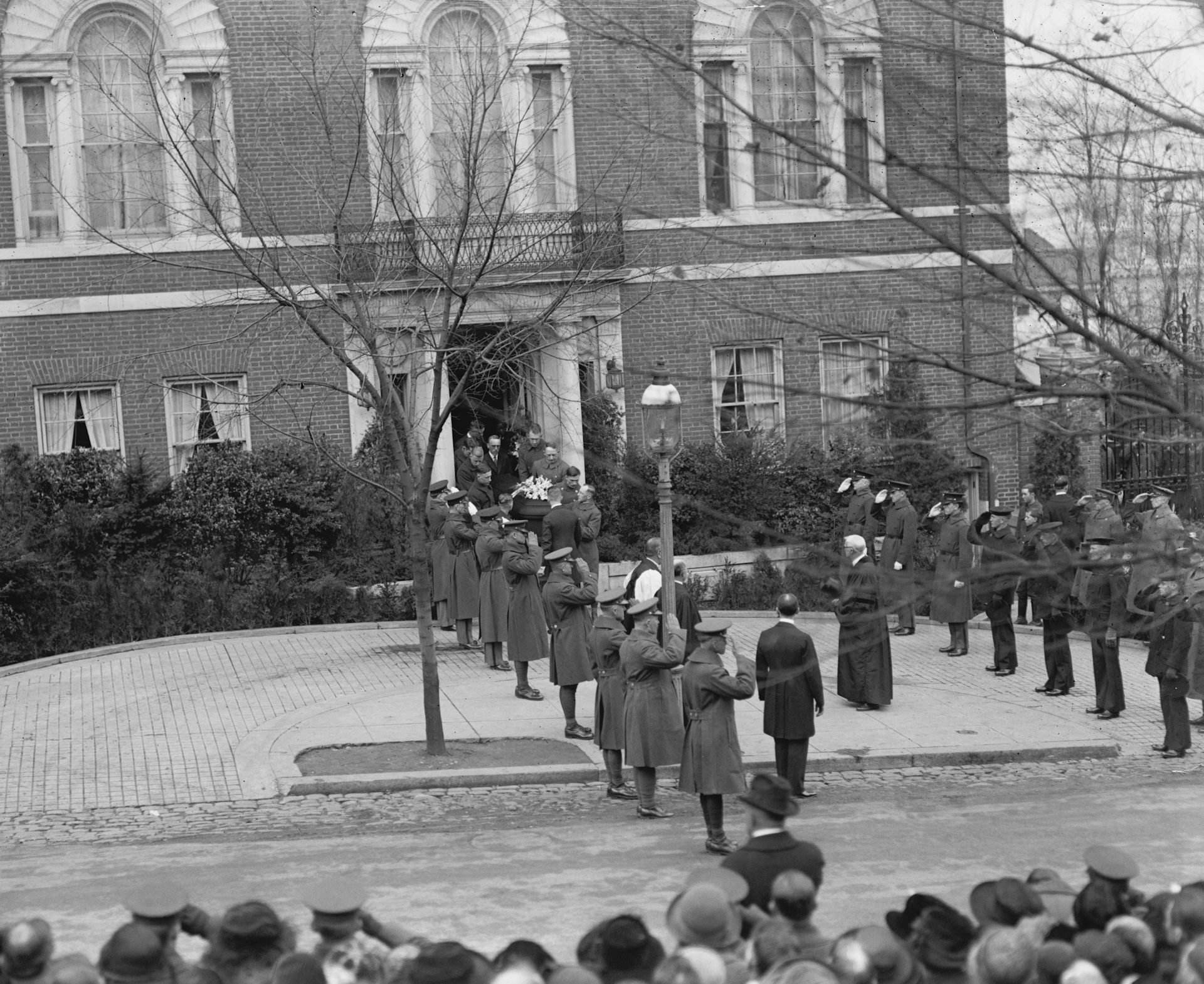
Harding died suddenly of a heart attack on Aug. 2, 1923, and was succeeded by Vice President Calvin Coolidge. Wilson lingered on until Feb. 3, 1924.
The day after Wilson’s death, The Associated Press published a report that revealed what most people had known all along: Since his collapse, Wilson had been a “shadow of his former self.”
This article is republished from The Conversation, a nonprofit, independent news organization bringing you facts and trustworthy analysis to help you make sense of our complex world. It was written by: Thomas Doherty, Brandeis University
Read more:
A brief history of presidents disclosing – or trying to hide – health problems
The importance of watching the health of a U.S. President: the Spanish flu and a flawed peace treaty
Feinstein just the latest example of an old problem: Politicians have long been able to evade questions about their ability to serve
Thomas Doherty does not work for, consult, own shares in or receive funding from any company or organization that would benefit from this article, and has disclosed no relevant affiliations beyond their academic appointment.

















































Comments