Is Taiwan a country or not?
Published in Political News
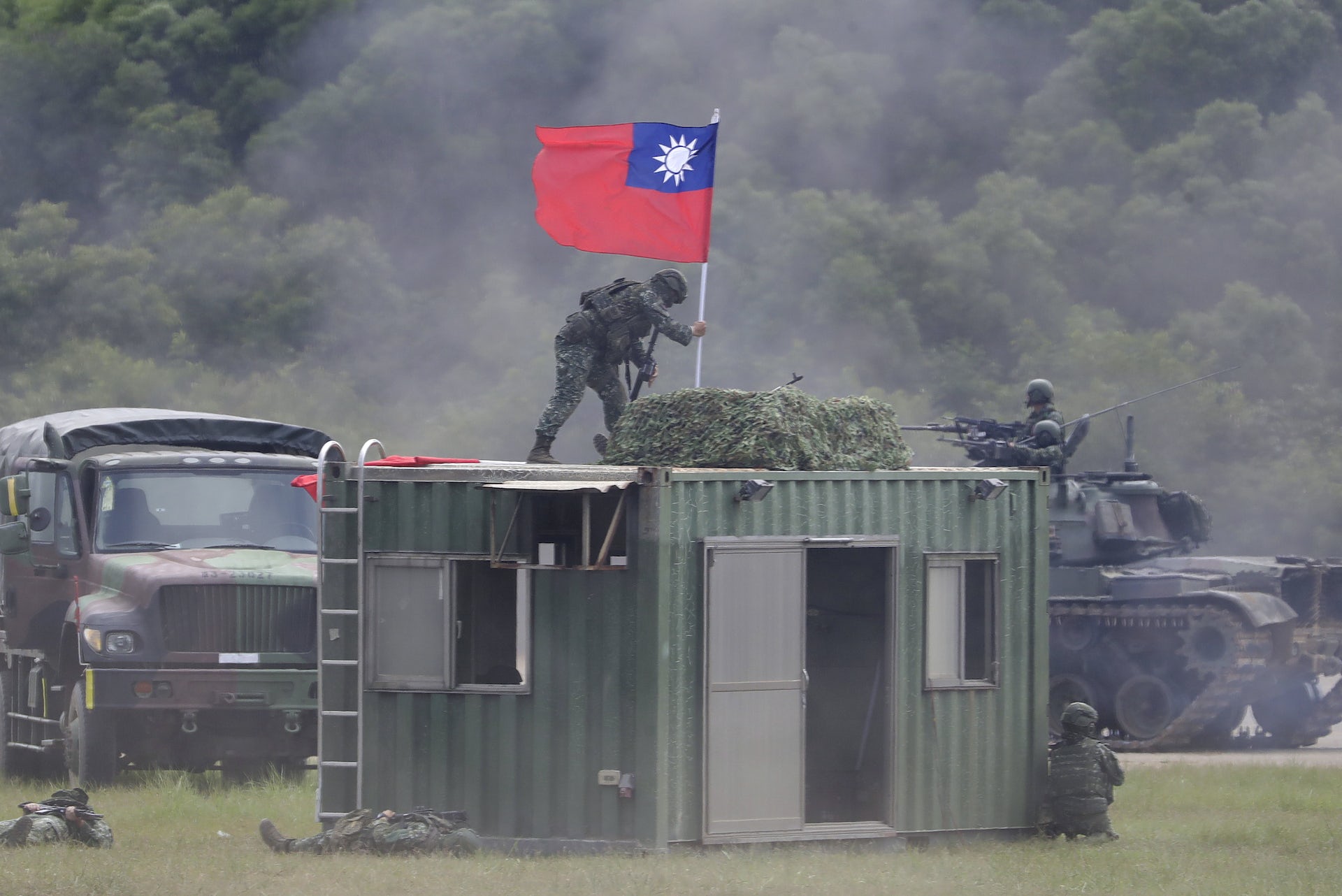
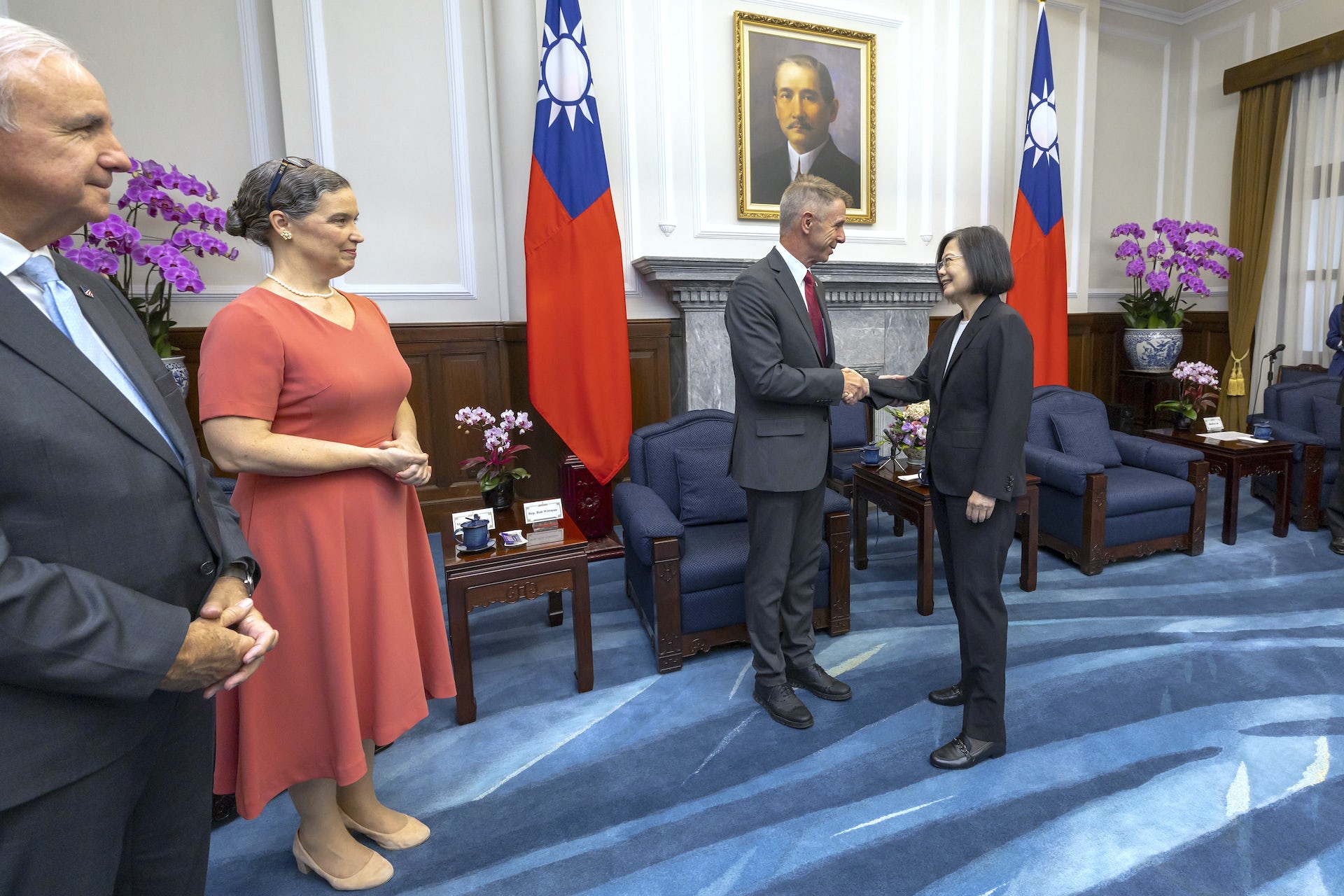


Defining what is and isn’t a country is a lot more complicated than many people would realize. Take the case of Taiwan.
On Aug. 30, 2023, a committee of the U.K. Parliament referred to Taiwan as an “independent country” in a report. This is the first time any part of the British political system has used that phrasing.
Officially, the U.K. “does not recognise Taiwan” as a country, nor does it “maintain formal diplomatic relations with the island,” which is one way states recognize each other as equals on the international stage.
Like the U.K., the U.S. also “does not have diplomatic relations with Taiwan,” although there is a “robust unofficial relationship,” according to the State Department. Many other countries are in a similar boat.
So where does that leave Taiwan? Is it, or is it not, a country?
From my perspective as a political scientist, here’s how I would approach this question.
According to what’s known as the “declarative theory of statehood,” a country – which is often referred to as a “state” in political science and international relations terminology – must possess the following qualities: “(a) a permanent population; (b) a defined territory; (c) government; and (d) capacity to enter into relations with the other states.”
These four qualities were agreed upon in the 1933 Montevideo Convention on the Rights and Duties of States, which is an international treaty registered with the League of Nations, the precursor to the United Nations.
Article 3 of that treaty says that the existence of a “state is independent of recognition by the other states.” In other words, as long as the four qualities above are met, an area qualifies as a country even if other countries choose not to recognize it.
One criticism of this framework is that it opens the door for many areas to be considered countries, even though they may seem outlandish.
For example, in the 1960s, Italian engineer Giorgio Rosa built a 4,000-square-foot (400-square-meter) platform 7 miles (11 kilometers) off the coast of Italy. On June 24, 1968, Rosa – whose last name means “rose” in English – declared that his platform was an independent country named the Republic of Rose Island. This artificial island had a restaurant, bar, souvenir shop and post office. Its official language was Esperanto.
It could be argued that Rose Island met the criteria outlined in the Montevideo Convention, as there was a permanent population because Rosa lived there; his humanmade platform had a defined territory; there was a government because Rosa declared himself president; and Rose Island’s post office gave it the capacity to communicate with, and thus enter into relations with, other countries.
Although several countries, including the U.S., have ratified the Montevideo Convention, Italy has not. So, 55 days after Rose Island declared independence, the Italian military destroyed the platform.
In contrast to the declarative theory of statehood, what’s called the “constitutive theory of statehood” considers a country to be a country only if it is recognized by other already recognized countries.
There is no magic number for how many countries one must be recognized by. Rather, those that aspire to be regarded by the world as an independent country must join the United Nations as a full member.
In order to join the United Nations, applicants must be recommended by the Security Council, which comprises 15 members. Five of those members are permanent and have a veto. Applicants must have the support of nine of the 15 members, including each of the permanent members.
If the Security Council recommends admission, the application is presented to the General Assembly, where each full member of the United Nations has a single vote. A two-thirds majority is necessary before a country can join.
Today, most of the world’s countries officially adhere to some variation of the idea that there is only one China, whose capital is Beijing, and which encompasses both the mainland territory and the island of Taiwan.
There is a government there, but there is also a government on Taiwan, based in its capital, Taipei. That government calls itself the Republic of China and traces its history to the early 20th century, when a revolution overthrew the emperor of China.
Notably, at that time, nobody’s definition of China included the island of Taiwan, which was then commonly called Formosa. Japan had seized the island in a war in the late 19th century.
In 1927, an uprising by the Chinese Communist Party attacked the Republic of China government. That kicked off a bloody civil war that lasted until 1949.
In that year, the government of the Republic of China retreated to the island of Taiwan. That same year, Mao Zedong, leader of the Chinese Communist Party, proclaimed the founding of the People’s Republic of China, with its capital in Beijing.
But Mao still sought control over his enemy’s territory, declaring, “Taiwan is ours, and we will never compromise on this issue, which is an issue of internal affairs.”
To this day, the government of the People’s Republic of China, whose capital is Beijing, considers Taiwan part of its “sacred territory.” The constitution of the People’s Republic of China states that “(i)t is the lofty duty of the entire Chinese people, including our compatriots in Taiwan, to accomplish the great task of reunifying the motherland.” Its foreign affairs ministry says, “Taiwan is a sacred and inseparable part of China’s territory.” On Oct. 2, 2023, the Beijing government celebrated its national day by releasing a video signifying its focus on unity with the people of Taiwan.
In contrast, the Republic of China refers to the area under its control as “the Taiwan area,” or “the free area.” It refers to the rest of China as “the mainland area,” which the Taiwanese government has described as being under a “Period of Communist Rebellion.”
Other countries are similarly delicate. For example, in 1972, the U.S. “acknowledge(d) that all Chinese on either side of the Taiwan Strait maintain there is but one China and that Taiwan is a part of China.” In 1979, the U.S. again “acknowledge(d) the Chinese position that there is but one China and Taiwan is part of China.”
Taiwan argues that it meets the Montevideo Convention’s criteria for being considered a country under the declarative theory of statehood. However, Taiwan has not yet formally declared itself to be a new, independent country. According to President Tsai Ing-wen, “(w)e don’t have a need to,” because “(w)e are an independent country already and we call ourselves the Republic of China.”
But recall that, according to the constitutive theory of statehood, a country is only a country if it’s recognized by other already recognized countries, and the ultimate manifestation of such recognition is full membership in the United Nations.
Interestingly, the Republic of China was actually a founding member of the United Nations. However, in 1971, the United Nations voted “to expel” the Republic of China, and instead recognized the Communist government “as the only legitimate representative of China to the United Nations.” Subsequent attempts by Taiwan to join the United Nations have been unsuccessful.
Today, only a dozen or so countries continue to maintain formal diplomatic ties with Taiwan, most of which are small island developing states such as Nauru, Palau and Tuvalu.
Each of these countries recognizes Taiwan as “the Republic of China,” and none of them simultaneously maintains offical ties with the People’s Republic of China.
Until Taiwan formally declares itself independent of the rest of China – or until Taiwan is recognized by the international community as being independent of the rest of China – Taiwan’s status as a country will continue to be questioned.
This article is republished from The Conversation, an independent nonprofit news site dedicated to sharing ideas from academic experts. If you found it interesting, you could subscribe to our weekly newsletter.
Read more:
Why is Taiwan competing in the Olympics under ‘Chinese Taipei’?
Why the big fuss over Nancy Pelosi’s possible visit to Taiwan?
Joshua Holzer does not work for, consult, own shares in or receive funding from any company or organization that would benefit from this article, and has disclosed no relevant affiliations beyond their academic appointment.






















































Comments