The 'Barbie' and 'Star Wars' universes are entertaining, but they also unexpectedly can help people understand why revolutions happen
Published in Political News

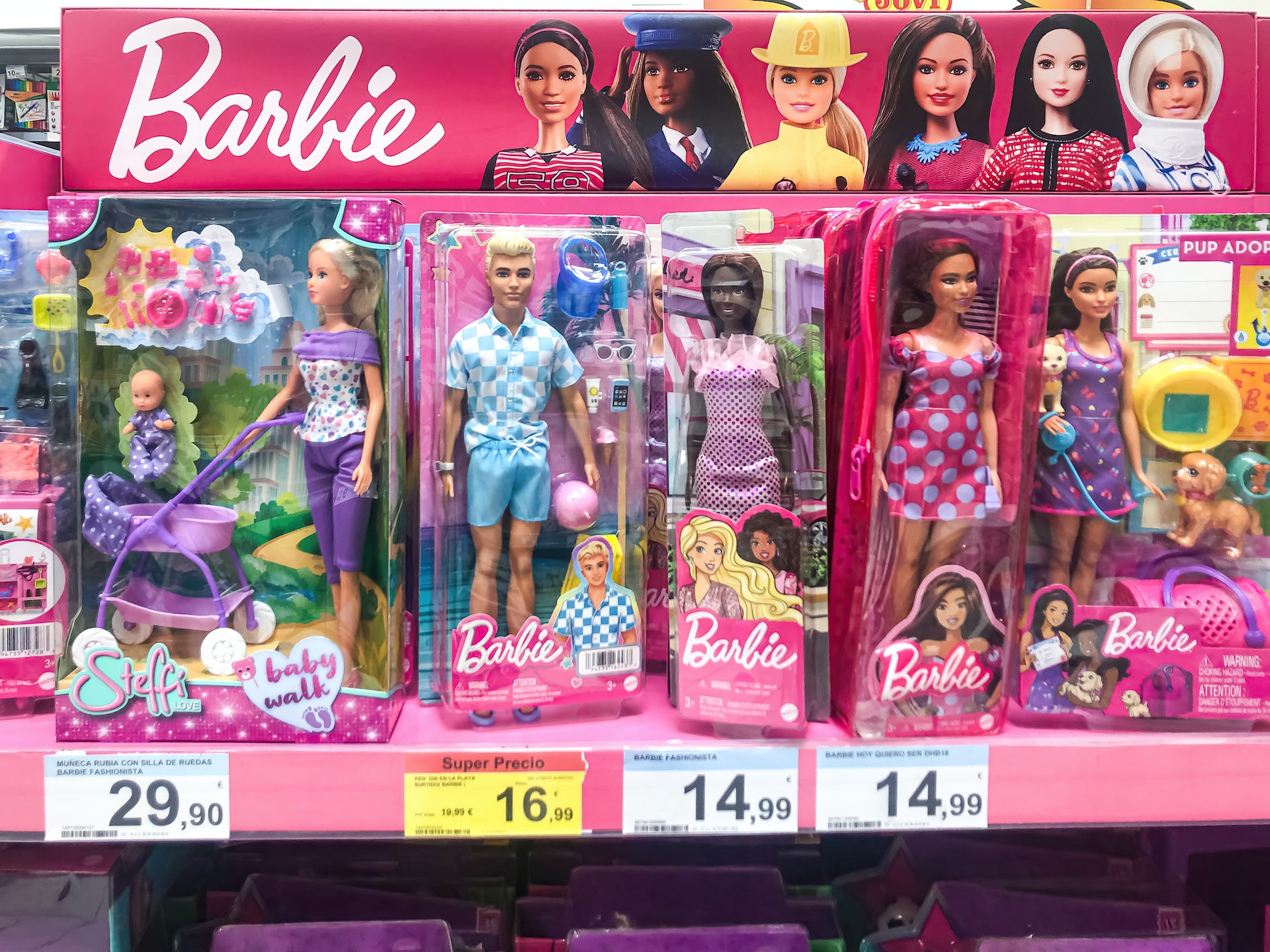




Barbie dolls and “Star Wars” movies and toys have entertained generations of American children – in many cases, well into adulthood. But these brands’ influence stretches beyond a penchant for hot pink and lightsaber battles.
In particular, both the “Barbie” movie, released in July 2023, and a “Star Wars” franchise television series called “Andor” offer important lessons about revolutions.
Hollywood has long been obsessed with revolutions. There are uprisings in other popular movie franchises like “The Hunger Games,” “Harry Potter” and “Avatar.”
In each fictional universe, an oppressed group stages a revolution that fights for political and economic freedom.
As experts in violence and democratization, we have written about how popular culture allows people to better understand real-life political movements and crises.
We also use films and shows in our classes to help students learn about why revolutions happen.
Both “Barbie” and “Andor” are useful for those who want to understand why revolutions happen and what it takes for them to happen.
Their fundamental point: Before the start of any revolution, the oppressed have to first recognize their oppression.
“Barbie” begins in the fictional, very pink and California-perfect Barbieland. Almost everyone is either a version of a Barbie doll or a Ken doll. And the women – all called Barbie – are in charge of Barbieland. Yet the men – all collectively called Ken – are blissfully unaware that they experience political, economic and social repression.
These men are not part of the Barbieland government. They do not work. The primary Ken, played by actor Ryan Gosling, describes his job as “beach.” It was unclear where the Kens even live, since only the women live in the plastic, perfect homes.
It is only when the main Ken leaves the universe of Barbieland and accidentally enters the real world that he realizes men are oppressed back home.
Ken sees that men have power in corporate offices and other places in the real world. He returns to Barbieland with a desire to improve life for other Kens. The Kens then claim all of the Barbies’ houses as their own, and grab all of the important jobs in Barbieland. Then they try to change the constitution – but the Barbies ultimately stop them.
The lead character Cassian Andor from the “Star Wars” universe, meanwhile, had a similar experience. Andor lives under the autocratic Galatic Empire. Unlike the Kens, Andor is somewhat aware that the Empire is oppressive. At a young age, Andor witnesses the Empire’s army, called the Imperials, kill his friend. When he fights back, he is sent to a “youth center,” akin to a juvenile prison, for three years.
But instead of becoming a rebel when he is older, Andor quietly takes advantage of the system and makes money stealing from the Empire. It is not until he experiences severe repression in prison that he tries to actually overthrow the Empire.
These fictional universes also show how difficult it is for revolutionary leaders to recruit and organize others to help fight for their cause. Sometimes, the cost to fight might be too high, as the government in power could imprison or execute anyone who tries to change the system. This discourages participation in the revolution. If the cost is lower, it might be easier to recruit revolutionaries.
In “Barbie,” when the Kens try to change the constitution to give men all of the power, the Barbies do not fight back with violence. Instead, they trick the Kens into being jealous of one another so they become divided and cannot work together to change the constitution. This lack of violent response by the Barbies lowers the potential risk of revolution for the Kens. As such, it is easier for the main Ken to recruit other Kens to change the system.
This is not the case in “Andor.” The cost of seeking change is death, and few people join in the revolution.
It is not until Andor goes to prison that he decides that the cost of doing nothing is higher than the cost of joining the revolution. When he is in prison, he realizes that no matter what he does, the Empire is going to kill him by working him to death. He then decides to revolt with other prisoners.
In real life, recruiting others to join a revolution can becomes easier over time if more and more people participate. The more people there are, the harder it becomes for the government to punish all the people who are rebelling. This, in turn, makes it safer to join the cause, implying that more people may join in.
The prison uprising in “Andor” illustrates this point.
Andor convinces other prisoners to rebel by truthfully telling them that 5,000 other people will fight with them. He explains that the number of prisoners would significantly outnumber the prison guards. All of the other prisoners then decide to fight back and escape, as their chance of successfully escaping is higher and their chance of being punished is lower.
Both “Barbie” and “Andor” also teach us what it takes to maintain peace after a revolution: It is essential to include the opposition in government.
After the Ken revolt, the Barbies bring the Kens more into the government of Barbieland. The narrator hints that the Kens will eventually gain as much power and influence as “women have in the real world.”
After the “Andor” rebellion, a government called the New Republic forms after the uprising and recognizes that in order to maintain peace, it must give political amnesty to former members of the failed Galactic Empire.
Most civil wars end with one side winning, and few end in a negotiated peace deal.
However, even with one side winning the war, research shows that the winning side still needs to include the losing side to prevent further violence.
After a revolution or civil war, government policies that aim at creating equality and equity, share power with marginalized groups and give amnesty to the opposition can go a long way toward preventing future violence.
However, it is still challenging to maintain peace after a revolution takes place. The civil uprisings in Afghanistan from 1992 through 1996, the Central African Republic from 2012 through the present, and Syria from 2011 until today all demonstrate that it is hard to maintain peace after a civil conflict. All three of these places have had violent uprisings to challenge the government in control. Violence and political instability are also common in these three countries, which are all internally divided and controlled by different governments and militia groups.
One of the best predictors of civil wars is whether a country has had a civil war within the last five years. The risk for a civil war decreases over time the further a country gets from its last internal conflict.
In Barbieland, the Kens need to feel like they have a voice and some control over their lives once the Barbies reassume power – or else they may see another Ken uprising. This is concerning because the president denies the Kens’ request for a Supreme Court seat and instead says that maybe a lower court judgeship could happen. Could this be a sign that there is more trouble ahead in Barbieland?
The revolution also does not resolve in “Andor,” and we have to wait until “Return of the Jedi” for that rebellion resolve. However, the New Republic that eventually emerges is unable to stave off conflict, as the First Order rises and destroys the New Republic Senate in the seventh “Star Wars” movie.
While revolution is hard, governance is harder.
This article is republished from The Conversation, an independent nonprofit news site dedicated to sharing ideas from academic experts. The Conversation has a variety of fascinating free newsletters.
Read more:
How I learned to stop worrying and love the doll – a feminist philosopher’s journey back to Barbie
‘Barbie’ is, at its core, a movie about the messy contradictions of motherhood
Michael A. Allen has previously received funding from the Minerva Research Initiative, the Department of Defense, and the Army Research Office. The views expressed here are the authors' only and do not represent the views of any outside funder.
Julie VanDusky-Allen does not work for, consult, own shares in or receive funding from any company or organization that would benefit from this article, and has disclosed no relevant affiliations beyond their academic appointment.






















































Comments