War in Ukraine is contributing to the erosion of global consensus over the spread of dangerous weapons
Published in Political News
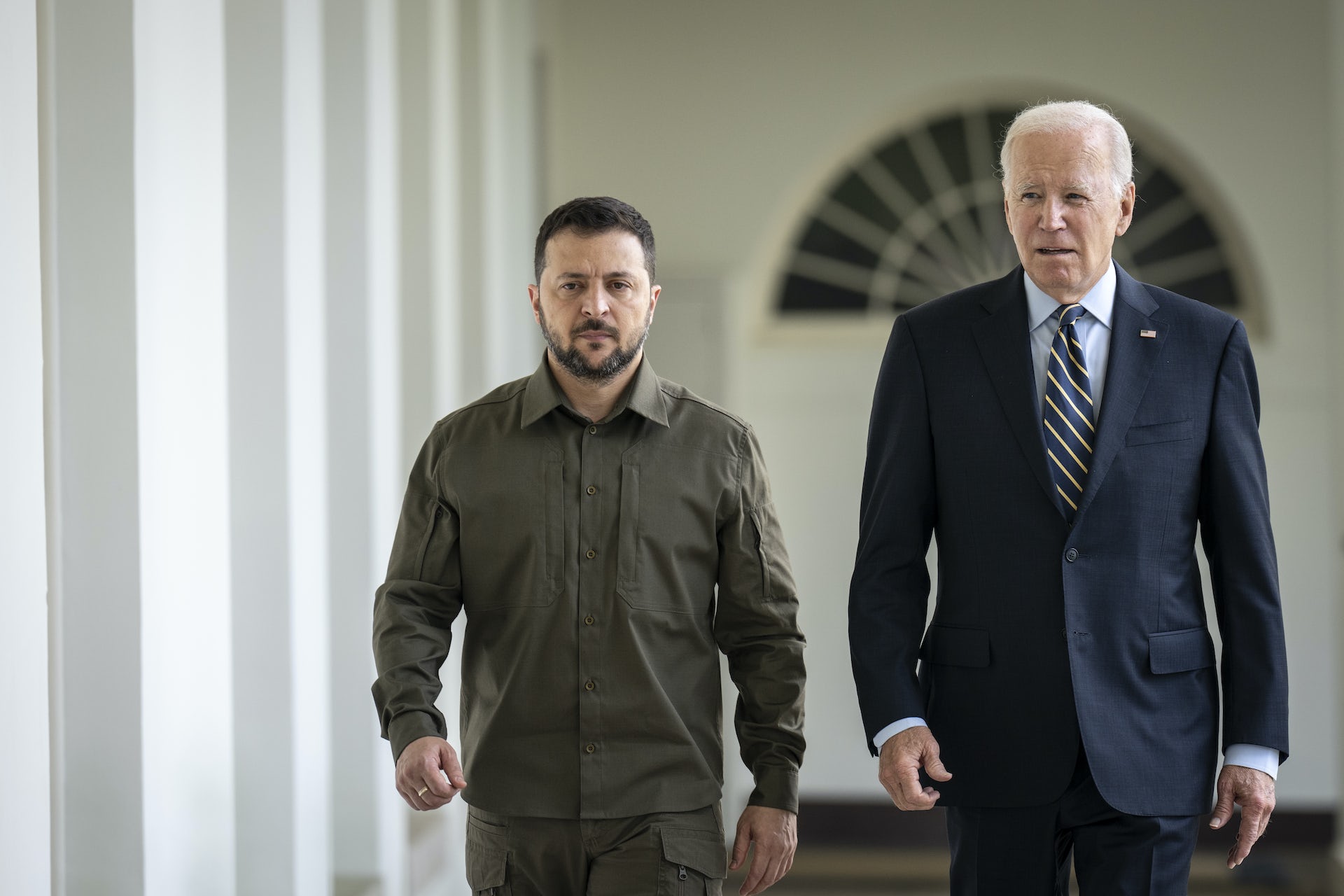
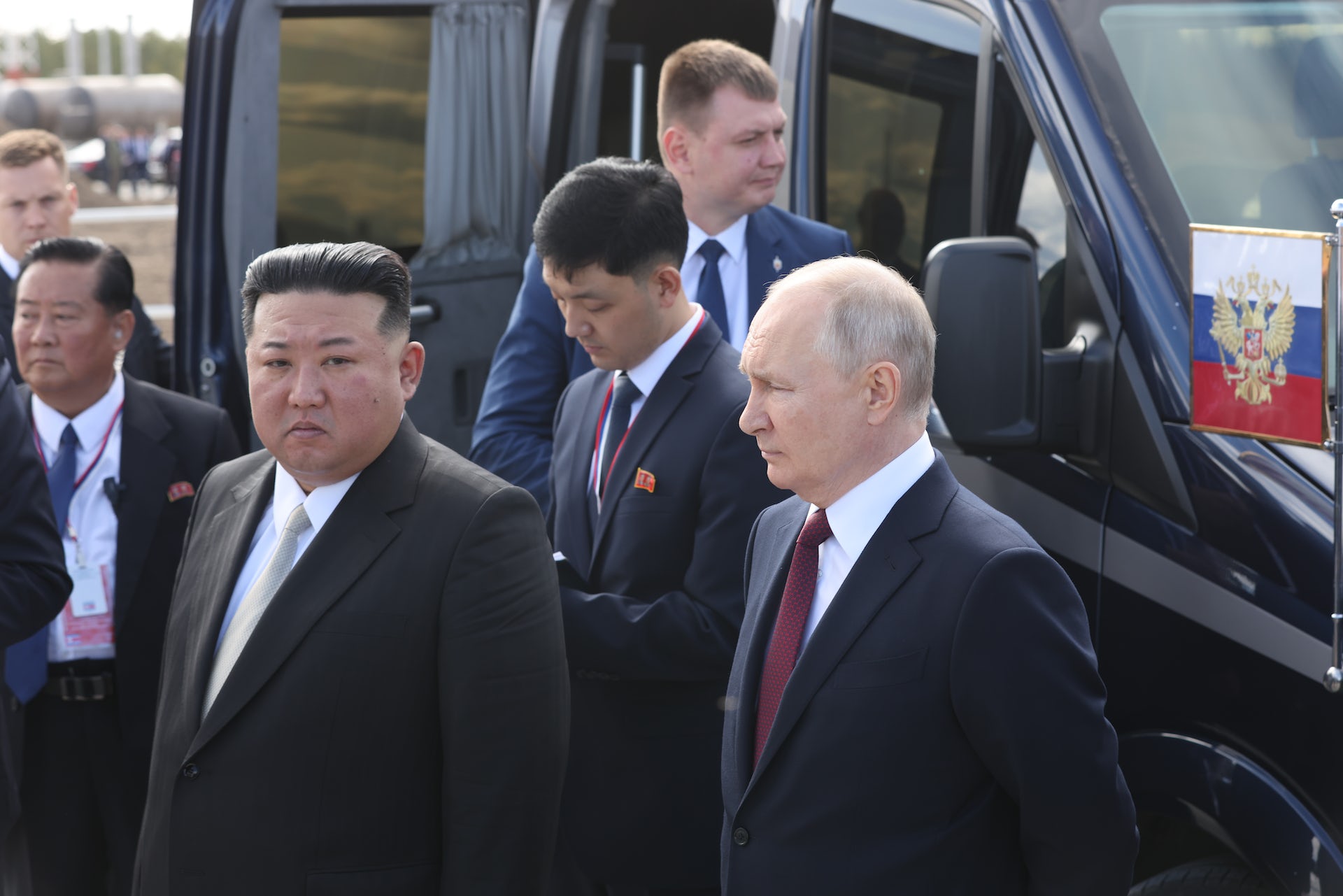

When Ukraine’s Volodymyr Zelenskyy met with President Joe Biden, on Sept. 21, 2023, the topic of weapons supply was on the agenda. That same issue almost certainly came up between Russia’s Vladimir Putin and North Korean leader Kim Jong Un when the pair met earlier in September.
The fact is, with the conflict in Ukraine having now dragged on for more than a year and a half, both sides are increasingly desperate to keep the flow of arms going. And that has alarmed people like Izumi Nakamitsu, the United Nations’ high representative for disarmament affairs, who on Sept. 12 warned of violations of international resolutions against the illegal transfer of weapons and the risk of proliferation even after the war ends.
As an expert on international security and weapons proliferation, I share these concerns. After the 9/11 terrorist attacks in 2001, efforts were made to forge a global consensus on the spread of weapons. But the war in Ukraine is contributing to a reordering of global politics that has eroded cooperation to stop the spread of weapons and dangerous technology, such as advanced missiles, drones, munitions, and the components and know-how necessary to build them.
The war itself isn’t the cause of this trend. Growing competition between China, Russia on one side and the United States and its allies on the other prompted the drift away from consensus on weapons nonproliferation.
Efforts to encourage global disarmament and nonproliferation date back to before World War I and can be seen in the various conventions to stop the spread of nuclear, chemical and biological weapons. But they varied in scope and effectiveness, and it is now recognized that during that time the Soviet Union clandestinely violated treaties including the [Biological and Toxin Weapons Convention.
Global concerns over the threat from terrorism after 9/11 meant that countries looked towards nonproliferation with more urgency. With international support, the U.N. Security Council passed Resolution 1540 in 2004, establishing a legally binding mandate for all member states to confront the illicit proliferation of weapons of mass destruction.
It also created an international committee charged with providing support for member states to combat proliferation and develop strategic trade control systems.
Since then, the committee, with broad international support, has assisted states through answering specific requests regarding improving their strategic trade control systems and organizing outreach activities that help individual states address particular issue areas, such as improving their compliance with various nonproliferation regimes.
These events are often supported by numerous states, including China, the United States and Russia. The U.N. has also instituted multilateral sanctions regimes to address illicit proliferation and its role in conflicts, ranging from sanctions on the North Korean missile and nuclear programs to the now paused Iran nuclear deal.
This system has seen legitimate transnational cooperation – even among rivals – and success in curbing illicit proliferation
The post-9/11 nonproliferation consensus built upon already existing multilateral export control regimes that sought to limit the spread of dangerous weapons and technology. These regimes differed from Cold War-era trade control regimes, like the pro-Western Coordinating Committee for Multilateral Export Controls, or COCOM, which sought to limit the spread of weapons and technology to Warsaw Pact countries, that is those aligned with the Soviet Union and China.
The end of the Cold War brought the creation and expansion of more inclusive nonproliferation regimes – such as the Wassenaar Arrangement, which promotes transparency and greater responsibility in the transfer of conventional arms and dual-use goods and technologies, and the Missile Technology Control Regime, or MTCR, which seeks to limit the proliferation of missile systems and other delivery systems and technology. These followed in the footsteps of the Nuclear Suppliers Group export control regime, which initially included the Soviet Union.
But the consensus on weapons nonproliferation has come under serious threat from increased tensions and rivalry between the United States and both China and Russia – and have come to a head over Ukraine.
Western-imposed sanctions over the invasion of Ukraine have angered Russia and China. To Moscow and Beijing, unilateral sanctions undermine international cooperation and reflect a desire by Western powers – particularly the United States – to assert their will over others.
The United States and it’s allies argue that sanctions are necessary to counter Russian aggression against Ukraine. They are aimed at increasing the cost for Russia to acquire military goods and technology, and make their supply chains more vulnerable to disruption.
Arguments of their merit aside, sanctions have forced Russia to become creative in how it goes about acquiring goods and technology. Russia is increasingly reliant on imports from states that are themselves subject to international sanctions, such as Iran and North Korea, and moving sanctioned items, including weapons, through the Caspian Sea.
Iran has been accused of supplying drones to Moscow and developing drone production facilities and technology, while in return receiving sanction-busting goods from Russia.
Meanwhile, Russia’s increasing ties with – and violation of UN sanctions against – North Korea have undercut multilateral nonproliferation efforts against the isolationist Asian state.
North Korea has been able to leverage arms shipments to Russia into Moscow’s greater support for its missile and nuclear programs, as evidenced by the North Korean leader’s recent visit to the Vostochny Cosmodrome in Russia’s far east.
Within this changing geopolitical environment, U.N. mechanisms to prevent North Korea from building up its weapons stockpile are being eroded. Though Russia and China have voted to renew the U.N.‘s panel of experts committee to assist the enforcing of North Korea sanctions, they also voted against strengthening the sanctions for the first time since 2006.
Western arms transfers, though important for Ukraine’s defense, likewise have consequences for nonproliferation. The U.S. decision to send cluster munitions to Ukraine is particularly controversial. The transfer of cluster bombs could undermine efforts – and the U.S.’s own momentum – toward banning their use, something more than 120 countries have signed up to.
The U.S. isn’t alone among Western states in blurring the line on weapons exports. The United Kingdom and France have exported Storm Shadow land-attack cruise missiles to Ukraine – a move that likely violates the Missile Technology Control Regime’s “presumption of denial” affecting missiles with a 300 kilometer range and a 500 kilogram payload. This presumption of denial, though not legally binding, has guided MTCR member states since it’s creation, though not without some past tension.
The U.K. has stated that, given the circumstances, the transfer does not violate the MTCR and has received U.S. support for the export. Any decision by the U.S. to send ATACMS missiles, which Ukraine has requested and the Biden administration has seriously considered, would also greatly undercut any possible continued cooperation with Russia through the Missile Technology Control Regime, as well as China – who although not a member has pledged to adhere to its terms.
Arms transfers are vital to Ukraine’s defense, but Western leaders need to be prepared to address the proliferation consequences that may follow.
The Ukraine war has contributed to a fracturing of the global consensus on nonproliferation in a way that erodes cooperation and has seen the rise of policy driven by competing global blocs, as it was during the Cold War. This is evident not only in the competition for weapons stemming from the Ukraine war, but also in the way that individual countries are levying controls on areas involved in the development of weapons.
Take, for example, the tit-for-tat unilateral-applied export controls and sanctions between the U.S. and China.
They target areas such as academia, semiconductors, foreign direct investment and battery supply chains. These previously neglected realms are all receiving increased attention due to their role as sources of knowledge and goods for emerging weapons and technology.
Despite these developments, cooperation on weapons nonproliferation is still possible. Even during the heights of the Cold War there was cooperation on arms control and nonproliferation particularly in the nuclear realm.
Similarly today, the great powers can focus on continued cooperation in areas such as unmanned aircraft, space, nuclear proliferation and deterrence.
The Ukraine war may be a harbinger of a new more dangerous world regarding nonproliferation, but that doesn’t mean multilateral cooperation to stem the proliferation of dangerous weapons is doomed.
This article is republished from The Conversation, an independent nonprofit news site dedicated to sharing ideas from academic experts. The Conversation is trustworthy news from experts, from an independent nonprofit. Try our free newsletters.
Read more:
How Putin has shrugged off unprecedented economic sanctions over Russia’s war in Ukraine – for now
Is the US being hypocritical in taking years to destroy its chemical weapons, while condemning other nations for their own chemical weapons programs? A political philosopher weighs in
Nolan Fahrenkopf is a research fellow at the Center for Policy Research at the University at Albany, which receives grants related to nonproliferation from the U.S. Department of State.





















































Comments