Wagner's mutiny punctured Putin's 'strongman' image and exposed cracks in his rule
Published in Political News
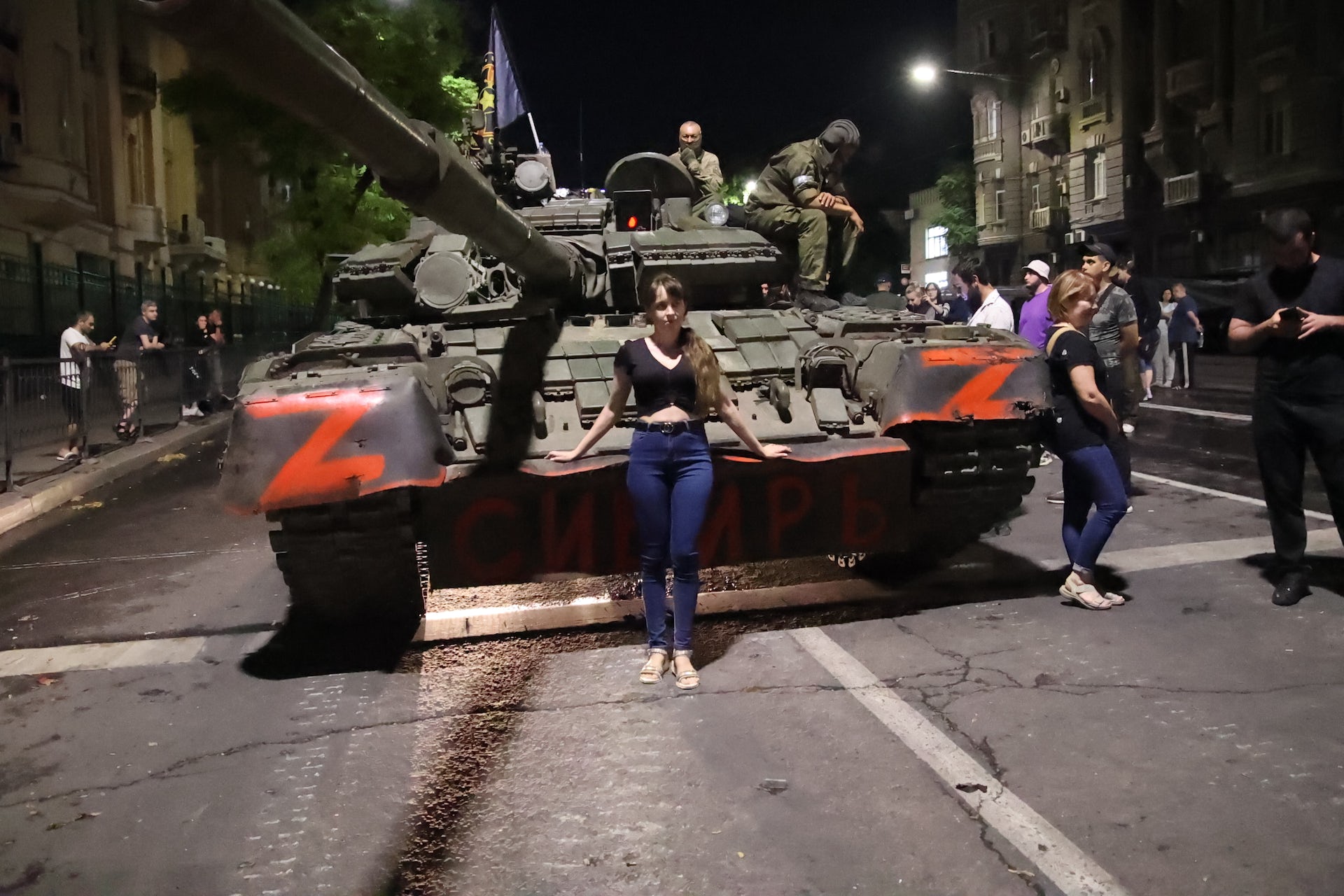
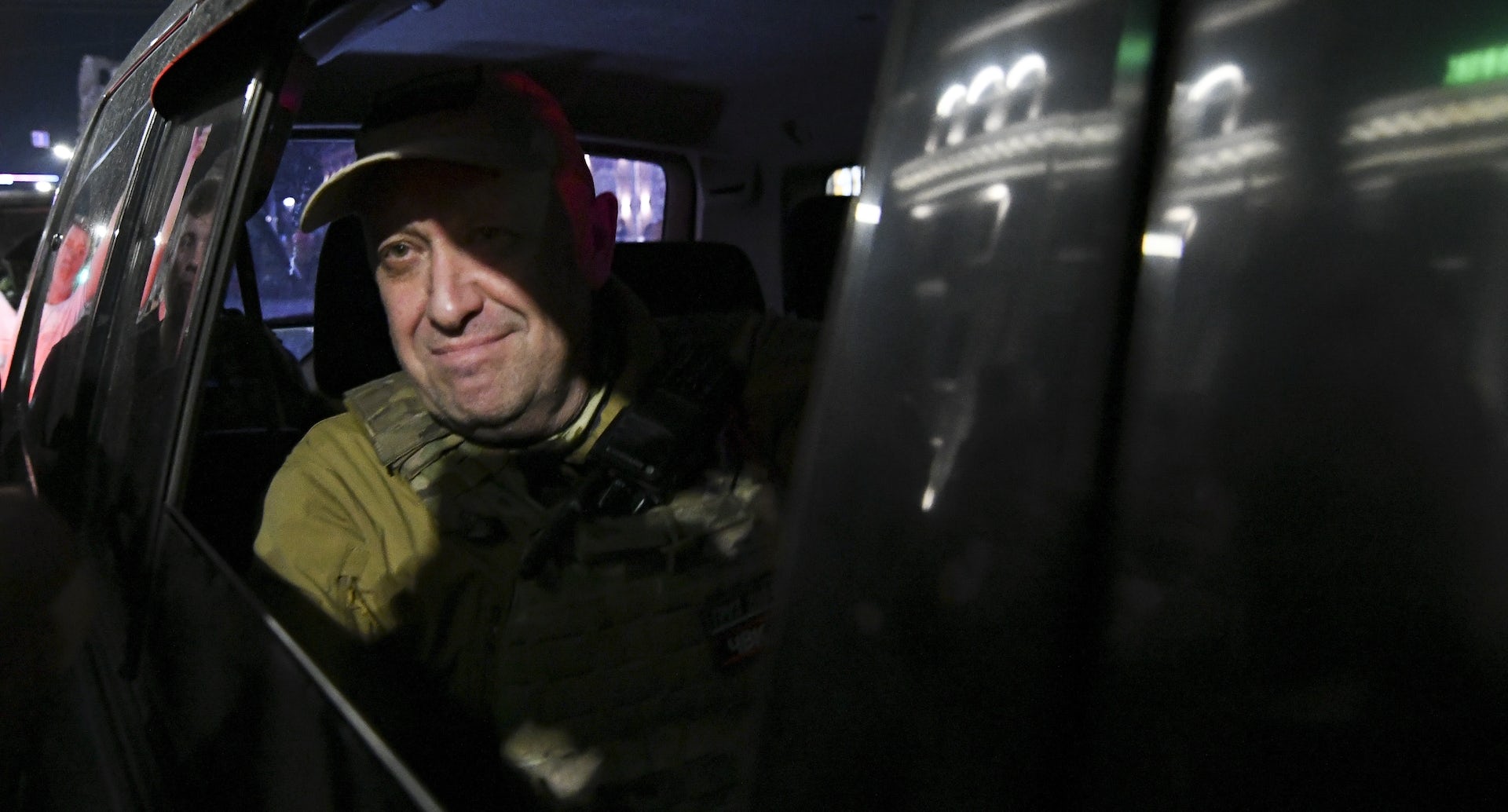

Less than 24 hours after the mutiny began, it was over.
As the rebelling Wagner column bore down on Moscow, Belarusian President Alexander Lukashenko brokered a deal under which Russian President Vladimir Putin promised to drop criminal charges against the mercenary leader Yevgeny Prigozhin and allow him to seek asylum in Belarus. The departing Wagner troops were given a heroes’ send-off by some residents of Rostov-on-Don – the southern Russian town they had taken control over without firing a shot earlier in the day.
Prigozhin gambled and lost. But he lives to fight another day – for now at least.
The events of June 24, 2023, had observers searching for the right term to describe what was going on: Was this a coup attempt, a mutiny, an insurrection?
Did Prigozhin seriously think that he would be able to enter Moscow? Perhaps he genuinely believed that Putin would accede to his demand to fire Defense Minister Sergei Shoigu and Chief of General Staff Valery Gerasimov – two men that the Wagner group head has previously harshly criticized for their conduct of the war.
More radically, Prigozhin may have hoped that he would receive support from elements in the Russian military. Indeed, that seemed to be the case – his group encountered no resistance in taking over Rostov-on-Don or heading north for some 350 miles (600 kilometers) through Voronezh and Lipetsk provinces – though they were reportedly attacked by a helicopter gunship, which they shot down. Prigozhin claimed to command 25,000 troops, though the actual number may be half that figure.
But while the mutiny was short-lived and its goals unclear, it will have lasting effects – exposing the fragility of Putin’s grip on power and his ability to lead Russia to victory over Ukraine.
Prigozhin’s abortive insurrection has punctured the “strongman” image of Putin, both for world leaders and for ordinary Russians.
He was unable to do anything to stop Prigozhin’s rogue military unit as it seized Rostov-on-Don – where the Russian Southern Military Command is headquartered – and then sent a column of armored vehicles up the M4 highway toward Moscow. Putin was forced to make a televised address at 10 a.m. local time on June 24 describing the revolt as a “stab in the back” and calling for harsh punishment of the mutineers. But it was the intervention of Belarus President Lukashenko that brought about an end to the mutiny, not any words or actions from Putin. Somewhat uncharacteristically, both Prigozhin and Putin exercised restraint and stepped back from the brink of civil war by agreeing on the compromise deal that allowed Prigozhin to escape punishment.
Exiled Russian political scientist Kirill Rogov has argued that the most challenging development to Russia’s leaders may not be the mutiny itself, but the rhetoric that Prigozhin used to justify his actions. In an interview released on social media a day before taking control of Rostov-on-Don, Prigozhin argued that the Ukraine war was a mistake from the beginning, launched to benefit the personal interests of Defense Minister Shoigu and an inner circle of oligarchs. Prigozhin brushed aside all the ideological claims Putin has made about the war – the need to denazify Ukraine, the threat of NATO expansion – as just cover for self-interest. “Our holy war has turned into a racket,” he said.
Prigozhin’s words and actions have exposed the vulnerability of Putin’s grip on power and the hollowness of his ideological framing of the war in Ukraine and Russia’s place in the world.
Putin’s constant refrain is that any opposition to his rule – whether it be from the Kyiv government or from protesters at home – is part of a Western plot to weaken Russia. It is hard to imagine that his propagandists will be able to argue that Prigozhin is also a tool of the West.
Over the past 10 years, and especially since the February 2022 invasion of Ukraine, Putin has ruthlessly deployed the coercive apparatus of the state to crush any liberal opposition. At the same time, radical ultra-nationalists – not only Prigozhin but also the military bloggers and correspondents reporting from the war zone – have been given a relatively free hand.
For the most part, they were kept out of state-controlled television broadcasts, but they have reached a wider Russian audience through social media channels such as Telegram, VKontakte and YouTube.
Prigozhin, a former convict who went on to provide catering for the Kremlin before founding the Wagner group, has seen his profile and popularity in Russia rise during the war in Ukraine. In May 2023 polling, he was cited among the top 10 trusted political figures.
It is unclear why Putin was tolerating the nationalists, Prigozhin included, as they increasingly questioned Russia’s war performance. It may be because the Russian president is ideologically aligned with them, or saw them as useful in balancing the power of the generals. Perhaps, also, Putin had come to believe his own propaganda – that nobody could be more nationalist than Putin himself and that Russia and Putin were one and the same thing – echoing presidential aide Vyacheslav Volodin’s 2014 comment: “No Putin, no Russia”.
Certainly prior to the Wagner mutiny, there were growing winds of discontent among nationalists. On April 1, 2023, one group of prominent bloggers, including Igor Girkin and Pavel Gubarev, announced the formation of a “Club of Angry Patriots.” As Wagner soldiers marched toward Moscow on June 24, the club issued a statement of indirect support for Prigozhin.
Prigozhin might now be in the Belarusian capital, Minsk, where – theoretically at least – he can do less damage to Putin. But there are other discontents still in Moscow, and politically active.
Security services in Russia have begun raiding Wagner group offices, but it remains unclear what will happen to Prigozhin’s extensive business operations around the world. Wagner soldiers will be offered the chance to sign contracts with the defense ministry – if they did not take direct part in the insurrection.
Putin has no one to blame but himself for the crisis. Prigozhin’s Wagner group was created with his blessing and promoted by the Russian president. It was a tool that Putin could use to further Russia’s military and economic objectives without direct political or legal accountability – initially in the Donbas in eastern Ukraine in 2014, then in Syria, Libya and elsewhere in Africa.
It was not until July 2022 that Wagner was officially acknowledged to be fighting in the Ukraine war. But over the past six months, they have played an increasingly prominent role and have been rewarded with praise in the Russian media.
But as his prestige grew, so too did Prigozhin’s criticism of those around Putin. Starting in December 2022, he began openly challenging Shoigu. He avoided direct criticism of Putin, though in an expletive-laced tirade on May 9 – the day Russia commemorates the end of World War II – he complained about the lack of ammunition for Wagner fighters and talked about “a happy asshole Grandfather,” in what has been taken to be a clear reference to Putin.
It remains a mystery why Putin did not move to get rid of Prigozhin before now – one of the many mysteries of Russian politics over the past century.
Prigozhin has inflicted significant damage on his once all-powerful benefactor. Exiled Russian journalist Mikhail Zygar goes so far as to argue that the failed mutiny has exposed Putin as a “lame-duck” president; likewise, sociologist Vladislav Inozemtsev asserts that “Putin is finished.”
Such definitive judgments are premature, I feel. Putin is a tough and resilient politician who has faced down the most serious challenge to his authority since he came to power in 2000. But there can be no doubt that the aborted mutiny has exposed profound structural flaws in the Russian system of rule.
This article is republished from The Conversation, an independent nonprofit news site dedicated to sharing ideas from academic experts. If you found it interesting, you could subscribe to our weekly newsletter.
Read more:
Wagner’s rebellion may have been thwarted, but Putin has never looked weaker and more vulnerable
Wagner group mercenaries in Africa: why there hasn’t been any effective opposition to drive them out
Peter Rutland does not work for, consult, own shares in or receive funding from any company or organization that would benefit from this article, and has disclosed no relevant affiliations beyond their academic appointment.
















































Comments