Diversity and moderation over tradition – why Democrats moved South Carolina to the start of the 2024 presidential campaign
Published in Political News
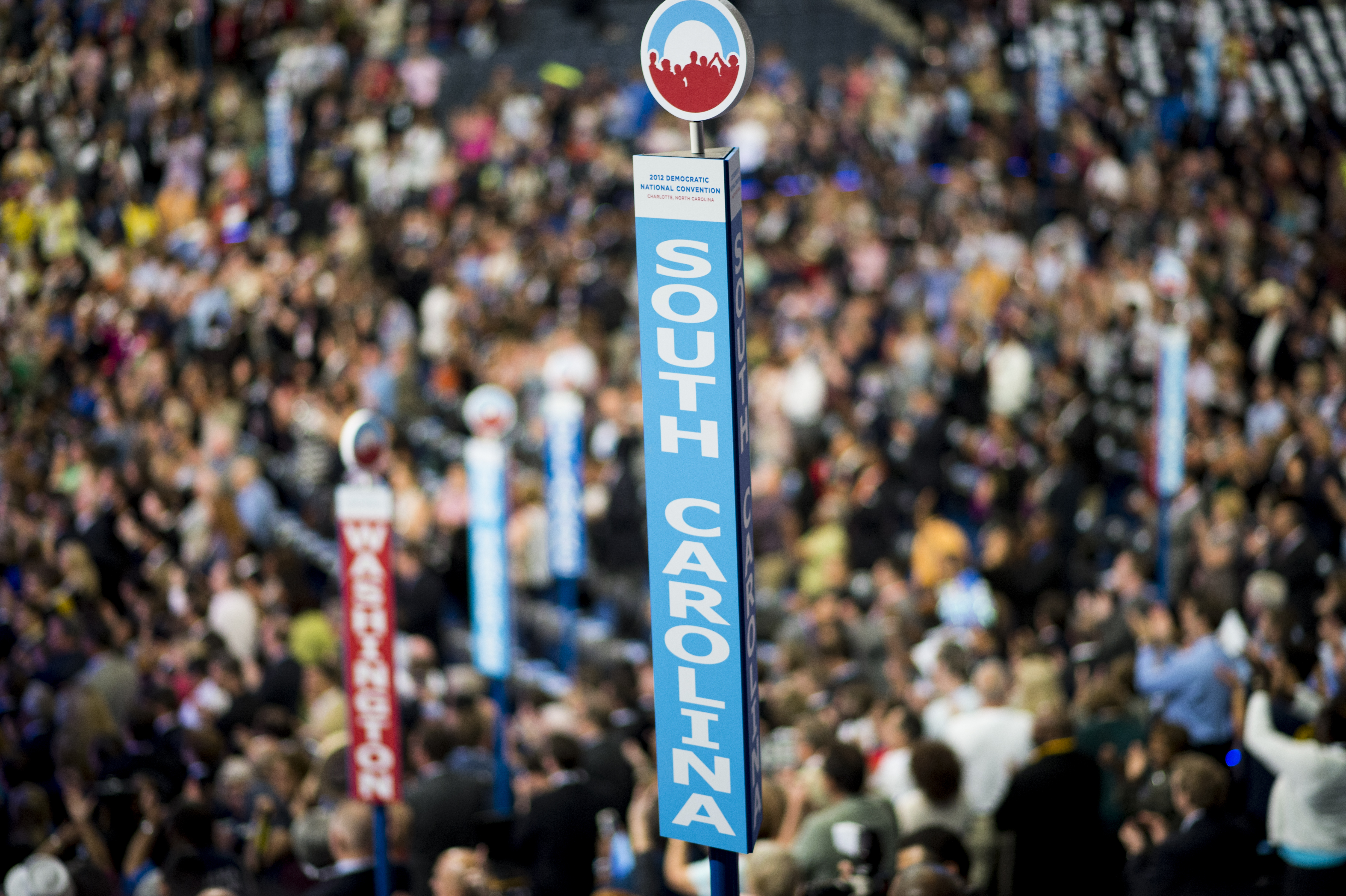
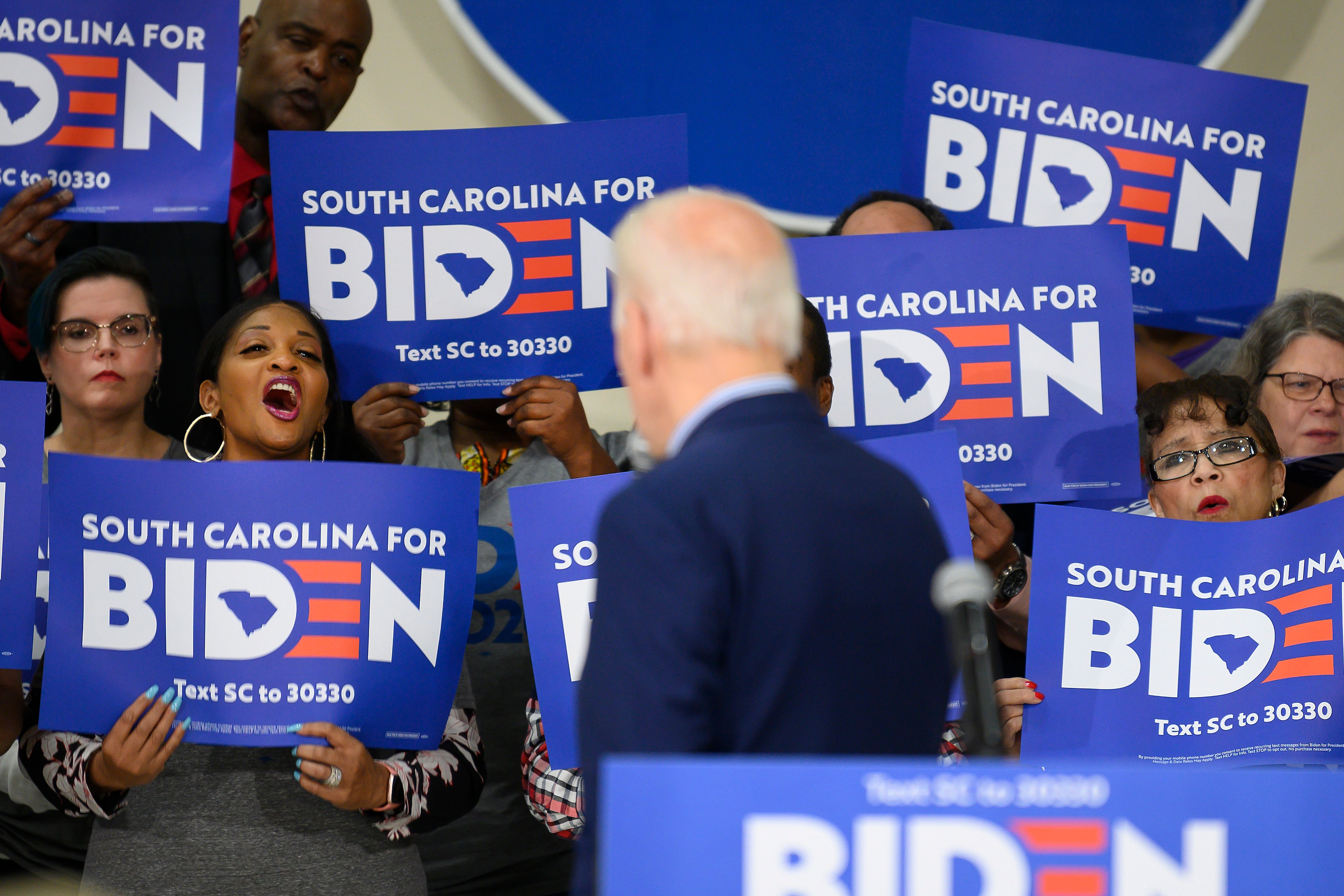




The Democratic National Committee approved a proposal on Feb. 4, 2023, that puts South Carolina first on the party’s presidential nominating calendar, upending 50 years of tradition. For the first time, voters of color, moderates, hourly workers – and Southerners – will have the first say in choosing the party’s nominee.
President Biden weighed in on changes to the nominating calendar in a Dec. 1, 2022, letter to the DNC Rules and Bylaws Committee . He wrote that early nominating states should reflect the diversity of the party and nation and that time-consuming caucuses, like those held in Iowa, should no longer be a part of the process because they disadvantage hourly workers and others who can’t take the required time away from work.
“For decades, Black voters in particular have been the backbone of the Democratic Party but have been pushed to the back of the early primary process,” he wrote. “We rely on these voters in elections but have not recognized their importance in our nominating calendar. It is time to stop taking these voters for granted, and time to give them a louder and earlier voice in the process.”
The new early-state lineup shakes up the old order. Instead of Iowa, then New Hampshire, Nevada and South Carolina, it puts South Carolina first, followed by Nevada and New Hampshire a few days later, then Georgia and Michigan. Iowa, which has kicked off the process since 1972, is noticeably absent from the early voting.
The lineup drew criticism from party leaders in both Iowa and New Hampshire. And the DNC had to grant Georgia and New Hampshire more time to change their primary dates. If ultimately they are unable to meet the new deadline of June 3, 2023, they will lose the ability to hold a DNC-approved early nominating contest. The states’ party leaders, though, say the challenges they face are not easily solvable.
In Georgia, primary dates are determined by the secretary of state’s office, not state party leaders. In New Hampshire, state officials and Democrats have said they will follow state law and hold their primary first, regardless of the DNC calendar. But bucking the DNC’s nominating calendar opens up the state Democratic Party to sanctions, including the automatic loss of half its delegates.
As political scientists in South Carolina, we understand how important the state’s primary is to the Democratic Party. Working at the College of Charleston for over a decade, we have seen dozens of campaign visits and events by presidential hopefuls of both parties to our city and campus.
Given our front-row seats, we wrote “First in South: Why South Carolina’s Presidential Primary Matters,” a book about South Carolina’s primary process. Published in 2020, it examines South Carolina’s demographic makeup, the state’s primary electorate and how it compares with each party’s typical national primary and caucus voter.
What we learned was, on several key metrics, South Carolina voters are a better reflection of the demographic diversity and moderate stance on issues the party prioritizes than voters in Iowa and New Hampshire.
For our analysis, we used presidential primary exit poll data similar to the data reported by CNN, from every state from 2000 to 2016. We compared each state’s demographic profile with the Republican and Democratic parties’ national averages on 12 common exit poll questions – including age, education level, income, race and views on specific issues – to get a picture of the South Carolina electorate and how it compares with typical voters of both parties.
First, and perhaps most obvious, the Democratic electorate in Iowa and New Hampshire is less than 5% Black. South Carolina’s Democratic primary electorate is far more diverse, at over 50% Black. Exit polls during the 2016 presidential primary elections also showed the drastic differences in the demographic makeup of South Carolina and Iowa.
Racial diversity is an important factor, given that Black voters are a critically important constituency in the modern Democratic Party. For example, 87% of Black women who are registered voters identify with the Democratic Party. Overall, 4 in 10 registered Democratic voters are nonwhite.
What’s more, South Carolina Democrats are ideologically moderate on both economic and social issues, which makes it is harder for extreme candidates to win the state’s primary. By comparison, Democrats in Iowa and New Hampshire are more liberal than the average Democratic voter nationally.
For example, in 2020, CNN’s exit polls showed that 57% of Iowa’s Democratic caucus voters supported a government-run health insurance plan. Nationally, only 42% of Americans say they support such a plan, according to data from Gallup. In this respect, Iowa’s Democratic electorate is out of step with the mainstream.
South Carolina’s Democratic primary voters are much better aligned on this key issue, with 49% saying they support a government-run health care plan, according to the same CNN exit polls.
South Carolina’s ideological moderation and racial diversity were key to Biden’s comeback in the 2020 Democratic primary. After losing in Iowa, New Hampshire and Nevada, Biden won South Carolina with twice the vote of his nearest competitor, Vermont Sen. Bernie Sanders.
Our analysis of results, dating back to 1980, shows that South Carolina has a strong record of picking winners in Democratic contests. Since 2004, when the state secured the first Democratic primary in the South, voters have backed the eventual nominee each time, with one exception. In the state’s lone miss in 2004, John Edwards of neighboring North Carolina won the South Carolina primary, but John Kerry went on to secure the party’s nomination.
The plan approved by the DNC on Feb. 4 removes caucus states from the early part of the process and puts Democrats on a different presidential nominating schedule from Republicans, who are maintaining the order of Iowa, New Hampshire, South Carolina and Nevada. Party leaders from New Hampshire and Iowa appealed, unsuccessfully, to the DNC to reconsider the plan before the final vote. The reputation of Iowa Democrats’ caucus system, of course, took a hit after results of the 2020 presidential contest were significantly delayed because of technical problems and reporting issues.
In our view, South Carolina’s first-in-nation position is well deserved. It’s not just about voters’ diversity and moderation on issues. The state’s open primary system permits people to participate in one primary or another, regardless of party affiliation. And its Saturday primaries make it easier for hourly workers to take part.
But there is also reason for South Carolina Democrats to exercise caution. As their counterparts in Iowa and New Hampshire rightly point out, hosting the first caucus or primary is a substantial endeavor for party leaders and citizens alike. Iowa’s inability to declare a winner for weeks after its caucus in 2020 is a cautionary tale.
This article is republished from The Conversation, an independent nonprofit news site dedicated to sharing ideas from academic experts. The Conversation is trustworthy news from experts, from an independent nonprofit. Try our free newsletters.
Read more:
How one man fought South Carolina Democrats to end whites-only primaries – and why that matters now
Black turnout in primaries might make Democrats think twice about swing voter strategy
The authors do not work for, consult, own shares in or receive funding from any company or organization that would benefit from this article, and have disclosed no relevant affiliations beyond their academic appointment.





















































Comments