Editorial: The lesson of the rocket vs. the rail
Published in Op Eds
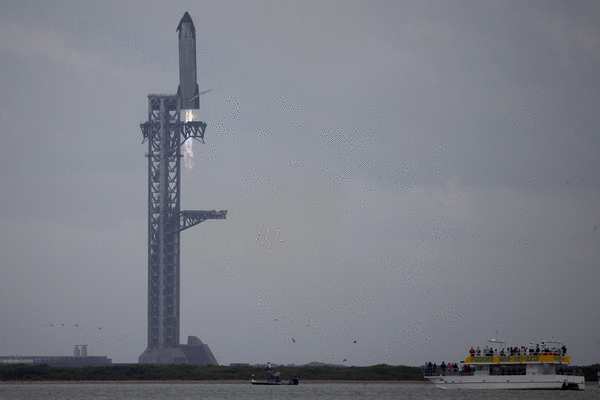
At this rate, Elon Musk is more likely to put people on Mars before California completes the high-speed rail project it started working on nearly 20 years ago.
SpaceX’s Starship recently returned to Earth in unprecedented fashion. It had launched less than 24 hours earlier. The ship then flew back to Cape Canaveral and settled itself between two giant mechanical arms. Yes, a tower caught a rocket. It was an incredible spectacle.
SpaceX put Starship to work, too. The craft deployed 26 Starlink satellites and circled the globe 14 times. Its ability to “catch” Starship shows that SpaceX is well on its way to having the technical know-how to launch hundreds of Starship missions a year. The launch did have a few glitches. Something went wrong with the booster, and it exploded over the Gulf of Mexico. SpaceX has caught the booster three times before, however.
SpaceX founder Elon Musk has said he wants more than 10,000 Starship launches annually by 2030. That cadence of launches is mind-boggling. For reference, NASA’s space shuttle flew 135 missions over 30 years.
The success of SpaceX is also paving the way for America to return to the moon within the next few years. NASA is working with SpaceX to do just that. Musk’s vision of building a city on Mars seems less far-fetched with each passing day, although many hurdles remain.
Back on Earth, California faces a more ground-bound problem. In 2008, voters approved almost $10 billion in bonds to start work on a high-speed rail line between Los Angeles and San Francisco. But the estimated cost has ballooned from $45 billion to as high as $231 billion. The new completion date is 2040. Incredibly, the project has yet to lay a single mile of track.
There are obvious reasons why these two projects have turned out so differently.
For one, Musk and his investors are risking their own money. This feature of the free market helps direct money toward endeavors that have more reasonable chances of success. In contrast, politicians risk other people’s money when backing projects such as high-speed rail. This tends to result in money being funneled into whatever is politically popular in the moment, regardless of the prospects for long-term success.
Consider also what happens when things don’t run smoothly. SpaceX’s early problems nearly bankrupted Musk. That financial pressure forced Musk and SpaceX to work harder and innovate. In California, high-speed rail’s failures haven’t prevented the project from being a lucrative venture for its administrators and consultants.
The next time a politician claims the solution to an economic problem is more government, remember the difference between the rocket and rail.
_____
©2026 Las Vegas Review-Journal. Visit reviewjournal.com.. Distributed by Tribune Content Agency, LLC.













































Comments