Commentary: Should we make daylight saving time permanent? A history lesson from 1883 Chicago
Published in Op Eds
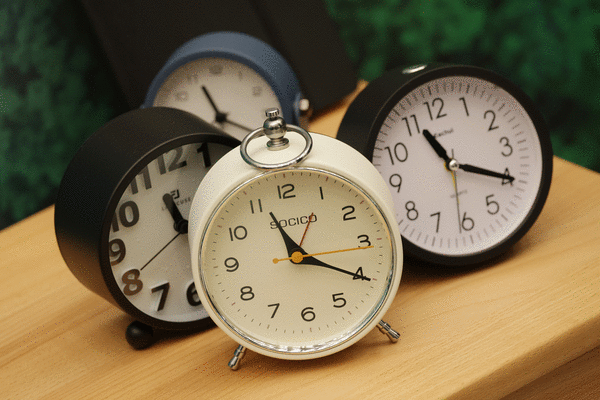
On Nov. 18, 1883, Chicago’s railroad clocks struck noon, stopped, and waited nine minutes and 32 seconds for noon to happen again. A front-page story in the Tribune the next morning opened with the biblical story of Joshua commanding the sun to stand still. The railroads demonstrated that “the hand of time can be moved backward,” the Tribune reported.
The miracle was arranged five weeks earlier at Chicago’s Grand Pacific Hotel. Railroad managers, keen to settle the matter before Washington could, adopted railroad engineer William F. Allen’s plan to replace some 50 railroad standards with five zones an hour apart. Chicago’s own time, set by the sun over the city, ran nine and a half minutes ahead of the 90th meridian. On the appointed day, the city handed the difference back.
The Tribune sent a man to the West-Side Union Depot to watch. The dispatchers “all looked unusually solemn.” Shortly before noon, “the conductors, engineers, and other train-men dropped in one by one,” each with his time piece in hand. The depot master laid his chronometer under a magnifying glass. At noon, the wall clock was stopped, and a telegraph sounder began repeating each swing of a pendulum at the Allegheny Observatory in Pittsburgh. For nine and a half minutes, nothing happened with great precision. When the signal ceased, every watch was set at once; a murmur of satisfaction went round, and everybody except the telegraph operators departed with a sigh of relief.
Downtown, jewelers put cards in their windows: “Set back nine minutes.” The greeting on the street was “Have you the new time?”
Nobody minded surrendering nine minutes, because everyone surrendered the same nine minutes. That is what a standard is for.
Now, the U.S. Senate is being asked to move the downbeat. On July 14, the House passed the Sunshine Protection Act, 308 to 117, which would turn daylight saving time, a summer arrangement, into a lifetime appointment. The president wants it. The Senate left town for the midterms without a vote, and if it does nothing before the 119th Congress concludes in January, the bill dies.
The idea is colorable in July, when the House voted, and will be judged in January. Chicago’s latest sunrise of the year comes in early January, at about 7:18 a.m.; under permanent daylight saving time, it would come at about 8:18. The sun would keep its appointment, and Chicago would turn up in the dark holding a lunchbox.
The country has run this rehearsal before. In December 1973, in a sumptuary mood brought on by the oil embargo, Congress put the nation on year-round daylight saving time for two years. It took effect Jan. 6, 1974; the next morning, the sun rose in Washington at 8:27 a.m. Florida buried eight schoolchildren killed on dark roads in the first weeks, and while statisticians later declined to blame the clock for every death, parents had reached their own verdict. Public support fell from 79% to 42% by February. A week after Richard Nixon resigned in August, Sen. Bob Dole introduced a repeal. The House voted 383 to 16, and by late October, the country was back on standard time. A two-year law lasted 10 months, outliving the president who signed it by 11 weeks.
Musicians know this temptation. Orchestras drift sharp. A higher pitch sounds brighter, the strings ring, the audience thrills — the singers pay, straining toward notes the composer set lower. In 1859, largely to spare its singers, France fixed concert pitch by law at 435 hertz. The world later settled on 440, and the Berlin Philharmonic tunes to 443. Permanent daylight saving time is pitch inflation applied to the day: We get a brighter evening, bought with a morning in which children must stand in the dark.
The American Academy of Sleep Medicine favors permanent standard time, the winter clock. History agrees with the doctors. Standard time was born in a Chicago hotel, became federal law in 1918 and has outlasted every experiment since. Any state already may keep it all year; Hawaii and most of Arizona do, and the sun has raised no objection. The Senate can end the twice-yearly switch and still keep the mornings: Amend the bill to lock the clock where Chicago set it.
I write from Tampere, Finland, where my wife and I send our two children to school in December darkness. The sun rises after half past nine, and nobody proposes making it later. Finland pressed Europe to stop changing clocks, and its government asked for permanent winter time. The European Parliament voted 410 to 192 in 2019 to end the switch, and Europe has spent seven years agreeing that the hands should stop and quarreling over where. The answer already is in this newspaper’s archive, on the Nov. 19, 1883, front page.
Illinois’ senators should carry that front page to the floor. The railroads asked only that a continent be wrong about the sun by the same nine minutes; the House would have it wrong by an hour, all winter, forever.
Have you the new time? Chicago has had it since 1883, and it is still correct.
____
David Woodard is a conductor and writer based in Tampere, Finland.
___
©2026 Chicago Tribune. Visit at chicagotribune.com. Distributed by Tribune Content Agency, LLC.












































Comments