Justin Fox: Please don't let Flock turn you against police cameras
Published in Op Eds
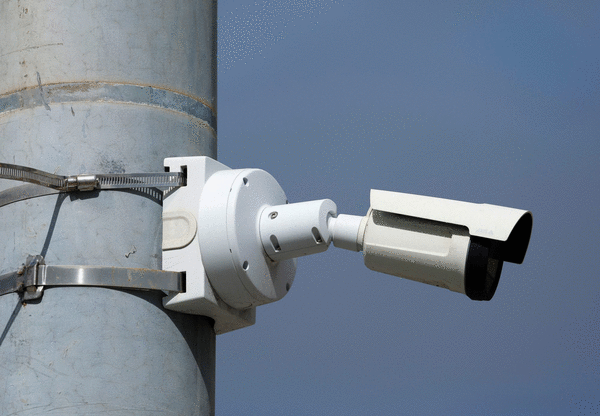
The first license-plate-reading cameras in the U.S. were installed 40 years ago in Galveston County, Texas. They were supposed to catch speeders, but Texas law didn’t really provide for a means of enforcement and almost everybody hated them. Within a year or so they were gone.
In 1987, brothers and recent college graduates Jim and Adam Tuton set up speed cameras in Paradise Valley, Arizona, and met with more success. Traffic collisions fell 42% in the affluent Phoenix suburb and locals seemed happy with the safety improvement. The town has stuck with traffic cameras ever since.
Over the decades the company the Tutons founded, American Traffic Solutions, persuaded more communities to adopt speed and red-light cameras, but progress was slow. There were drawn-out legal challenges from angry ticket recipients, and multiple states banned automated traffic enforcement outright.
After a private-equity makeover that included the acquisition of a manager of tolls for rental-car fleets and a name change to Verra Mobility Corp., the company went public via special-purpose acquisition vehicle in 2018. By then it appeared to have landed on a winning formula: Focusing on enforcement near schools and in road-construction zones made it easier to get political buy-in.
The Bipartisan Infrastructure Law passed by Congress in 2021 endorsed this approach, providing funding for automated traffic enforcement in school and work zones but not elsewhere. Speed cameras operated by Verra and other companies are now in place in 392 jurisdictions in 26 states, according to the Insurance Institute for Highway Safety, up from 153 in 17 states in 2020. Verra’s biggest government customer, New York City, now has more than 2,200 speed cameras and 600 that track red-light violations.
These numbers pale in comparison, though, to the 120,000-plus license-plate-reading cameras installed for more than 1,200 public and private-sector customers in 49 states since 2017 by Flock Safety — a company founded that year by three recent college graduates in Atlanta — which have sparked a bipartisan national backlash. Flock cameras are not meant to catch speeders but those who commit other crimes, and both their selling point and the main cause of all the consternation is their networked nature, which allows for relatively easy tracking of vehicles as they move from place to place.
There is a lot to be said for using license-plate readers and other cameras in law enforcement, and it would be a shame if they were all swept away in the current anti-camera fervor. But the past experiences of Verra Mobility and its precursors and the current allergic reaction to Flock’s rapid national rollout are indications that building public support is essential — a step that Flock, a venture capital-backed startup that as of its last funding round in April was valued at $8.4 billion, would seem to have neglected. Making money off license-plate cameras is a lot more complicated than just turning on the cameras.
The first step in building public trust in enforcement cameras is showing that they actually make people safer. For traffic cameras this is well established, with a 2010 Cochrane Review of speed cameras finding evidence of significant declines in speeding and crashes across dozens of studies and a meta-analysis published this summer arriving at similar conclusions on speeding (it didn’t look at crashes).
Reviews of red-light cameras have found reduced red-light violations and injury crashes, albeit at the cost of an increase in rear-enders. For cameras that monitor other kinds of criminal behavior, such as those installed on subway systems and in crime-plagued neighborhoods, most studies also find localized reductions in crime, especially property crime.
There’s much less evidence on the effectiveness of Flock’s networked cameras, mainly because their ubiquity is so recent. A working paper made public in August by two University of South Carolina criminology professors used the staggered deployment of Flock cameras across 216 law enforcement agencies to estimate that installing the cameras reduced motor vehicle theft by 11%, but a critique from the civil-liberties-focused public-interest law firm Institute for Justice argued that it failed to adequately sort out the Flock effect from pre-existing trends. There’s not a lot to go on yet beyond that, apart from Flock’s claim that its cameras “supported more than 1 million investigations, assisted in solving 20% of cleared cases, helped locate more than 10,000 missing persons, and contributed significantly to stolen vehicle recoveries” last year.
I imagine Flock’s network does have some deterrent effect — it makes it easier to catch criminals, after all. But it is also ripe for abuse, and judges and lawmakers will be spending years sorting out how exactly the technology fits with the Fourth Amendment’s ban on “unreasonable searches and seizures.” Fourth Amendment scholar Orin Kerr of Stanford Law School gave a lecture last month on the competing legal theories that is worth a watch, and New York University School of Law’s Policing Project has a License Plate Reader Policy Scorecard that shows just how far most states still have to go in adequately regulating the cameras’ use. I doubt a flood of litigation and legislation is what growth-focused investors such as Andreessen Horowitz had in mind when they decided to back Flock.
At the same time, while traffic cameras appear to be on quite solid legal ground and clearly work in deterring bad driving behavior, operating them turns out not to be the most lucrative business in the world — in part because making them politically acceptable seems to require prioritizing deterrence over revenue generation.
Traffic enforcement for government customers accounts for almost half of Verra Mobility’s revenue, but managing tolls for rental car companies that then charge customers big markups on them brings in two-thirds of the profits, and when Avis Budget Group Inc. gave notice in May that it was terminating its contract, Verra’s stock price fell 71% in a single day. It has failed to recover even though the company has since brought Avis Budget back on board, and Verra’s market capitalization, which peaked at $5 billion in 2024, is now a measly $250 million.
_____
This column reflects the personal views of the author and does not necessarily reflect the opinion of the editorial board or Bloomberg LP and its owners.
Justin Fox is a Bloomberg Opinion columnist covering business, economics and other topics involving charts. A former editorial director of the Harvard Business Review, he is author of “The Myth of the Rational Market.”
_____
©2026 Bloomberg L.P. Visit bloomberg.com/opinion. Distributed by Tribune Content Agency, LLC.

















































Comments