Abby McCloskey: Don't mess with Texas' economic miracle
Published in Op Eds
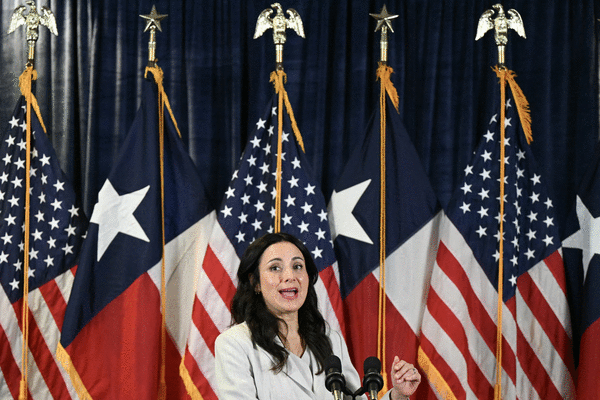
Democrats might think that the Texas Miracle is a deep-red state going blue in the 2026 midterms. But the real Texas Miracle is an economic story, and it’s been unfolding for three decades of uninterrupted Republican leadership. The phrase describes a combination of low taxes, low regulation, energy expansion and investment in education that, together, produced economic growth unmatched by any other large state. But starting in 2027, Texas will be governed by Democrats. So how long will the “miracle” continue?
Texas has long offered proof that limited government results in economic expansion, dynamism and affordability. If Democratic Gov.-elect Gina Hinojosa comes in with an interventionist bent and weakens economic opportunity — as seen in other blue-governed states — get ready for Texas to become exhibit A in the GOP’s economic argument in 2028.
I moved to Texas in 2014 to direct policy for then-Gov. Rick Perry’s second presidential run. Core to his campaign was the Texas Miracle. One talking point was that all the net job growth coming out of the Great Recession happened in Texas. From 2007 to 2014, US employment was down by 275,000 jobs; over that time, Texas was up by nearly 1.5 million, according to AEI scholar Mark Perry. Its economy now rivals that of France, with far fewer residents.
Although economic growth can push up prices, especially if housing stock is limited, Texas remains one of the most affordable states in the U.S. As a result, there’s been a historic migration to Texas, especially from the blue stronghold of California, which ranks toward the bottom on any affordability scale. Since 2020, Texas has gained 2.6 million new residents, larger than the population of New Mexico. Dallas-Fort Worth is on track to soon surpass Chicago as America’s third largest metro area.
To be sure, Texas’ limited-government approach means residents have to make big sacrifices on government benefits, such as healthcare and public education. But millions of Americans have found this trade worth making in exchange for low taxes and plentiful jobs.
So what will happen once Democrats take charge? In January 2027, Texas will get its first Democratic governor in a generation, in addition to a Democratic majority in the state House. (The Texas Senate will remain Republican.) Even the Texans I talk to who are ecstatic about James Talarico’s U.S. Senate win are concerned about what happens next for the Texas economy. They’re glad for a check on the Trump administration in Washington; they worry about California-style governance at home.
The Texas Miracle is worth preserving. For the incoming Democratic administration, that means first doing no harm. There’s no state income tax looming, according to Hinojosa, which would require a state constitutional amendment. That’s good. But her team should be careful not to gum up business activity with regulation or to curb energy production. I support her delaying data centers until Big Tech compensates for higher utility costs for the public. But all the anti-billionaire talk could also risk driving job creators out of the state. She’ll have to strike a balance.
I understand why Hinojosa’s campaign promise of a $1,500 check to each Texas household, drawn from the state’s $27 billion rainy-day fund, is popular. But a one-off payment does little to address structural affordability challenges. We’re also in an environment where — especially if new taxes aren’t being introduced — we might need that money for the electrical grid or public education. Which brings me to the next point.
Hinojosa is absolutely right that education is a top priority, but she’s wrong to make a bogeyman of the state’s voucher program. (Although certainly, improvements could be made.) Half of Texas kids cannot read at grade level, a trend that started more than a decade ago. There’s real work to do here. Keep the voucher program, but increase accountability. Preserve public school access. Get screens out of elementary schools. And get literacy and math on track by third grade, as Mississippi did, with intensive coaching. There’s a good use for the rainy-day fund, right there.
As important as what the Texas Miracle includes is what it leaves out.
Part of the implicit promise of the Texas Miracle was that politics wasn’t going to seep into everything, like it did in some progressive enclaves. Texans wanted no part of blue states’ school curriculum dictates, energy-efficient light bulb mandates or sanctuary-city laws. But then zealous Republicans started doing that kind of thing here, too, with government sweeps searching state universities for DEI, vigilante laws aimed at abortion and tacking the Ten Commandments in public school classrooms.
Partisan culture wars shrink the tent. Economic opportunity broadens it — creating wide open spaces for dynamism and pluralism. Policymakers should, wherever possible, seek to reduce the role of politics in everyday Texans’ lives. That, too, would be a welcome course correction.
Ben Franklin once quipped, “a republic, if you can keep it.” The same goes for this new Democratic administration and the Texas Miracle.
_____
This column reflects the personal views of the author and does not necessarily reflect the opinion of the editorial board or Bloomberg LP and its owners.
Abby McCloskey is a columnist, podcast host, and consultant. She directed domestic policy on two presidential campaigns and was director of economic policy at the American Enterprise Institute.
_____
©2026 Bloomberg L.P. Visit bloomberg.com/opinion. Distributed by Tribune Content Agency, LLC.














































Comments