Editorial: A breakthrough in space travel should transcend politics
Published in Op Eds
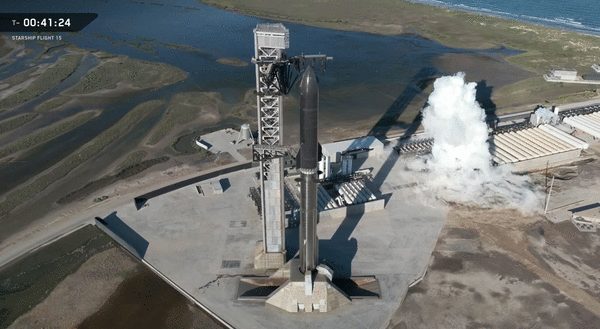
Under Elon Musk’s leadership, SpaceX achieved an engineering feat that delighted viewers around the world. On Saturday, the company caught the Starship spacecraft’s upper stage, Ship 42, in the launch tower’s mechanical arms after it completed 14 orbits and spent roughly 22.5 hours in space. The spacecraft carried the words “Don’t Panic,” a fitting message for a mission that demanded extraordinary precision.
The successful catch was a major milestone for the Starship program, Musk’s most ambitious project yet. The spacecraft is designed to be fully reusable, and recovering its upper stage is a crucial step toward that goal. The achievement showed that an idea once dismissed as science fiction can move closer to reality through years of work by engineers and technicians.
Yet the accomplishment is difficult to separate from Musk’s polarizing public role. His purchase of the platform now known as X sparked intense debate over his promise to create a free-speech platform. He used his wealth to help build a political coalition that played a significant role in the 2024 election. His chainsaw approach to government efficiency, through DOGE, drew fierce criticism. Again and again, Musk has placed himself at the center of political fights.
In today’s toxic political climate, that controversy can overshadow the work of the thousands of SpaceX employees who helped make this moment possible. The company’s livestream captured even its presenters struggling to contain their emotions as Ship 42 was caught. Their reaction reflected years of testing, setbacks and painstaking engineering finally coming together.
The upper-stage catch was a major accomplishment, even though the Super Heavy booster’s catch attempt the previous day was aborted and the booster was destroyed over the Gulf of Mexico. SpaceX has caught boosters before; this was the first time it caught a Starship upper stage returning from orbit.
Because the program is so closely associated with Musk, some pundits and politicians are likely to question his judgment or dismiss the significance of the achievement. But doing so diminishes the contributions of the thousands of people whose expertise and labor made the catch possible, as well as the prospect of transformative technological advancement in space travel.
Recovering both stages is central to making Starship fully reusable. If SpaceX succeeds, reusability could eventually lower the cost of reaching space and enable more frequent launches. A milestone of this scale should inspire national pride and curiosity about what comes next. Political allegiances need not disappear for Americans to recognize exceptional engineering.
This achievement also offers an opportunity to inspire the next generation, including students in Maryland classrooms, to challenge assumptions and push the boundaries of what seems possible. The lesson is not that every view Musk holds deserves agreement. It is that political disagreement should not prevent us from recognizing professional achievement or honoring the people responsible for it.
Should Musk have stayed in his lane as an engineer and technology executive? Perhaps. Should our political culture draw clearer distinctions between a person’s political views and the work of a company’s employees? Also perhaps. At the very least, each of us can watch the catch, share it with a student and decide whether we are giving this remarkable accomplishment and the people behind it the recognition it deserves.
_____
©2026 The Baltimore Sun. Visit at baltimoresun.com. Distributed by Tribune Content Agency, LLC.

















































Comments