Editorial: At long last, make standard time permanent
Published in Op Eds
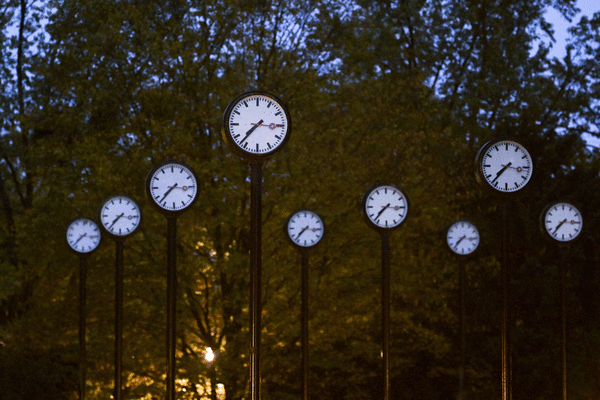
America’s clocks are back where they belong and, once again, most Americans would prefer not to have to change them again.
Congress should heed that sentiment, but the word from Washington is that President Trump still wants to make it happen one more time.
Trump continues to want year-round Daylight Saving Time, even though the House-passed bill that the Florida delegation unwisely promoted was going nowhere in the Senate before Congress recessed for the election.
If he were to get it enacted now, it would mean moving every clock up one hour in late fall or winter, the worst of all possible times.
Make standard time the norm
Trump is correct: Most Americans loathe the spring and fall clock-switching. But he’s wrong to claim that a vast majority preferred year-round DST as the alternative. A poll last year found a modest edge, 56%, for that.
It also didn’t represent what America’s doctors think about DST in the context of its harmful effects on the human body. The American Medical Association has been calling for permanent standard time year-round — as it used to be — since a vote of the AMA’s House of Delegates four years ago. The necessary legislation is stalled in a House committee.
Over the ages, the human body evolved a circadian rhythm naturally synchronous with the rising and setting sun. Societies everywhere set noon, the midpoint of their days, at the time in the sky when the sun was midway between rising and setting.
Changing nature is beyond the actual powers of Congress; indeed, beyond the reach of even Donald Trump.
Moving clocks ahead one hour every spring, with its consequence of prolonged early darkness, has been associated with more traffic accidents and with physical symptoms including sleep deprivation, anxiety and depression and — controversially — heart attacks. The mind can eventually adjust, but not the body.
“Less morning light can decrease levels of the mood-boosting hormone serotonin. In contrast, exposure to light later in the evening can delay the production of melatonin, the hormone that helps you fall asleep,” explained HarvardHealthOnline in 2023.
A change in time of war
It wasn’t until World War I, an unnatural event, that anyone thought there were benefits to be had by tampering with natural time. A much-referenced essay by Benjamin Franklin in 1784 was facetious, written to satirize the French upper crust for sleeping late.
The wartime pretext was that DST would save on coal consumed for heating and electricity, but recent data is inconclusive as to energy-saving benefits.
What’s not in doubt is the public’s dissatisfaction with the year-round DST that the Nixon administration and Congress revived in 1974 to cope with an Arab oil embargo. Accounts of children killed and injured as they made their way to school in predawn darkness helped spur repeal in short order.
And those dark winter hours underscore the objection of some Midwestern and Western senators who are blocking the year-round DST bill. They point out that sunrise in December and January would not come until nearly 9 a.m. in places like Lincoln, Nebraska, and even later elsewhere.
Sen. Steve Daines, R-Mont., argues that it would mean putting kids on buses when the sun in western Montana wouldn’t rise until 9:30 a.m.
What “Florida likes for tee times at certain times of the year” doesn’t work for his constituents, Daines said.
“Three months out of the year, kids in towns like Bentonville, Fayetteville and Fort Smith would start school ahead of the sun,” said Sen. Tom Cotton, R-Ark., a leading opponent.
Toughest for teens
That would be vicious for teenagers, who are late sleepers by nature, not choice. School bus schedules, set for the convenience of schools, not kids, typically ignore that.
Daines’ snipe at tee times wasn’t off the mark. Trump owns 17 golf courses in the U.S. and Canada and has been open about wanting an extra hour for golfers.
Trump’s fixation with an expensive sport indulged by only one of every seven Americans — according to the industry’s own statistics — recalls a poem written by the social reformer Sarah Norcliffe Cleghorn in 1915.
The golf links lie so near the mill
That almost every day
The laboring children can look out
And watch the men at play
Congress members who care about what’s best for America’s kids — and the nation as a whole — will vote to kill the year-round DST bill and insist on permanent natural time.
_____
©2026 South Florida Sun Sentinel. Visit at sun-sentinel.com. Distributed by Tribune Content Agency, LLC.

















































Comments