Editorial: Detroit automakers, it's past time to catch up with the Chinese
Published in Op Eds
The Big Three domestic automakers reported financial results this month and, as usual, tried to put the best spin on their numbers. As General Motors Chief Executive Mary Barra wrote in her letter to shareholders, “GM is performing well.”
How do you say “Yeah, right” in Chinese?
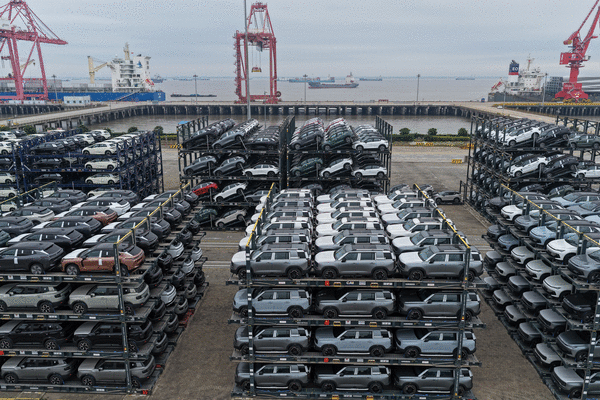
One of the most important economic engines for Illinois and the rest of the Midwest is getting badly outclassed in global markets. Faced with poor sales at home, China’s automakers are cashing in seemingly everywhere outside of China.
Everywhere, that is, except in the U.S.
America’s Big Three automakers have become dependent on trade barriers that keep out Chinese cars. The result is a less competitive U.S. auto industry, and a U.S. population unable to buy well-made Chinese vehicles for sale at a fraction of U.S. prices elsewhere. Consumers outside the U.S. are moving on from GM, Ford and Stellantis. China is remaking the car business without them.
It’s not too late to shore up this strategically important sector, which accounts for hundreds of thousands of American jobs and a significant share of Gross Domestic Product. U.S. automakers have stumbled before and still managed to recover.
This time feels different. The Big Three’s biggest strength is producing gas-guzzling pickup trucks and large SUVs. Those command high profit margins today, but they’re heavy polluters and costly to fuel and maintain. It’s a niche that’s likely to decline.
Market share for the automotive industry can be calculated in more than one way, but any way you slice it, the explosive growth of Chinese brands stands out.
The non-partisan Center for Automotive Research pegs Chinese carmakers’ share of the global market at 25% as of 2025, up from 14% in 2020 and practically zero not that long ago. The Big Three global share has dwindled to just 12%, CAR reports. Analysts expect the Chinese share to keep growing and the U.S. share to dwindle even more.
The milestones keep piling up: In Europe, Chinese car brands for the first time passed popular Japanese brands in the number of new registrations last quarter. In Mexico, despite a substantial tariff, vehicles made in China accounted for 17% of deliveries in the first six months of 2026, up 30% from the year-ago period.
The average price of a new car in the U.S. clocks in at $50,000. Chinese electric and hybrid models routinely sell for half that amount just south of the border in Mexico, and even less elsewhere. Detroit can’t compete with the Chinese on price.
So far, EVs have proven less popular in the U.S. than hybrids, which combine electric- and gas-powered engines. Detroit’s automakers, particularly GM, were slow to recognize the staying power of hybrids, leaving foreign competitors such as Toyota with a significant advantage.
More fundamentally, U.S. manufacturers have been slow to reduce costs, develop new models and increase reliability. That happens when an industry is selectively shielded from market forces.
At the same time, the Big Three have been aggressive in funneling cash to Wall Street investors through dividends and stock buybacks. GM recently announced a massive $20 billion buyback program, after having just completed a $6 billion buyback.
Short-term-minded shareholders love it. But it’s a call to arms for a United Auto Workers union itching to go on strike again when contracts expire in 2028. UAW President Shawn Fain called the GM buyback program “legalized mass looting.”
That’s rich coming from the guy who led strikes a few years ago against the Big Three that resulted in today’s incredibly generous labor contracts — one more reason why the companies are at a competitive disadvantage.
Fain is correct, however, that the automakers should be investing more to shore up their futures rather than lining the pockets of investors. (Stellantis, by the way, had to suspend its dividend because of financial setbacks).
Apart from President Donald Trump’s protectionism, U.S. economic policy hasn’t helped Detroit. The abrupt end of support for electric vehicles under Trump pushed the companies to take massive losses that continue today. Trump’s tariff attacks against trading partners disrupted supply chains and his Iran war has done a number on fuel prices. Inflation is making the U.S. car business a lot tougher.
What should the U.S. be doing? Shielding Detroit from competition can’t go on forever. Chinese automakers have benefited from massive industrial subsidies and low environmental standards, as well as intellectual property theft. They didn’t get the edge they have today by fighting fair. But they weren’t dumb, either.
What’s most needed is consistent support for American competitiveness. Generic policies like research-and-development tax credits can help, but more detailed, specific policies would help more. The U.S. should reinstate subsidies for electrification of vehicles, for instance, and coordinate its trade policy with Canada and Mexico to better manage the threat from Chinese automakers.
Writing in the Washington Post recently, Ford boss Jim Farley pointed out the need to train Americans in skilled trades. A shortage of blue-collar talent is holding back the economy, and government could do a lot more to correct the shortfall.
The U.S. badly needs to wise up and use its economic power to support advanced industries before they become irrelevant on the global stage. Stupid isn’t working. It’s time for America to get smart about its industrial future.
_____
©2026 Chicago Tribune. Visit chicagotribune.com. Distributed by Tribune Content Agency, LLC.
















































Comments