Editorial: Cost-of-living crises don't need to cost so much
Published in Op Eds
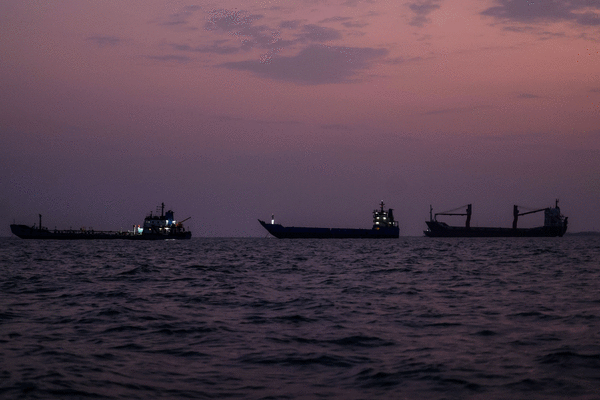
Time and again, cost-of-living crises like the current global energy-price shock confront governments with a dilemma: Either do the difficult work of identifying and supporting the vulnerable, or throw money at everyone whether they need it or not. Time and again, they overwhelmingly choose the latter.
It’s a habit they can no longer afford.
When Russia invaded Ukraine in 2022, the accompanying surge in energy prices — particularly in Europe — exposed serious gaps in social safety nets. Unable to quickly locate and reach the hardest-hit consumers, governments resorted to suboptimal measures such as blanket relief payments and price controls. These undermined efforts to reduce consumption and required vast fiscal resources — in the European Union, about 1.2% of gross domestic product in 2022. By one estimate, the cost could’ve been about a third as much if support had been targeted at the poorest 20% of households.
Were any lessons learned? Hardly, judging from this year’s energy shock caused by the war in Iran. Although the EU’s fiscal response is smaller — expected to reach about 0.2% of GDP by year-end — it again has consisted predominantly of untargeted price and income measures, such as Germany’s hefty fuel-tax discount and Sweden’s cash payments tied to electricity and gas consumption. The European Commission estimates that targeted measures have accounted for only 25% of the total cost — the same as in 2022.
Europe isn’t alone. Throughout the world, policies aimed at mitigating the energy shock have been profoundly wasteful. Although the Organization for Economic Cooperation and Development recommends that such measures be targeted and temporary, only a small portion of its 38 member states have complied. And the impact isn’t only fiscal: The US administration’s deal to secure more Russian diesel has incurred a large geopolitical cost for what promises to be a vanishingly small effect on prices.
To be sure, sweeping responses have their advantages. They’re politically appealing: Voters notice when prices at the gas pump fall. They demand less bureaucratic coordination. Yet over time they create bad incentives. Why invest in energy-saving equipment when you can count on the government to step in whenever prices spike? Worse, such policies burden already severely stretched public finances: Research suggests that the fiscal cost of untargeted measures can be as much as 22 times greater, particularly for subsidies aimed at producers such as power utilities.
When the next shock comes, governments must be better prepared. They have much of the information they need on the income, size, location, energy efficiency, social program participation and bank details of households. The challenge is linking all the data in ways that allow rapid identification of the needy and delivery of aid — and generating the political will to make the necessary investments when there’s no crisis to focus officials’ attention. Denmark, for example, has combined data on income and energy sources to target people most exposed to high heating costs.
Ultimately, the best path to energy resilience is to reduce reliance on fossil fuels in the first place. In the meantime, and in other sectors, cost-of-living shocks will continue. They need to cost taxpayers less.
____
The Editorial Board publishes the views of the editors across a range of national and global affairs.
©2026 Bloomberg L.P. Visit bloomberg.com/opinion. Distributed by Tribune Content Agency, LLC.














































Comments