Editorial: America used to have standards for political rhetoric
Published in Op Eds
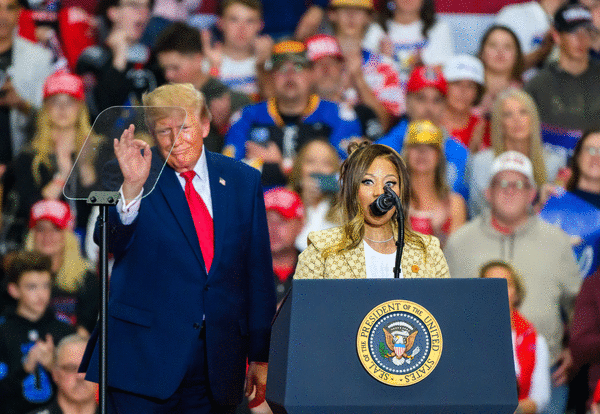
Should America long for the days when a married president would not publicly catcall a woman who was not his wife and when the crowd would not cheer him for it?
At a rally in Michigan, President Donald Trump called attention to a “beautiful” feature of rapper Nicki Minaj, saying her derriere was “hard to miss.” The most revealing part was not simply the president’s remark. It was the thunderous acceptance from the MAGA crowd. There was no gasp, no rebuke, no visible discomfort. The audience cheered.
That reaction tells us something serious about the standards we have abandoned. A president’s words matter. So does the response of the people who hear them. When a crowd treats the public objectification of a woman as entertainment, the breach of decorum becomes more than one man’s lapse. It becomes a measure of what his supporters are willing to applaud.
Family values and standards still matter. They matter in the way we speak about women, in the example we set for children and in the conduct we expect from people entrusted with public leadership. To say so is not to demand perfection or to pretend that earlier generations always lived up to their ideals. It is to insist that ideals still have value and that leaders should be judged against them.
America’s public language has long drawn on religious and moral traditions. “One nation under God” and “In God We Trust” remain part of our civic vocabulary. Leaders across the political spectrum invoke faith, family and service. Many Americans still attend worship, teach their children to show respect and believe that self-restraint is a virtue. Those commitments should mean more than words recited at a rally or invoked during a campaign. They should shape what we are willing to excuse.
For generations, political leaders were expected to show a measure of dignity in public. They were expected to speak with restraint, treat others with respect and understand that the presidency carries obligations beyond winning applause. These standards were never applied evenly, and nostalgia can conceal the failures of the past. But that does not make the standards themselves foolish or obsolete. Civility, modesty and respect are not signs of weakness. They are disciplines that help hold a society together.
Now, vulgarity is often repackaged as authenticity. Politicians insult, swear and provoke, then claim that anyone who objects is too sensitive or out of touch. Trump is not alone. Politicians across the spectrum use profanity and personal attacks to command attention, while social media rewards the spectacle with clicks and applause. But “everyone does it” is not a defense. It is a description of how low the bar has fallen.
The consequences reach beyond politics. Children watch how adults treat one another. Young men notice whether public figures are praised for belittling women. Families hear what leaders say about respect, then see what their audiences celebrate. A culture cannot teach dignity at home while cheering its public rejection.
We have crossed a Rubicon when a president can make a crude public remark about a woman and a crowd responds with thunderous approval. The line is not crossed because every leader must be polished or every joke must be solemnly condemned. It is crossed when people stop recognizing that some conduct is beneath the office and beneath the standards we should expect of one another.
The answer is not to idealize the past or demand spotless leaders. It is to recover the conviction that character matters alongside policy, that restraint is a form of strength and that family values must be practiced as well as proclaimed. We should ask more of our leaders, but we must also ask more of ourselves. Applause is a choice. So is silence. And the standards a nation keeps or abandons are revealed in what it is willing to celebrate.
_____
©2026 The Baltimore Sun. Visit at baltimoresun.com. Distributed by Tribune Content Agency, LLC.












































Comments