Editorial: Voters unhappy with the high cost of green schemes
Published in Op Eds
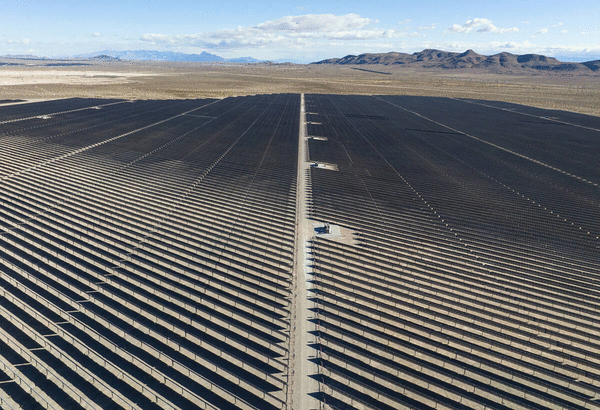
Some voters are starting to realize that green energy isn’t as cost effective as promised.
For decades, green energy backers have promised to deliver the best of both worlds. They claimed that green energy, like solar and wind, would save the planet by reducing carbon emissions and would reduce prices. Despite years of leftist propaganda, most voters aren’t worried about the oceans rising. Even former President Barack Obama once bought beachfront property on Martha’s Vineyard. But saving money is a top priority.
Promises like these lead states around the country to pass ever-more aggressive renewable portfolio standards. In 2020, Nevada voters approved a 50 percent RPS by 2030. California has a 60% RPS by 2030. It also wants 100% of its energy to come from renewable and zero-carbon resources by 2045. Proposals like these start small and then ramp up over time.
In the Southwest, some solar power can make sense, although it’s far from the bliss promised by green energy advocates. See the anger over NV Energy’s demand charge. What many seem to miss is that this plan is an attempt to help customers who don’t have rooftop solar. NV Energy says that non-rooftop-solar customers essentially subsidized their rooftop solar neighbors by $424 million from 2018 to 2024.
The problem is that solar and wind energy are intermittent. Even in sunny Southern Nevada, they don’t provide reliable power. The backbone of the American power system remains fossil fuel and nuclear power.
Now imagine how a scheme like this would work in the Northeast. Democratic leaders in those states have largely embraced these green schemes, and Northeast residents are paying for it — literally. As the Wall Street Journal reports, residential power and heating bills have soared over the last six years. In Maine, they’ve almost doubled. They’re up 59% in New York and 43% in Massachusetts. Many residents in these states rely on heating oil, instead of natural gas. That leaves them subject to the ups and downs of global prices. Not great.
The alternative is natural gas, but Democrats have opposed its development. For instance, in 2022, then-Attorney General and now-Massachusetts Gov. Maura Healey stopped two natural gas pipelines. In 2024, she asserted that net-zero is a “social and economic imperative that informs everything we do.”
But now that her Republican gubernatorial opponent is hammering her over the issue, she wants the Trump administration to fast-track permitting for an expanded natural gas pipeline. Looks like winning re-election is the true imperative.
High power bills remain unpopular, but solving that problem requires understanding what’s driving up the prices.
_____
©2026 Las Vegas Review-Journal. Visit reviewjournal.com.. Distributed by Tribune Content Agency, LLC.


















































Comments