Gautam Mukunda: Too much AI can stifle innovation
Published in Op Eds
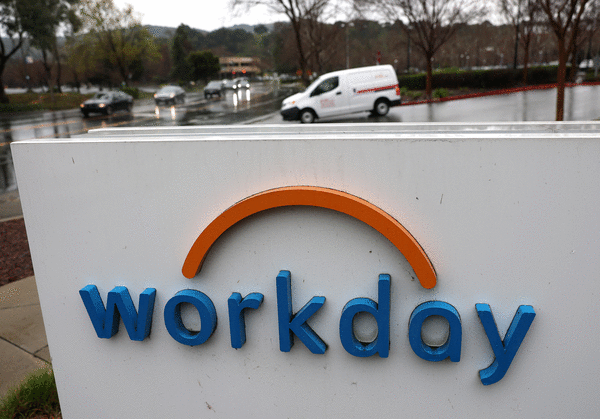
The latest way to sell artificial intelligence is with a high-tech version of the promise that corporate America last bought from Six Sigma. Earlier this month, Workday Inc. told investors that its customers should pay for its AI agents out of what they spend on labor and services, not just software. Workday itself, its CEO said, was looking to replace new hires with AI.
One of the promises of AI is that it will take processes previously performed by expensive and unreliable humans and do them with cheap machines that can act with perfect uniformity. But corporate America has run this experiment before — and it didn’t go well. The results confirmed what the late William Abernathy of Harvard Business School called the productivity dilemma: The increased efficiency came with decreased innovation.
Process management programs such as Six Sigma work by reducing variance in a company’s routines. Management scholars Mary Benner and Michael Tushman have documented a surprising side effect. Examining more than two decades of patents and quality certifications in the paint and photography industries, they found that the more process management a company did, the more its innovation built on what it already knew instead of creating new approaches and drawing on new ideas.
One reason is that most organizations decide their next step by making small changes and evaluating the response, the way a climber in fog feels for the next foothold. This works until you reach the top of whatever hill you are on. From there, every step looks like a mistake, even if a far higher peak sits across the valley. Variation can help when it makes you try something on the other side of the valley.
Six Sigma was designed for factories, but it didn’t stay there. It began at Motorola Inc. in 1986 and spread through corporate America in the 1990s after General Electric Co. embraced it. In 2000, a GE veteran became chief executive of 3M Co. and brought Six Sigma with him. 3M’s reputation rested on inventions such as the Post-it note, whose co-inventor told Businessweek in 2007 that innovation is a numbers game in which you “go through 5,000 to 6,000 raw ideas to find one successful business.” Six Sigma saw that as waste. 3M had long prided itself on drawing at least a third of its sales from products under five years old. By 2007, that share had slipped to a quarter.
AI lets companies automate processes and eliminate humans, with all their eccentricities. Danaher Corp. is building an AI-powered lab that designs, makes and tests antibodies, and sends each result back to the model. Danaher says the lab applies “the same test-and-verify discipline” long used to improve its operations, with models helping prioritize the most promising designs before any are made. When the target is known, as with antibodies, that’s a cheap and reliable approach. But if the same method spreads to attempts to do new things, it will restrict companies to repeating the same thing instead of finding something better.
A second risk to innovation is subtler. Even when AI generates new options, it draws them from the probability distributions inherent in its training data. In a 2024 study, Princeton University researchers asked GPT-4 to decode a simple cipher. It got the answer right 51% of the time when the hidden message was a likely sentence and 13% of the time when it was an unlikely one, though the decoding rule was the same. A follow-up found the same pattern in OpenAI’s o1, a model built for reasoning. Human variation comes from somewhere else — odd backgrounds, misreadings, stubbornness, even mistakes, which is why it can land somewhere genuinely new.
AI can sometimes replace creativity with persistence. In May, for example, OpenAI said one of its models had disproved a conjecture in geometry that Paul Erdős posed in 1946. Thomas Bloom, one of the mathematicians who wrote a companion paper on the result, said part of its success came from following paths a human might have dismissed as not worth the time. But in pure math, a dead end costs only computing time. When failed attempts are customers, paychecks and experiments, companies will tune their systems to do the things they’re sure will work.
This doesn’t mean companies shouldn’t use AI. It does mean that they need to put as much effort into protecting innovation from AI as they do into using AI to innovate. 3M eventually released the company’s research scientists from any obligation to meet Six Sigma objectives. The constant pressure to cut costs and increase efficiency becomes a trap when it reaches places where companies are trying to do new things.
Workday may be right that agents can cut a company’s labor budget by doing the rote work. But the money companies spend on labor isn’t just a cost. It’s where they keep all those human eccentricities that, every once in a while, add up to something as implausible and brilliantly successful as an unsticky sticky note. Spend too much of it on seemingly perfect software, and you might end up, well, stuck — on the wrong side of the valley.
____
This column reflects the personal views of the author and does not necessarily reflect the opinion of the editorial board or Bloomberg LP and its owners.
Gautam Mukunda writes about corporate management and innovation. He teaches leadership at the Yale School of Management and is the author of "Indispensable: When Leaders Really Matter."
©2026 Bloomberg L.P. Visit bloomberg.com/opinion. Distributed by Tribune Content Agency, LLC.















































Comments