Editorial: The questions voters should ask midterm candidates
Published in Op Eds
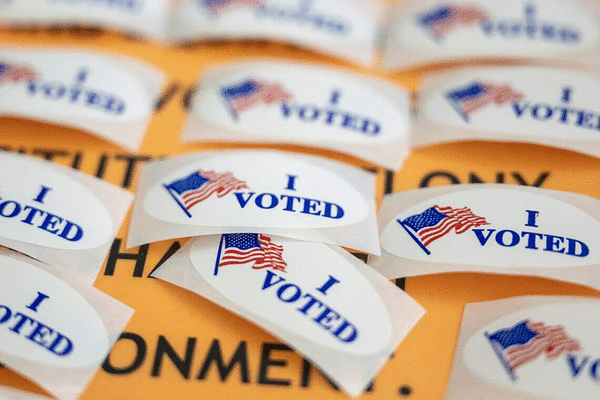
As voters approach the midterm elections, each party is eager to make the choice seem simple. Democrats point to the cost of living and argue that Republicans have failed to deliver economic relief. Republicans emphasize immigration, public safety and cultural questions, arguing that Democrats have lost touch with the country’s values.
The economy will be central, but voters do not experience their lives in tidy categories. A family may worry about grocery bills while also caring deeply about border security, schools or public safety. Priorities shift. An issue that once dominated debate may recede, then return when events put it back in the headlines.
That creates opportunity and risk for both parties. Democrats may see an opening in frustration over prices. Republicans may expect cultural issues to energize their voters. Neither can assume voters will carry the same priorities into the voting booth that they emphasized months earlier. People judge the country as they find it on Election Day.
The deeper challenge is the distance between political rhetoric and governing. Campaigns make arguments memorable. Governance requires turning those arguments into policies that work, paying for them and accepting responsibility for results.
Voters should ask candidates what they would do. What policy would change? Who would benefit? What would it cost? How would success be measured? And what would the candidate do if the proposal failed? Those questions are closer to the choices voters face than a debate over which party has the better talking point.
Cultural disputes matter. They reflect disagreements over identity, history and values. The debate over Columbus Day and Indigenous Peoples’ Day carries meaning for many Americans. But symbolic recognition alone does not solve practical problems. Politicians can signal allegiance through cultural arguments while saying little about decisions that shape daily life.
There is a danger in treating moderation as weakness. Candidates can be punished for acknowledging competing interests or admitting that problems have no easy solutions. The incentive is to sound certain and accuse opponents of bad faith. That may command attention, but it can make compromise look like betrayal and leave voters with less serious choices.
Maryland knows the cost when public officials focus more on political combat than their responsibilities to residents. Disagreement is inevitable. But when it becomes government’s organizing principle, people who need practical solutions are left watching leaders trade accusations.
The midterm election will not ask voters to choose perfect candidates. It will ask them to judge records, promises and priorities, then decide who is most likely to serve the public after the campaign ends. Voters should ask whether candidates understand the problems, offer workable answers and accept accountability.
The pendulum will continue to swing. The question is whether voters can make it swing toward competence. The country needs leaders who address economic pressures without dismissing cultural concerns, explain how their policies will improve people’s lives and work across disagreement when the public interest requires it. That is a harder standard than choosing a party, but it is also the standard the moment demands.
_____
©2026 The Baltimore Sun. Visit at baltimoresun.com. Distributed by Tribune Content Agency, LLC.















































Comments