Abby McCloskey: MAHA's strange pivot to its least-popular ideas
Published in Op Eds
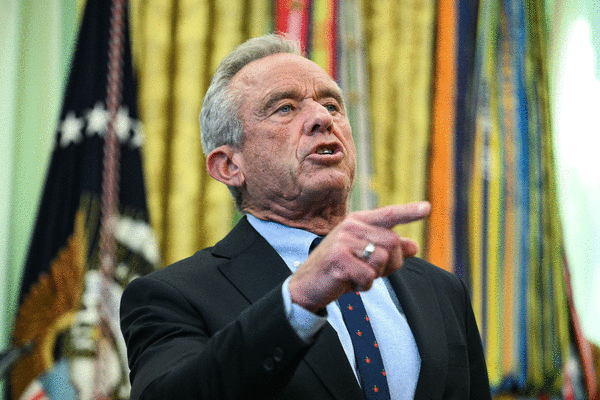
“Bobby Unleashed” is the West Wing’s midterms motto, according to reporting by Politico. But what exactly is Health Secretary Robert F. Kennedy, Jr. being unleashed to do? Because the biggest MAHA policy reforms have run into that familiar Washington foe: old-fashioned bureaucracy. And while many Americans still do want to “Make America Healthy Again,” there are now plenty of other concerns competing for voters’ attention.
Since the start of the year, Kennedy has visited 19 states, touting his “take back your health” campaign and rallying with GOP governors and members of Congress. It makes sense as to why. President Donald Trump’s approval rating has dropped, and betting markets put odds on the Democrats sweeping the midterms.
Meanwhile, MAHA retains broad appeal. More than four in ten Americans support it, according to KFF polling. That’s a larger share than those who identify as Republicans. Many of its core tenets — including concern about chemical additives in foods — generate upwards of 75% approval.
That’s because America’s health crisis is one of the few things you don’t have to take an expert’s word for; you can see it with your own eyes. And you don’t have to work very hard to convince Americans that it’s pretty weird to look at the back of a package of something as simple as sweet potato fries and see a dozen or more unpronounceable ingredients.
Even among voters who explicitly identify as “non-MAHA,” a majority support the following MAHA pillars: cleaner diets and more fitness (82%); reducing exposure to harmful chemicals (76%); and limiting the influence of pharmaceutical companies (56%).
If only MAHA’s most significant reforms to address such things hadn’t stalled. For example, take ultra-processed foods. It has taken the Food and Drug Administration a year and a half to come up with a federal definition of “ultra-processed foods,” a draft of which they submitted to the White House in August. The agency has yet to make the details public, suggesting that it might have run into yet more bureaucratic hurdles.
Other priorities are tied up in court. Earlier this year, the White House offered waivers to 23 states to limit the purchase of sugary beverages or candy with funds granted by the Supplemental Nutrition Assistance Program (SNAP). It was a first in the program’s history and a meaningful change given that one in five American kids is on SNAP. A National Bureau of Economic Research paper released last month on ten of those states found that soda purchases fell by about 13% among SNAP recipients, an encouraging change towards better health. But a DC district court challenged the federal waivers, putting their future into question.
MAHA supporters may say that this fight was never going to be easy, especially considering that much of it runs counter to a multi-billion-dollar food and beverage manufacturing sector. But for an administration that seems to bulldoze its way forward and ask for apologies later, reform has been slow-moving. Not to mention that some of the progress has been directly thwarted by Trump himself. (I’m thinking here of the executive order earlier this year protecting pesticides.)
Perhaps this is why MAHA has self-diluted by including a bunch of other less popular and less scientifically supported issues, such as going after food dyes and Tylenol use during pregnancy. These are distractions from the issues most MAHA and MAHA-curious voters prioritize and splinter the movement’s political potential.
Then there are vaccines. Trump recently signed an executive order that recommends reducing routine childhood vaccines from 18 to 11 diseases and spreading those shots out over more visits to the doctor. But are vaccines why children are increasingly suffering from chronic health conditions or neurodivergence? “There is no evidence for that,” parent guru and economist Emily Oster said on my new Brookings Institution podcast, “No More Sidewalks.” She said that while spreading out vaccines could make some sense, there’s a larger downside risk that kids get fewer vaccines overall if it requires more appointments. Already, we’re seeing preventable diseases like pediatric measles on the rise.
Politically, the Trump-RFK position on vaccines is a loser. Although 65% of MAHA voters say they’d like to reduce the number of vaccines Americans receive, that view is shared by only 23% of non-MAHA adults. Most Americans remain confident in childhood vaccines, including school requirements, according to Pew.
And voters now have a lot of other things on their minds, too. When asked to select the most important health priority for the federal government in a KFF poll earlier this year, four in ten MAHA voters (42%) chose lowering health costs, twice the share who chose restricting chemical additives in the food supply (21%). Zoom out further and voters’ biggest concern heading into midterms is affordability. The cost of those sweet potato fries looms even larger than the ingredients in them.
Americans still want to be healthier. But MAHA has so far failed to deliver on what it promised, and good vibes can only take public policy so far.
____
This column reflects the personal views of the author and does not necessarily reflect the opinion of the editorial board or Bloomberg LP and its owners.
Abby McCloskey is a columnist, podcast host, and consultant. She directed domestic policy on two presidential campaigns and was director of economic policy at the American Enterprise Institute.
©2026 Bloomberg L.P. Visit bloomberg.com/opinion. Distributed by Tribune Content Agency, LLC.













































Comments