Editorial: Higher interest rates send a warning to everyday Americans -- Cut your debt
Published in Op Eds
When government bond prices go down, it usually means one of two things: either the economy is strong, and demand for capital is pushing up interest rates, or inflation and excess borrowing is putting the future at risk.
For a couple of years now, bond prices have mostly gone down, sending interest rates higher. Take it as a warning.
The 10-year Treasury note has soared from roughly 3.7% around this time in 2024 to 4.7% today. The 30-year Treasury bond stands close to a 20-year high, at 5.2%, up from just 4% two years ago. Interest rates on corporate bonds also have shot higher, and a recent effort by U.S. Treasury Secretary Scott Bessent to tamp down long-term rates has fallen flat.
Since his second term began, President Donald Trump has pushed for the U.S. Federal Reserve to cut rates, aiming to benefit politically from a temporary economic boost. Yet that move would worsen inflation, which is running well beyond the Fed’s 2% target, making any rate cut unlikely, despite ongoing pressure from the White House.
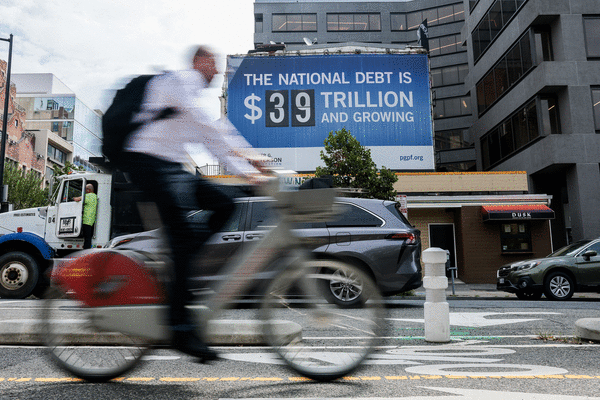
Government borrowing similarly has been in the news as the national debt hit a troubling $40 trillion and counting. At the same time, businesses are borrowing a fortune to expand data center networks and integrate artificial intelligence. Demand for AI is raising the cost of loans needed to build it out.
It’s not as if the U.S. is alone in experiencing punishing inflation and higher interest rates. Across the developed world, central bankers are fretting over the same issues.
What does it all mean for everyday people? In short, now is the time to cut your debt. It’s getting too expensive to carry the debt loads that became common when rates were low in the years after the 2008 financial crisis.
A standard 30-year mortgage today bears an interest rate of roughly 6.65%. Two years ago? A little lower, but not by that much. Interest charges on bank credit card balances, government-backed education loans and borrowing for cars and trucks also haven’t moved in lockstep with Treasuries so far. Still, they’re high enough that, along with higher home prices, it’s keeping would-be buyers out of the market.
Overall, costs are adding up for many households as debt levels rise. Factor in stubbornly high inflation, sluggish wage growth and a hit-or-miss job market, and many Americans below the very top of the income scale are feeling a lot poorer these days.
Bad economic vibes have political implications for the midterms and beyond. Consumer confidence is under pressure, as people understandably feel worse about their prospects. Household budgets need to adjust for challenging times ahead.
We know it’s much easier to say, “Cut your debt,” than to pull it off. Many Americans are living paycheck to paycheck. Who can afford to pay down debt when basics like food, gas and rent keep going up?
Nevertheless, acting now will lead to a better future. Rule No. 1: Less debt is always better when your finances are already shaky. But some other ideas can help, too. Refinancing, for instance, can enable households to replace high-priced debt with a more affordable loan. Promotions offering 0% rates on transferred credit-card balances require juggling but can save money and provide flexibility. To pay down debt, consider starting a side hustle like freelance work or a part-time job for supplemental income.
Help is available for managing household finances. Many employers offer financial counseling via employee assistance programs. Nonprofits like United Way (who aren’t trying to take advantage of anyone) also provide free programs. And it should go without saying that every household should have a budget, and every budget worth the name should aim to rein in debt and build a rainy-day fund for life’s uncertainties.
The same goes for government. No way should local, state and federal lawmakers be left off the hook while households struggle to live within their means.
As The Wall Street Journal recently pointed out, Chicago squandered the money from COVID-19 relief and continues overspending under Mayor Brandon Johnson. The idea that Springfield will bail out Chicago and some future Democratic president will bail out Springfield has become a common scare tactic for Republicans on the campaign trail.
But anyone looking at the balance sheets will recognize there’s no money for that.
Chicago can’t afford its bills. Springfield faces enormous pension obligations and little fiscal room to assume Chicago’s problems on top of its own. And the federal government is so overstretched that its $40 trillion debt is on track to hit a mind-boggling $50 trillion in just three years.
Government debt at those levels will force unwanted decisions across the board: Higher taxes. Cuts to benefits and services. Limited flexibility to respond when a crisis strikes.
_____
©2026 Chicago Tribune. Visit at chicagotribune.com. Distributed by Tribune Content Agency, LLC.


















































Comments