Politics
/ArcaMax
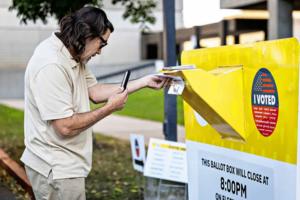
George Skelton: Need help deciding on the state ballot measures? Here are my recommendations
SACRAMENTO, Calif. — You haven’t voted yet because the state propositions are too bewildering? I’m with you. There are too many for normal human consumption. But I’ve figured them all out at last.
I’ve concocted my own personal voter information guide that I’ll share here. Heads up: I’m negative on most measures, including some ...Read more
Commentary: Flock cameras show that we need a constitutional amendment for information privacy
Should owning a phone and a car and using the internet mean organizations know everything about us? The current debate over the expansion of Flock cameras, a form of automated license plate readers, across the U.S. triggers this broader question as governments and private enterprises seek to expand their surveillance power.
Historically, legal ...Read more

Commentary: If Israel gets a new prime minister, will anything change?
On Tuesday, Israelis will head to the polls for an election that the international press has described as Israel’s most consequential in decades — if not ever. The outcome will determine whether Israel continues its march to the ultraright, in which extremist political parties increasingly serve as kingmakers, or whether it reorients to the ...Read more
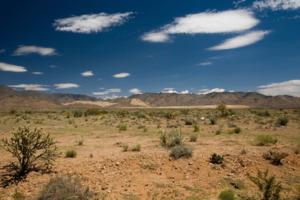
Commentary: Prevent collateral damage from California's new gold rush
California’s Gold Rush is usually told as a story of the past. But while we celebrate the prospectors and boomtowns that shaped the state, gold mining still threatens the landscapes, waterways and communities those stories leave out.
A new gold rush is taking shape. Today, foreign mining companies are pursuing new gold projects across ...Read more
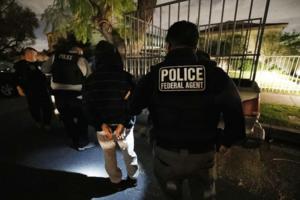
Commentary: ICE enforcement in Orange County raises red flags for misuse of government databases
Inside an abandoned work truck in northern Orange County one recent Saturday sat a steaming cup of coffee and a Danish with a bite taken out of it. The remnants of an ordinary morning, suddenly interrupted.
The truck belonged to a man who had gone out for gas and a car wash before the workweek. He never made it home. ICE agents had taken him ...Read more
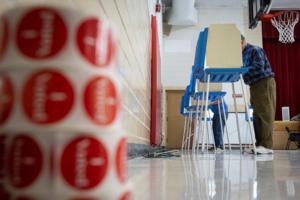
Aaron Brown: What's wrong with political polls these days?
I haven’t seen a news story about a political poll in recent years that wasn’t heckled for its sample size, crosstabs or bias. The identity of the hecklers depends largely on whose candidate comes out looking worse.
That’s how it goes when everyone’s a pundit. It’s about time we act like voters instead. As we barrel toward another ...Read more
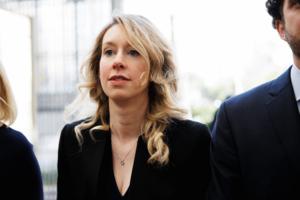
John Rash: 'You can see everything' -- Except, it seems, the truth these days
Within hours on Oct. 16 the curtain fell on the five-day stint of the White House press secretary Katie Zacharia and rose on “You Can See Everything,” the documentary about Elizabeth Holmes, the fraudulent founder of blood-testing company Theranos.
While separate events, they’re linked in an era of ever elusive truth.
The story about ...Read more
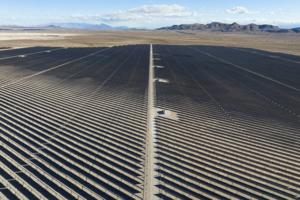
Editorial: Voters unhappy with the high cost of green schemes
Some voters are starting to realize that green energy isn’t as cost effective as promised.
For decades, green energy backers have promised to deliver the best of both worlds. They claimed that green energy, like solar and wind, would save the planet by reducing carbon emissions and would reduce prices. Despite years of leftist propaganda, ...Read more
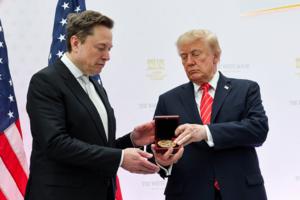
Editorial: Big money can distort campaign reality
If you’ve watched TV lately, you’ve probably seen this ad. Put out by Byron Donalds’ campaign, it features footage of a restaurant server, a utility worker and a senior-citizen couple, followed by a contemptuous voiceover accusing the Democratic gubernatorial candidate of wanting to raise taxes on tips, overtime, and Social Security.
The...Read more
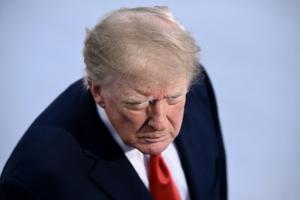
Editorial: A devious Trump, plotting more midterm mayhem
Having failed to keep the trust of voters he needs to keep Congress red while barring all others from casting ballots, Donald Trump is now setting the stage for midterm chaos.
This state’s cozy relationship with the administration gives Florida no protection. In fact, quite the opposite.
Florida led a legal fight to make sure it could use ...Read more
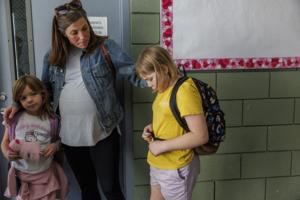
Commentary: Parks can play essential role in disaster response
As climate change brings more wildfires, floods and heat emergencies, public parks have proven to be essential community infrastructure, yet they are still funded as optional amenities. That has to change.
When the Eaton Fire ravaged Altadena, California, in January 2025, residents were scrambling for shelter and emergency services, while ...Read more
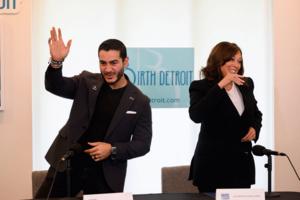
Kaitlyn Buss: Abdul El-Sayed wants a lot more government than Obama ever delivered
Abdul El-Sayed is no Barack Obama. In terms of what he expects government to do, he's far more ambitious.
If you thought Obama's expansion of the federal government went too far, consider what El-Sayed has in mind.
El-Sayed criticized Obama in the past for the former president's inability to institute what El-Sayed believes was a big enough ...Read more
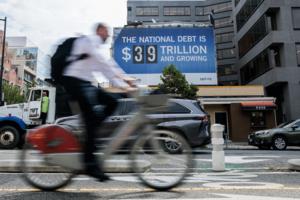
Commentary: How the federal debt happened
The federal government is drowning itself in red ink, caused by its spending far more than the revenues it collects. Economists agree that the debt explosion raises Americans’ borrowing costs, inhibits economic growth, and makes us all poorer. Yet our citizenry is rarely provided with detailed information about what drives this problem and ...Read more
Gautam Mukunda: Too much AI can stifle innovation
The latest way to sell artificial intelligence is with a high-tech version of the promise that corporate America last bought from Six Sigma. Earlier this month, Workday Inc. told investors that its customers should pay for its AI agents out of what they spend on labor and services, not just software. Workday itself, its CEO said, was looking to ...Read more
Allison Schrager: That grad school loan may cost you. It's about time
Our higher education system is broken. Families pay a fortune for degrees that do not pay off like they used to. However you feel about the future of advanced degrees, they’re certainly a mispriced asset — a mispricing that started in the market for student loans.
The biggest distortions are in graduate degrees, where students have the ...Read more

Editorial: Governments can't take their resilience for granted
Somewhat unexpectedly, the global economy has weathered the challenges of the past few years extraordinarily well. Following the pandemic, shock followed shock — Russia’s war on Ukraine, Washington’s rejection of rule-based liberal trade, then most recently the war with Iran. Any one of these might’ve led you to expect a severe economic ...Read more
Editorial: Pandering to Vladimir Putin won't bring peace to Ukraine
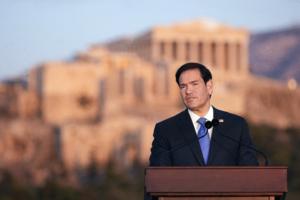
Speaking near the Acropolis earlier this month, Secretary of State Marco Rubio praised the ancient Athenians who heroically repelled Persian invaders. The administration he serves is treating Ukraine’s resistance very differently.
In hopes of lowering prices before the November midterms, the White House recently struck a deal easing sanctions...Read more
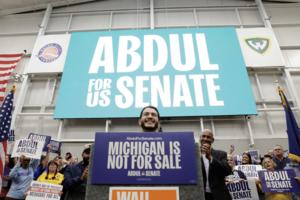
Commentary: Muslims have always had to prove our Americanness. Enter Abdul El-Sayed
Michigan’s Democratic candidate for the U.S. Senate, Abdul El-Sayed, is many things to many people.
He represents change, part of a new generation of outspoken leaders who aren’t afraid to challenge the status quo.
He represents possibility: As the son of Egyptian immigrants, his trajectory is the American dream realized.
And he ...Read more
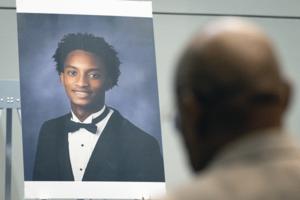
LZ Granderson: No magic words will cure the racism that festers in America
Martin Luther King III and his wife, Andrea Waters King, were in Georgia when they learned about the July death of Nolan Wells, who authorities in Mississippi said drowned even though no water was found in his throat, lungs or stomach.
"We were getting our daughter prepared for college when he died," Waters King said about Wells. "The news just...Read more
Commentary: Faith's work will outlast the ballot
After the midterm elections, people will still need groceries. A parent will still weigh the cost of a prescription against the rent. A child will still enter a classroom carrying burdens no backpack should hold. Whatever the electoral map looks like, faith communities will wake to neighbors who need more than a winning party's promises.
The ...Read more
Related Channels

ACLU
By The ACLU

Amy Goodman
By Amy Goodman

Armstrong Williams
By Armstrong Williams

Austin Bay
By Austin Bay

Betsy McCaughey
By Betsy McCaughey

Bill Press
By Bill Press

Bonnie Jean Feldkamp
By Bonnie Jean Feldkamp

Cal Thomas
By Cal Thomas

Clarence Page
By Clarence Page

Danny Tyree
By Danny Tyree

David Harsanyi
By David Harsanyi

Dick Polman
By Dick Polman

Erick Erickson
By Erick Erickson

Froma Harrop
By Froma Harrop

Jacob Sullum
By Jacob Sullum

Jamie Stiehm
By Jamie Stiehm

Jeff Robbins
By Jeff Robbins

Jessica Johnson
By Jessica Johnson

Jim Hightower
By Jim Hightower

Joe Conason
By Joe Conason

John Stossel
By John Stossel

Josh Hammer
By Josh Hammer

Judge Andrew Napolitano
By Judge Andrew P. Napolitano

Laura Hollis
By Laura Hollis

Marc Munroe Dion
By Marc Munroe Dion

Michael Barone
By Michael Barone

Mona Charen
By Mona Charen

Rachel Marsden
By Rachel Marsden

Rich Lowry
By Rich Lowry

Robert B. Reich
By Robert B. Reich

Ruben Navarrett Jr
By Ruben Navarrett Jr.

Ruth Marcus
By Ruth Marcus

S.E. Cupp
By S.E. Cupp

Salena Zito
By Salena Zito

Star Parker
By Star Parker

Stephen Moore
By Stephen Moore

Susan Estrich
By Susan Estrich

Ted Rall
By Ted Rall

Terence P. Jeffrey
By Terence P. Jeffrey

Tim Graham
By Tim Graham

Tom Purcell
By Tom Purcell

Veronique de Rugy
By Veronique de Rugy

Victor Joecks
By Victor Joecks

Wayne Allyn Root
By Wayne Allyn Root
Comics