Commentary: Is there a duty to save wild animals from natural suffering?
Published in Op Eds
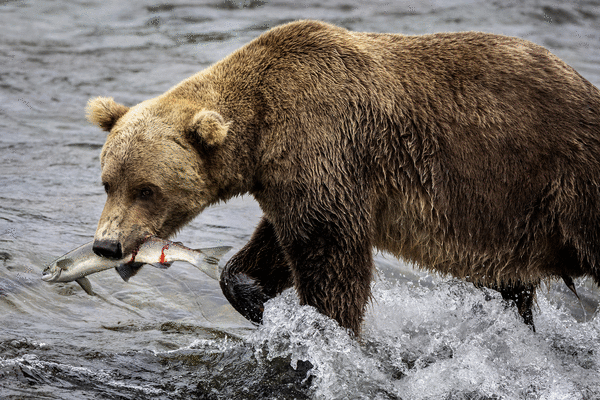
The internet occasionally erupts in horror at disturbing images of wildlife: deer with freakish black bubbles all over their faces and bodies, sore-ridden squirrels, horn-growing rabbits.
As a society, we tend to hold romanticized notions about life in the wild. We picture these rabbits nuzzling with their babies, these squirrels munching on some nuts and these deer frolicking through sunlit meadows. Yet the trend of Frankenstein creatures afflicted with various diseases is steadily peeling back this idyllic veneer, revealing the harsher realities that underpin the natural world. And we should do something about it.
First, consider that wild animals — the many trillions of them — aren’t so different from other animals we care about — like dogs and cats — or even from us. They love. They build complex social structures. They have emotions. And most important, they too experience suffering.
Many wild animals are suffering because of us. We destroy their habitats, they’re sterilized and killed by our pollution, and sometimes we hunt them down as trophies. Suffering created by humans is especially galling.
But even in the absence of human impact, wild animals still experience a great deal of pain. They starve and thirst. They get infected by parasites and diseases. They’re ripped apart by other animals. Some of us have bought into the naturalistic fallacy that interfering with nature is wrong. But suffering is suffering wherever it occurs, and we should do something about it when we can. If we have the opportunity to rescue an injured or ill animal, why wouldn’t we? If we can alleviate a being’s suffering, shouldn’t we?
If we accept that we do have an obligation to help wild animals, where should we start? Of course, if we have an obvious opportunity to help an animal, like a bird with a broken wing, we ought to step in, maybe take it to a wildlife rescue center if there are any nearby. We can use fewer toxic products and reduce our overall waste to minimize harmful pollution, keep fresh water outside on hot summer days, reduce our carbon footprint to prevent climate-change-induced fires, build shelter for wildlife such as bats and bees, and more. Even something as simple as cleaning bird feeders can help reduce rates of disease in wild animals.
And when we do interfere in nature in ways that affect wild animals, we should do so compassionately. For example, in my hometown of Staten Island, in an effort to combat the overpopulation of deer (due to their negative impact on humans), officials deployed a mass vasectomy program, rather than culling. And it worked. Why wouldn’t we opt for a strategy that doesn’t require us to put hundreds of innocent animals to death?
But nature is indifferent to suffering, and even if we do these worthy things, trillions will still suffer because the scale of the problem is so large — literally worldwide. It’s worth looking into the high-level changes we can make to reduce animal suffering. Perhaps we can invest in the development and dissemination of cell-cultivated meat— meat made from cells rather than slaughtered animals — to reduce the amount of predation in the wild. Gene-drive technology might be able to make wildlife less likely to spread diseases such as the one afflicting the rabbits, or malaria. More research is needed to understand the world around us and our effect on it, but the most ethical thing to do is to work toward helping wild animals in a systemic way.
The Franken-animals that go viral online may have captured our attention because they look like something from hell, but their story is a reminder that the suffering of wild animals is real — and it is everywhere. These diseases are just a few of the countless causes of pain in the lives of trillions of sentient beings, many of which we could help alleviate if we chose to. Helping wild animals is not only a moral opportunity, it is a responsibility, and it starts with seeing their suffering as something we can — and must — address.
____
Brian Kateman is co-founder of the Reducetarian Foundation, a nonprofit organization dedicated to reducing consumption of animal products. His latest book and documentary is “Meat Me Halfway.”
©2026 Los Angeles Times. Visit at latimes.com. Distributed by Tribune Content Agency, LLC.



















































Comments