Editorial: How Florida's DOGE governor lavishly spends on made-up emergencies
Published in Op Eds
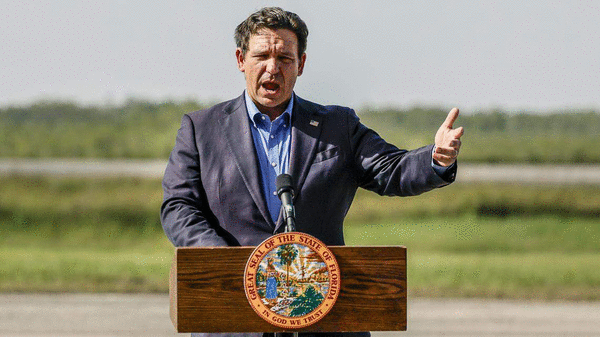
Gov. Ron DeSantis likes to talk about how “Florida was DOGE before DOGE was cool.” He spends a lot of time pointing fingers at government entities across the state that he accuses of abusing taxpayer money.
But DeSantis should write the playbook on how to spend lavishly on his political priorities — the same ideology-driven spending he decries when it comes to things like DEI. He’s managed to spend a lot, and with little oversight, by declaring “emergencies” on immigration. That allows him to access money without going through the Legislature or complying with more than two dozen state laws and rules, including competitive bidding requirements.
The Herald/Times Tallahassee Bureau reported this week that DeSantis’ immigration enforcement efforts have cost $573 million in the past three years in emergency response funds. The rest of that money has been spent on real emergencies, such as responding to six hurricanes since 2022.
The Florida Division of Emergency Management said in a Saturday report to the Legislature that it expects the federal government to reimburse the state for about half the cost of the immigration efforts. So far the agency has received nothing, though the federal government approved a Florida request for over $600 million in September, the Bureau reported.
Even if that reimbursement comes through, federal money isn’t free money, either. It’s also coming from taxpayers, who are paying for a bloated federal immigration budget. Remember what DeSantis said last year about federal spending: “We the People must stop the gravy train.” Apparently, he’s not worried about feasting on that gravy when it suits his political ambitions.
The emergency management division’s report does not specify how much of those emergency funds went to Alligator Alcatraz, the tent-and-trailer immigration detention center DeSantis ordered built in a matter of days in the Everglades, just west of Miami-Dade County. It does say that millions were used to equip state agencies with radios and high-tech cameras.
More emergency dollars went toward Florida’s immigration operations, called “Operation Vigilant Sentry,” than toward recovery efforts after Hurricane Idalia in 2023 or after flooding in Fort Lauderdale that same year, a tally by the Herald/Times Bureau shows.
How did DeSantis manage to spend so much of our tax money without questions asked? We can thank the Legislature, which approved the emergency fund in 2022, allowing the governor to spend money without seeking lawmaker approval during emergencies.
DeSantis declared a state of emergency in January 2023 in response to an influx of Cuban and Haitian migrants arriving by boat in the Florida Keys. He has extended those powers repeatedly, allowing him to not only spend freely but also to hire politically-connected vendors. That’s rich coming from the DOGE governor.
Governors must have the flexibility to access money fast in times of crisis. But the Legislature should not allow them to abuse that authority.
Lawmakers did have the sense to pass a law last year requiring more transparency on how the administration uses those funds. The law, however, may not go far enough. The report the Division of Emergency Management delivered to lawmakers does not break down in detail where that $573 million went.
There’s no question that immigrants who commit crimes should be deported and that the southern border should be controlled. This is no plea for open borders.
But is immigration in Florida truly an emergency, one that warrants the state spending millions of dollars to do the job of federal immigration enforcement? Are undocumented gardeners, babysitters and restaurant cooks as threatening to Floridians as hurricanes and natural disasters? No, but they sure help DeSantis remain relevant in Republican circles as his term ends.
Lawmakers, who are currently in session, should consider ways to rein in that spending and create more oversight over when and how governors declare emergencies. Instead, the Florida Senate is considering a bill to expand the emergency fund through 2027.
If Florida is truly fiscally conservative, it should not facilitate the creation of slush funds for its leaders.
___
©2026 Miami Herald. Visit at miamiherald.com. Distributed by Tribune Content Agency, LLC.





















































Comments