Editorial: Protecting Americans from 'extraterritorial overreach'
Published in Op Eds
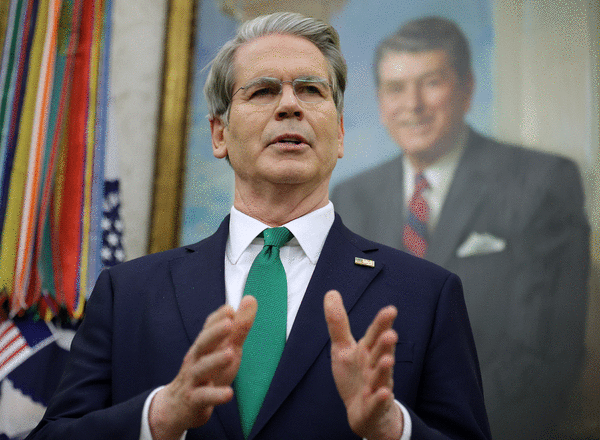
President Donald Trump has devoted much energy during his second term to undoing the damage caused by his predecessor’s economic paternalism. His latest success will be a boon to America’s competitiveness and sovereignty.
On Monday, the Treasury Department announced that U.S. multinational corporations will not be subjected to a 15% global minimum tax scheme concocted by the Organization for Economic Cooperation and Development. The Biden administration had previously pushed Congress to join the coalition of nearly 150 countries under the guise of stopping large companies from “tax shopping” by shifting profits to countries with friendlier business climes.
In fact, the proposal represents a massive government revenue grab — The Wall Street Journal estimated that the plan, as originally written, could cost the nation $122 billion over 10 years — and an affront to national autonomy when it comes to setting competitive tax rates. It’s also worth noting that, had any private industry implemented a similar “price-fixing” plan, the same congressional Democrats who jumped on board the government minimum tax bandwagon would have been apoplectic on antitrust grounds.
Despite arm-twisting by President Joe Biden’s treasury secretary, Janet Yellen, Congress refused to approve legislation to join the OECD tax plan. Upon taking office for his second term, Trump criticized the proposal and threatened to levy retaliatory taxes on nations that imposed higher taxes on American companies. But after congressional Republicans removed a “revenge-tax” provision from the president’s One Big Beautiful Bill, the White House agreed to enter negotiations to rework any international deal more to the liking of the United States. That approach now pays dividends.
The new agreement “excludes large U.S.-based multinational corporations from the 15 percent global minimum tax,” The Guardian reports, and includes concessions that won’t undermine the U.S. research and development tax credit. It also ensures that the United States preserves its independence when it comes to setting tax policy for international corporations instead of farming out that responsibility to unaccountable foreign bureaucrats operating with their own agendas.
The agreement is “a historic victory in preserving U.S. sovereignty and protecting American workers and businesses from extraterritorial overreach,” said Trump’s treasury secretary, Scott Bessent.
A good case can be made that the United States shouldn’t be part of any “minimum” tax proposal that subjects American interests to a complicated global tax regime. But Trump deserves credit for at least mitigating the damage that the original proposal would have wrought.
©2026 Las Vegas Review-Journal. Visit reviewjournal.com.. Distributed by Tribune Content Agency, LLC.



















































Comments