Politics
/ArcaMax
Andreas Kluth: Defeat has never sounded as victorious as in Trump's address
On April Fools’ Day, the American president addressed the nation and the world to send not one message about the war that the United States and Israel launched against Iran a month ago, but all possible messages at once.
The conflict is “nearing completion,” Donald Trump said, before repeating that the U.S. might also escalate by hitting ...Read more

Commentary: César Chávez and the pain of the silence born from assault
In the rush to cancel long-held celebrations and remove statues and murals to achieve distance from César Chávez because of his alleged sexual abuse, it is important not to shy away from the meaning of a lifetime of painfully guarded silence. Let’s consider the terrible contradiction that was the daily reality of Ana Murguía, Debra Rojas ...Read more

Mary McNamara: The golden idol at the center of Trump's presidential library is a terrible idea -- even for him
The recently revised food pyramid may put fruit as a medium priority, but there is nothing the Trump administration likes more than the apple of discord.
Every news cycle, the president seems intent on introducing something new for Americans to argue about: the wisdom (and legality) of war in Iran; the term “affordability”; the efficacy of ...Read more

Editorial: Court rulings against Trump proof that democracy still works
It must have been a confounding day for “No Kings” protestors. Their placards at rallies held around the country decry President Trump’s “authoritarian regime” and the “fascism” under which Americans now live. They’ve blasted the ballroom Trump was building adjacent to the White House.
Two federal judges upended that notion ...Read more

Andreas Kluth: The pope has a message for the 'secretary of war'
The message was as clear as modern popes get, especially in their Palm Sunday mass. “Brothers and sisters, this is our God,” Leo XIV told the faithful in St. Peter’s Square: “Jesus, King of Peace, who rejects war, whom no one can use to justify war. He does not listen to the prayers of those who wage war, but rejects them, saying: ‘...Read more

Mark Z. Barabak: Is California really going to elect a Republican governor? Is there a Democratic Plan B?
Today we discuss probability, self-destruction and political bossism.
Wow. California, which is as blue as Lake Tahoe, is about to elect a Republican governor ! How crazy is that?
Whoa. Hold up, pony. Let's not get too far ahead of ourselves.
Well, there's certainly a lot of Democratic angst out there.
That's for sure. It's reminiscent of...Read more

Editorial: Trump library looks more like an ego tower than a museum, even by Miami standards
Miami is no stranger to excess. In this city, gaudy isn’t so much an insult as a way of life. But even in a place known for Lamborghinis, Brazilian butt lifts and wannabe billionaires, President Donald Trump’s planned presidential library stands out.
On Monday, the Trump Library Foundation released the first rendering of the downtown ...Read more

Trudy Rubin: White House rejection of Ukraine's help to fight Iranian drones may cost US military lives
Nothing so perfectly demonstrates Donald Trump’s reckless approach to waging war on Iran than his rebuff of Ukraine’s offer to share drone technology that could save U.S. military lives.
Clearly, the president had little idea what he was getting into when he joined Israel in bombing Iran and killing its top leadership. This was a war of ...Read more

Joe Battenfeld: Democrats face deplorable dilemma -- whether to turn to Hillary Clinton
Democrats find themselves with a deplorable dilemma – whether to reach into their no-talent “bench” for a 2028 standard bearer or turn to the 78–year-old party matriarch for yet another comeback bid.
Saddled with an aging constituency of white, privileged, female boomers who fill up “No Kings” rallies, Democrats are in such disarray...Read more

Abby McCloskey: Classroom iPads are teaching kids the wrong skills
I’m going to say something from my firsthand experience as a mom: Schools have a terrible track record with screens. It tends to be adoption first, skepticism later (and then only maybe). That’s led to a generation of kids being treated as Big Tech guinea pigs and falling student achievement scores.
First, schools allowed kids to bring ...Read more

Mark Gongloff: The ecoterrorism is coming from inside the White House
President Donald Trump calls environmentalists “terrorists.” Yet he is responsible for destroying more oil and gas infrastructure, and possibly more fossil-fuel demand, than the most optimistic ecoterrorist could in their wildest dreams.
By going to war with Iran, the president, who has been openly hostile toward the clean-energy transition...Read more

COUNTERPOINT: It's time to halt the AI data center attack
Gasoline prices have nearly doubled nationwide over the last month, as President Donald Trump’s war with Iran continues. As a result, many consumer staples that rely on diesel-fueled trucks to reach store shelves are also rising in cost. And food prices are climbing especially quickly, in part due to a logjam of global fertilizer supply — ...Read more

Commentary: ICE abuses exemplify a cruel prison system
Every day, more gruesome details emerge of the inhumane conditions inside the detention facilities maintained by agents with Immigration and Customs Enforcement. There are countless reports of forced labor, sexual and physical assault, filthy facilities and people crammed into cells.
Last year, 32 people died in ICE custody, marking the agency�...Read more

Commentary: Preserving the best parts of César Chávez's legacy
One summer day in 1988, before the sun rose, my parents packed my three younger sisters and me into our beige Chevy station wagon. We drove from Oxnard to Delano, California, to stand in support of what would become César Chávez’s final fast. I remember the brutal heat, the crowded tent, the feeling we were part of something larger.
Chávez...Read more

POINT: A data center moratorium would be a gift to China
As the AI industry heats up globally, several U.S. state legislatures and Sen. Bernie Sanders are calling for a pause on all AI data center development, citing risks of job loss, superintelligence concerns and risks to working people.
Their concerns aren’t baseless, but a data center moratorium is not a solution. Although Sanders hopes it ...Read more
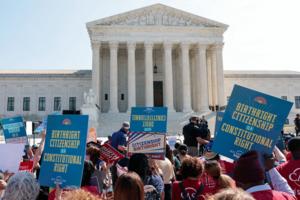
Editorial: No contest -- Supreme Court must uphold birthright citizenship
This week, the U.S. Supreme Court is hearing arguments on a case of long-settled law that shouldn’t even be before the justices: birthright citizenship.
The court will weigh President Donald Trump’s outlandish executive order purporting to end the automatic grant of citizenship to those born on U.S. soil to undocumented immigrants. We doubt...Read more

John Rash: War in Iran threatens to become a global food crisis
Pain at the pump is how Americans often perceive the economic impact of the U.S.-Israeli war in Iran.
Pain at the plate, however, is how the world may soon see the conflict.
To be sure, the omnipresent price of gasoline seen at nearly every intersection is important. But the impact doesn’t stop there.
Because while the global focus is on ...Read more

Mary McNamara: The golden idol at the center of Trump's presidential library is a terrible idea -- even for him
The recently revised food pyramid may put fruit as a medium priority, but there is nothing the Trump administration likes more than the apple of discord.
Every news cycle, the president seems intent on introducing something new for Americans to argue about: the wisdom (and legality) of war in Iraq; the term “affordability”; the efficacy of ...Read more
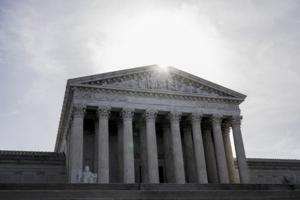
Editorial: A victory for the First Amendment at the high court
Progressives wasted no time characterizing the Supreme Court’s decision Tuesday on “conversion therapy” as an attack on the LGBTQ community. It is no such thing, representing instead a victory for the First Amendment.
The justices ruled 8-1 in favor of a religious counselor who challenged a 2019 Colorado law banning attempts to “change ...Read more

Commentary: How the White House can cut prices at the pump -- and elsewhere
Gas and diesel prices have soared since the start of the Iran war, but the situation could get even worse later this year because of ethanol requirements and problems with fertilizer supply chains.
To help keep a lid on prices at the pump, just days ago, the Environmental Protection Agency waived the summertime cap on the amount of ethanol ...Read more
Related Channels

ACLU
By The ACLU

Amy Goodman
By Amy Goodman

Armstrong Williams
By Armstrong Williams

Austin Bay
By Austin Bay

Ben Shapiro
By Ben Shapiro

Betsy McCaughey
By Betsy McCaughey

Bill Press
By Bill Press

Bonnie Jean Feldkamp
By Bonnie Jean Feldkamp

Cal Thomas
By Cal Thomas

Clarence Page
By Clarence Page

Danny Tyree
By Danny Tyree

David Harsanyi
By David Harsanyi

Debra Saunders
By Debra Saunders

Dennis Prager
By Dennis Prager

Dick Polman
By Dick Polman

Erick Erickson
By Erick Erickson

Froma Harrop
By Froma Harrop

Jacob Sullum
By Jacob Sullum

Jamie Stiehm
By Jamie Stiehm

Jeff Robbins
By Jeff Robbins

Jessica Johnson
By Jessica Johnson

Jim Hightower
By Jim Hightower

Joe Conason
By Joe Conason

John Stossel
By John Stossel

Josh Hammer
By Josh Hammer

Judge Andrew Napolitano
By Judge Andrew P. Napolitano

Laura Hollis
By Laura Hollis

Marc Munroe Dion
By Marc Munroe Dion

Michael Barone
By Michael Barone

Mona Charen
By Mona Charen

Rachel Marsden
By Rachel Marsden

Rich Lowry
By Rich Lowry

Robert B. Reich
By Robert B. Reich

Ruben Navarrett Jr
By Ruben Navarrett Jr.

Ruth Marcus
By Ruth Marcus

S.E. Cupp
By S.E. Cupp

Salena Zito
By Salena Zito

Star Parker
By Star Parker

Stephen Moore
By Stephen Moore

Susan Estrich
By Susan Estrich

Ted Rall
By Ted Rall

Terence P. Jeffrey
By Terence P. Jeffrey

Tim Graham
By Tim Graham

Tom Purcell
By Tom Purcell

Veronique de Rugy
By Veronique de Rugy

Victor Joecks
By Victor Joecks

Wayne Allyn Root
By Wayne Allyn Root
Comics